Tag: photographers

  • Efe Çaylak

    Efe Çaylak

    Efe Çaylak

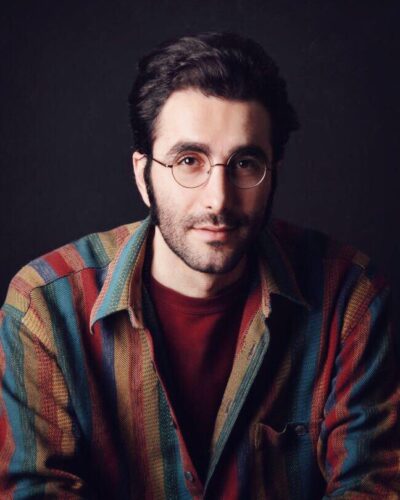
    Efe Çaylak is a Turkish photographer from Adana, in southern Turkey. He graduated from the Çukurova University, Department of Chemistry. Currently, he is based in Istanbul – as he defines it, it’s “the city with thousands of amazing views”. What he enjoys the most is experiencing life among the wide variety of people living there, each with their traditions and customs.
    Street Photography has been Efe Çaylak’s passion since 2009. He is one of the founding members of the Turkuaz Street Collective, active since 2013.

    About The Collection…

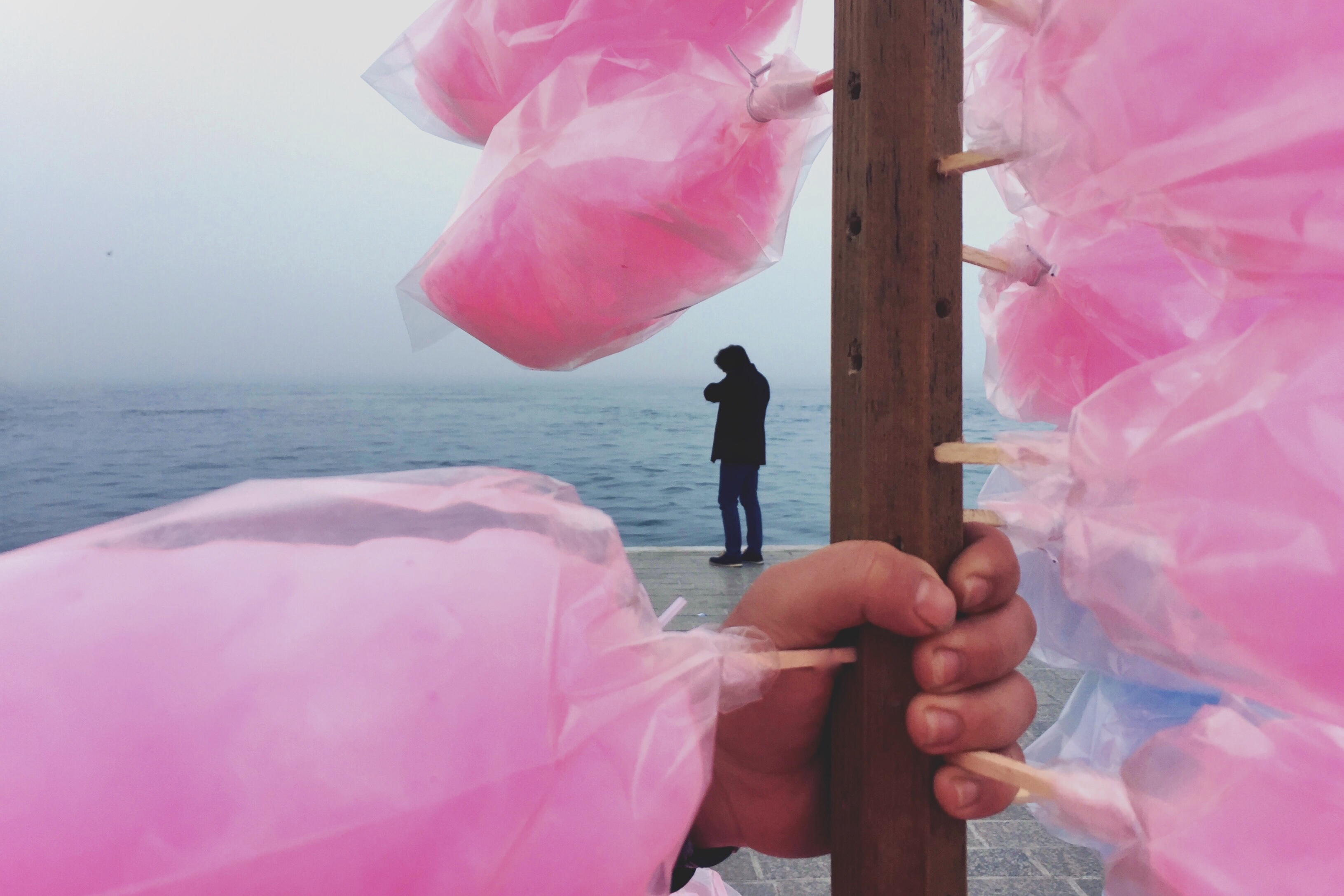
    Kadıköy is how the large, crowded and cosmopolitan district of the Anatolian side of Istanbul is known. It is a laid-back residential neighbourhood on the city’s Asian shore, and its port is very lively and dynamic at every hour of the day. Because of this, it’s hard to find quiet spots behind the chaos of the district itself.

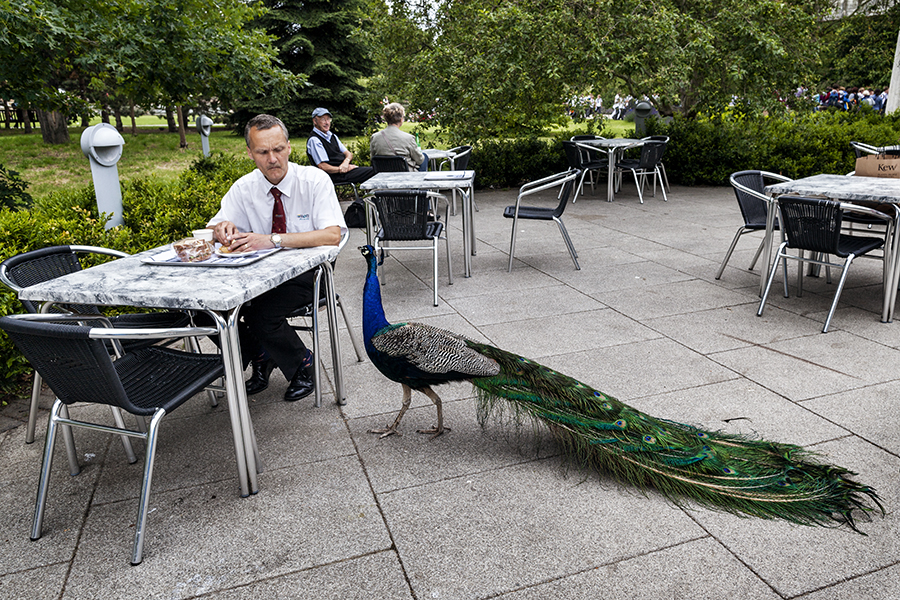
    «On the Waterfront» is a photography series born when the fog covers the port, and fewer people are to be found on the street. Then, the author tries to capture a more intimate side of Kadıköy. Not only human beings but every living creature – and sometimes statues – are part of the atmosphere. The consequent result is a story unveiling itself from every image in the series. Photography is one of the unique ways to connect the world and memorialise some unforgettable instants.
    «On the Waterfront» is still an ongoing series that the author plans on developing further to create a body of work that reflects and captures the life and spirit in Istanbul.

  • Marci Lindsay

    Marci Lindsay

    Marci Lindsay

    I currently live in Washington, DC, and am still rather new to shooting street photography. I went to college and then started a short-lived career as a city planner in NYC, and if anyone had told me then that I would soon be in Iowa raising four kids, I would have told them they were looking in the wrong crystal ball. We moved every few years, hitting suburbs in Virginia, New York, and Austin. I hope I am now finally and permanently a city dweller again, and also that I will continue to be able to see the world, as I was happily doing in pre-Covid days.

    [thb_button_text link=”url:https%3A%2F%2Fwww.instagram.com%2Fmarcislindsay|title:Marci%20Lindsay%20Instagram|target:%20_blank|rel:nofollow”]
    [thb_button_text link=”url:http%3A%2F%2Fwww.marcislindsay.com|title:Marci%20Lindsay%20Website|target:%20_blank|rel:nofollow”]

    About The Collection…

    I fell in love with street photography when I was a child, long before I knew it had a name. My parents had exactly one photo book, and it included work by the likes of Elliott Erwitt, Helen Levitt, Robert Doisneau, Garry Winogrand, and more. Later, studying in Paris, I spent money I didn’t have on a book of Magnum photographers’ work. But it wasn’t for another 35 years that I took up the challenge of photographing in the streets myself!


    These photos reflect my version of holding up a mirror to the world I see and capturing moments that most people would never notice. To me they are far more interesting—and funnier—than anything we could make up. I am drawn to ordinary people doing ordinary things. To me, it’s all extra- ordinary—gesture, connection, humor, and our workaday lives. We humans are so much more the same than we are different, and hopefully my photos remind people of that.

  • Subhran Karmakar

    Subhran Karmakar

    Subhran Karmakar

    I am a street photographer based in India. I have a Mass Communication background in my education and since my university days I practice this style for a few years now and the reason behind my starting was I can always do it whenever I want and wherever I want. I don’t have any high requirement for devices, I always use a point-and-shoot camera or sometimes an old iPhone. Alongside I also do Graphic designing. I shoot in the early morning and then start working after coming back home. On weekends I spend my whole day outside, having good food and shooting.

    [thb_button_text link=”url:https%3A%2F%2Fwww.instagram.com%2FSubhrankarmakar|title:Subhran%20Karmakar%20Instagram|target:%20_blank|rel:nofollow”]
    [thb_button_text link=”url:https%3A%2F%2Fwww.flickr.com%2Fphotos%2F186934717%40N04%2F|title:Subhran%20Karmakar%20Website|target:%20_blank|rel:nofollow”]

    About The Collection…

    I believe there are so many things to photograph every day and everywhere. A little creativity and attention are needed to spot those moments and create them in our way. As a photographer, I have realized over time that, if we enjoy seeing there is no boring day, but it’s very important to see.


    These pictures are from different parts of India and mostly Kolkata. I roam around my city almost every day and also I travel a lot. In street photography, I have a storytelling approach. Whenever I enter a scene, there is always a curiosity in my mind or let’s say many questions. I freeze the moment when I get the answer.

  • Bartosz Świątnicki

    Bartosz Świątnicki

    Bartosz Świątnicki

    I was born in 1982 in Warsaw, where I live till today.

    I work in the banking sector. Four years ago, I realized that I have a big need to do something creative. I’ve always loved cinema, especially films which made a visual impression on me, so photography was a logical choice.

    In the beginning I was documenting my surroundings. I was taking pictures of places I’ve been visiting, pictures of my family and friends.

    I’ve discovered street photography very fast. Since that time, I’ve been fascinated in it and my camera is always with me. It is a very addictive and exciting activity which became a very important part of my life.

    I am a finalist of the ‘Moment street photo awards and finalist of the Italian street photo festival.

    [thb_button_text link=”url:https%3A%2F%2Fwww.instagram.com%2Fbartekswphoto%2F|title:Bartosz%20%C5%9Awi%C4%85tnicki%20Instagram|target:%20_blank|rel:nofollow”]

    About The Collection…

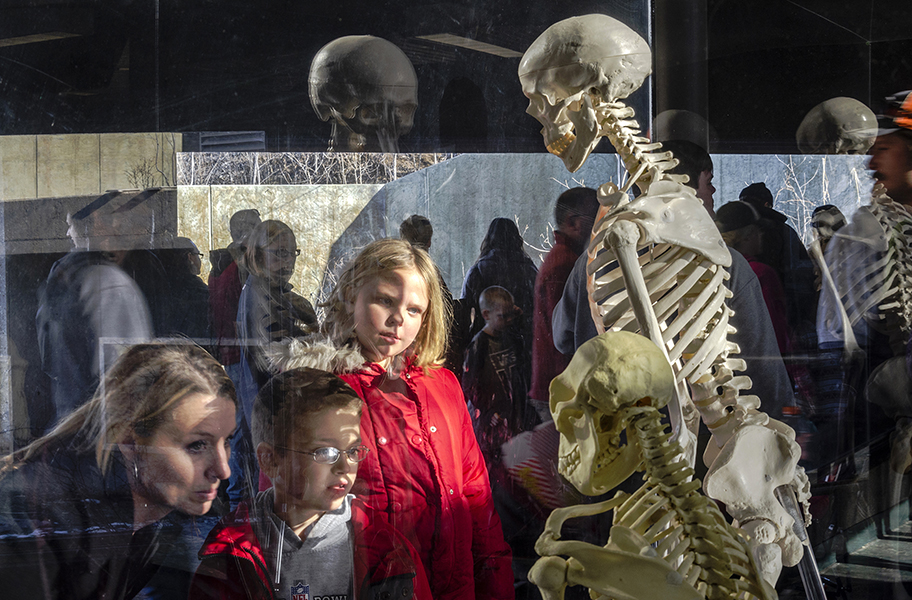
    The photographs in this collection, have been taken in my home town Warsaw and in other parts of Europe. Combining seemingly not matching elements makes it surprising, humorous, sometimes even surreal. In a familiar space I am trying to sense the potential of less obvious scenes and notice correlations, which are not visible to everyone at a first glance.

  • Kevin lcabales

    Kevin lcabales

    Kevin lcabales

    He is Kevin Icabales. A Filipino street photographer from Bacoor, Cavite, Philippines. He is also a professional real estate photographer, event photographer, and freelance photojournalist for Pond News Asia.

    His street photography works were exhibited in various countries such as the Philippines, Italy, Germany, Romania, India, and Ukraine. He is the winner of the Italian Street Photo Festival 2019 (Single Photo category) and his works can be seen in known &  publications such World Street Photography Book 5, World Street Photography Book 6, Eyeshot Magazine, Street Sweeper Magazine, Street Photography Magazine, and ProgressivE-zine.

    [thb_button_text link=”url:http%3A%2F%2Fwww.instagram.com%2Fk.icabalesphotography|title:Kevin%20lcabales%20Instagram|target:%20_blank|rel:nofollow”]
    [thb_button_text link=”url:http%3A%2F%2Fkicabales.myportfolio.com|title:Kevin%20lcabales%20Website|target:%20_blank|rel:nofollow”]

    About The Collection…

    “Interesting Silhouette Mysteries” collection will always catch your interest. There is a feeling of euphoria and some of it, you will feel nostalgic. The drama that silhouettes show lures our eyes and minds to stop and assess what the scene is all about. It’s time for you to witness and feel every photo included in this collection. Have an awesome viewing.

  • Max Sturgeon

    Max Sturgeon

    Max Sturgeon

    Max Sturgeon is a photographer and filmmaker who splits his time between Austin, Texas and Warsaw, Poland.  Working on film and TV projects as an assistant director for half the year enables him the flexibility to spend the rest of his time traveling overseas working on numerous ongoing long term photography projects.

    [thb_button_text link=”url:https%3A%2F%2Fwww.instagram.com%2Fmsturgeon3%2F|title:Max%20Sturgeon%20Instagram|target:%20_blank|rel:nofollow”]
    [thb_button_text link=”url:http%3A%2F%2Fwww.maxsturgeon.com%2F|title:Max%20Sturgeon%20Website|target:%20_blank|rel:nofollow”]

    About The Collection…

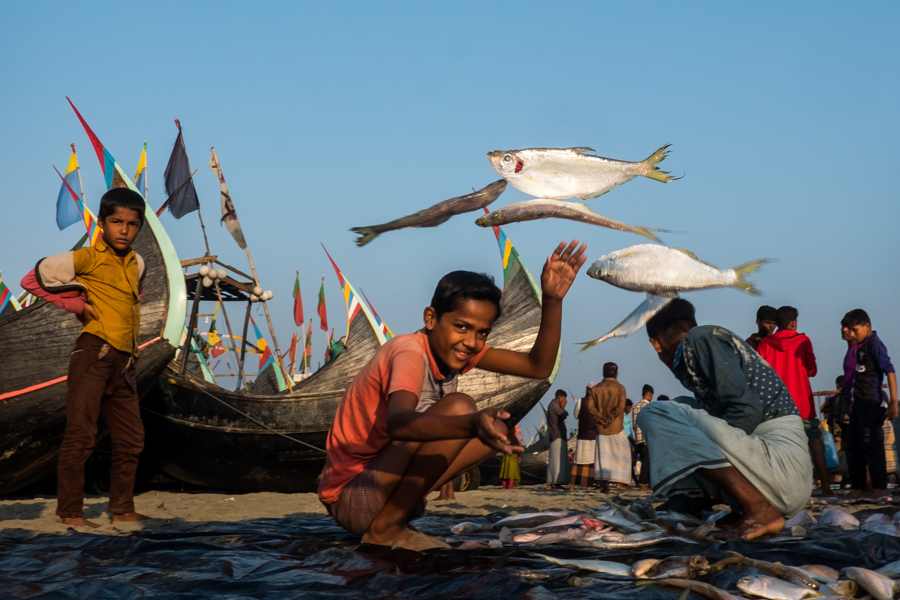
    To outsiders, the region around the Bay of Bengal can best be described as overwhelming.  Exotic to even the most experienced traveler it is an assault on the senses: the noise, the smells, the vibrant colors, the seemingly never-ending crowds pushing against you.  For many it can become too much, but the chaos is also what makes it so special and unique.  Life in the streets can be felt and seen like nowhere else – so alive and vibrant.


    The title of my project “Of A Different Stripe” refers to the uniqueness and strangeness of this region, at least to outsiders.  The photos I’ve captured are not staged or posed, here there is no need.  In a land of countless Gods and languages, the streets are theater, the performances one of a kind.  I’ve done my best to capture this chaotic beauty.

  • Alex Almeida

    Alex Almeida

    Alex Almeida

    I am a Brazilian musician who later became a journalist and photographer. I was born in 1973 in the seaside city of Santos, also known as “Pelé’s home”. Since my young undergrad years, I have journeyed into the heartlands of Brazil driven by curiosity and awe as I discovered the cultural cauldron treasure secularly hidden and cut from broadcasts and the midiatic agenda. My excursions through the fluvial roads of the forests or the desolate whereabouts of faraway towns in the Brazilian North and Northeast were nearly as exhausting as they were richly rewarding. I have headed my life northward, into the many Amazons that are still hidden in the heart of a colorful, continental yard where I stroll to find company and pleasure watching its vivid parade of resistance.

    [thb_button_text link=”url:https%3A%2F%2Fwww.instagram.com%2Falexalmeidafoto%2F|title:Alex%20Almeida%20Instagram|target:%20_blank|rel:nofollow”]
    [thb_button_text link=”url:http%3A%2F%2FWWW.ALEXALMEIDAFOTOGRAFIA.COM.BR|title:Alex%20Almeida%20Website|target:%20_blank|rel:nofollow”]

    About The Collection…

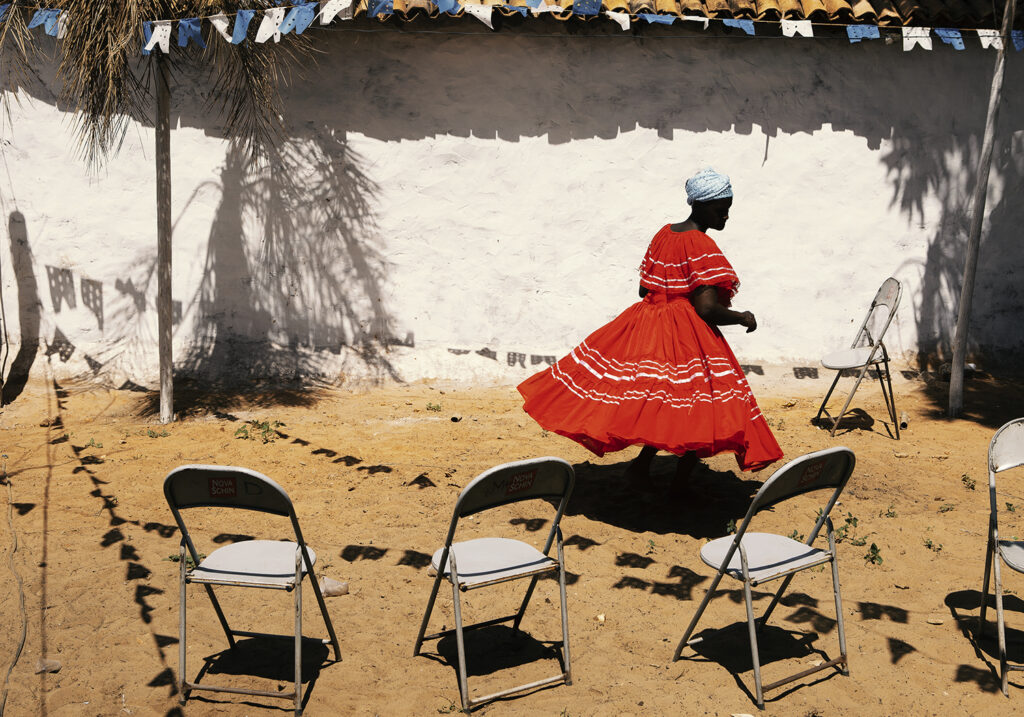
    The “ATLANTICO NEGRO” series was devised from my experience in the peripheral cultures of big Brazilian cities as well as the plunge into the depths of the Amazon rainforest, mostly renowned for its wildlife and vegetation, however equally vast in its human mosaic.


    This universe referred to as “minorities” has been historically oppressed and erased in Brazil both by the protection neglect of the original native peoples and the absence of the historical atonement owed to the peoples of the African diaspora.


    In the management of their dignified survival, these communities today claim their place of belonging in a new Brazil, where transformation seems to spring from the colors and the beauty of their rituals, which are arrayed in a brave and urgent yell of resistance.

  • Simon Kossoff

    Simon Kossoff

    Simon Kossoff

    These images are a search for kind of personal orientation between the dream or idea of a place and my actual experience of it in reality. They can be described as a collection of psychic coordinate points which I have plotted between the imagined America I brought with me from England and the real America I found on my arrival in 2008. These images are half truth and half fiction. They are a psychogeography. Filled with personal symbolism and tangled with influences so old they were already part of me long before this journey ever began.

    [thb_button_text link=”url:%20https%3A%2F%2Fwww.instagram.com%2Fspkossoff%2F|title:Simon%20kossoff%20Instagram|target:%20_blank|rel:nofollow”]

    About The Collection…

    The compulsion to travel, to move from one place to another, has been with me my whole life. Whether it be local, national or international, I have always found myself either in motion or, if not, I have been dreaming about it. Paradoxically, it has been in the periods of dreaming that Agoraphobia, (which Google defines as “Extreme or irrational fear of entering open or crowded places, of leaving one’s own home, or of being in places from which escape is difficult”) has gripped me and, at times, crippled me. These photographs are my continued (once secret) revolt against it in the United States of America today, despite recent quarantines.

  • Filip Machač

    Filip Machač

    Filip Machač

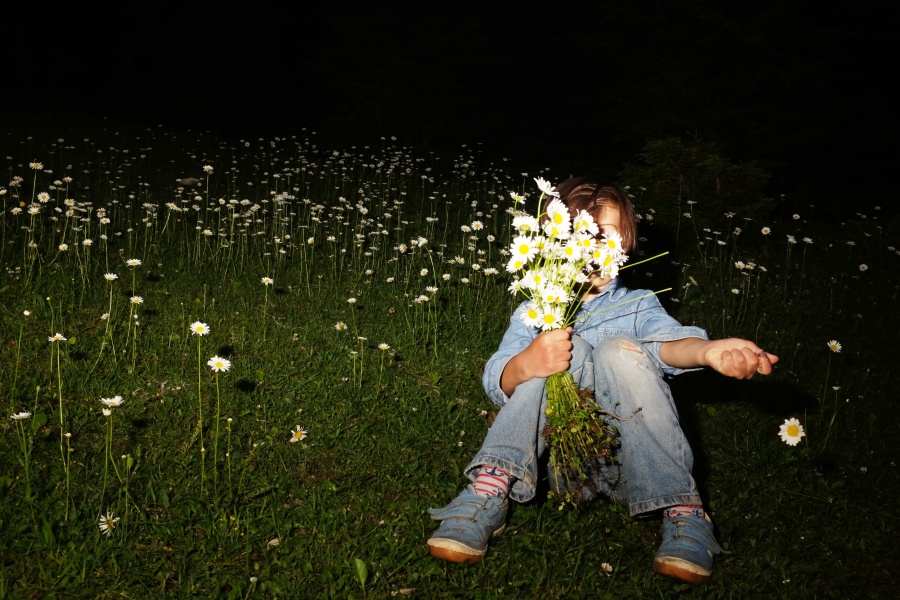
    I was born in 1984 in a small town in the Czech Republic. Since 2013, I have lived in Berlin, Germany. I started taking photos in 2012. In the beginning, I worked with photography on a conceptual level, using it as a medium for variuos art installations. Now, I try to work without the intention to document anything, nor to follow or develop any specific idea. In my last works I´m interested in how the photos can carry and develop their messages and meanings themselves without the authors conscious intention.

    Candid Photography is for me much more than a tool, it is a kind of intuitive communication with the things that surround me, where the process of “making” a photo is an kind of understanding how all things are connected.

    [thb_button_text link=”url:https%3A%2F%2Fwww.instagram.com%2Ffilip_machac_%2F|title:Filip%20Macha%C4%8D%20Instagram|target:%20_blank|rel:nofollow”]
    [thb_button_text link=”url:http%3A%2F%2Fwww.filipmachac.com|title:Filip%20Macha%C4%8D%20Website|target:%20_blank|rel:nofollow”]
  • Liliana Ranalletta

    Liliana Ranalletta

    Liliana Ranalletta

    Graduated in Modern Literature, I studied photography with many valid teachers.
    Before approaching the street photography I explored different types of photography and especially the macro that helped me in increasing my observation skills.
    I dedicate most of my shots to the “street” and to the people who live there, endless source of inspiration.
    I love travelling and I realized that every corner of the world has a different taste for me when viewed through the lens.
    In addition to street photography I am dedicated to some jobs in social work.
    My camera has become my inseparable mate of which I could never live without in order not to regret having missed an interesting shot.

    [thb_button_text link=”url:https%3A%2F%2Fwww.instagram.com%2Fliliana_ranalletta|title:Liliana%20Ranalletta%20Instagram|target:%20_blank|rel:nofollow”]
    [thb_button_text link=”url:https%3A%2F%2Flilianaranalletta.it%2F|title:Liliana%20Ranalletta%20Website|target:%20_blank|rel:nofollow”]

    About The Collection…

    The ability to freeze the instant and the unusual, gives me an indescribable feeling. The interest in humanity led me to investigate the everyday life, not only on the street, but wherever there could be an interaction among people. Besides freezing images of faces and situations, it’s nice to be able to tell a story by feeling and communicating emotions. Today photography for me is an urgency, a passion, an encounter, a means to investigate the reality that surrounds me.

    My object of photographic observation is above all the human being and the environment in which he lives. I like to share

  • Sourojeet Paul

    Sourojeet Paul

    Sourojeet Paul

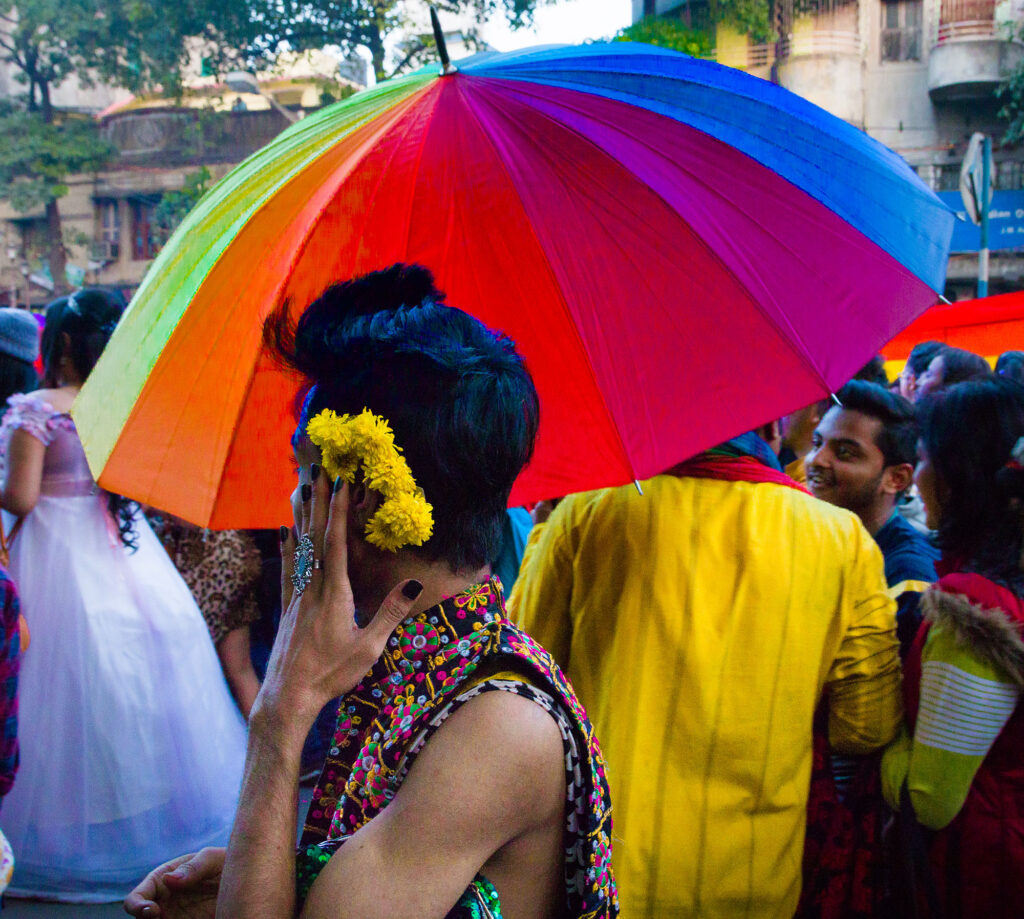
    Hi, Sourojeet here. I’m photographer based out of Kolkata,India.Recently I’ve developed a photoeassy on the lgbtq community of india and pride walk celebration.I’ll be highly obliged if you allow me a little space on your prestigious magazine. Sending you the story with some of the images.Please have a look.

    [thb_button_text link=”url:https%3A%2F%2Fwww.instagram.com%2Fsousonai|title:Sourojeet%20Paul%20instagram|target:%20_blank|rel:nofollow”]
    [thb_button_text link=”url:https%3A%2F%2Fsourojeetpaul.wordpress.com%2F|title:Sourojeet%20Paul%20Website|target:%20_blank|rel:nofollow”]

    About The Collection

    “It is my body and my wish… be gone demons.”


    The individuals of LGBTQ community have been relentlessly persecuted by society for their sexual orientations and method of pleasures.They’ve always been a prey of the tyrannical gaze of the society and even in the 21st century they face social taboos and judgemental behaviour.


    The work looks closely at the LGBT community in eastern India,often projecting a world devoid of restrictive laws and social taboos that the community regularly comes up against.For a community whose voice is often marginalised


    Homosexuality in India has been a subject of discussion from ancient times to modern times. Hindu texts have taken positions regarding the homosexual characters and themes Rigveda,one of the four canonical sacred texts of Hinduism says Vikriti Evam Prakriti (meaning what seems unnatural is also natural),which some scholars believe recognises homosexual dimensions of human life, like all forms of universal diversities.Historical literary evidence indicates that homosexuality has been prevalent across the Indian subcontinent throughout history, and that homosexuals were not necessarily considered inferior in any way until about 18th century during British colonial rule.


    The Arthashastra, an ancient Indian treatise on statecraft, mentions a wide variety of sexual practices which, whether performed with a man or a woman, were sought to be punished with the lowest grade of fine. While homosexual intercourse was not sanctioned, it was treated as a very minor offence, and several kinds of heterosexual intercourse were punished more severely


    Homophobia is prevalent in India.Public discussion of homosexuality,bisexuality and trans orientation in India has been inhibited by the fact that sexuality in any form is rarely discussed openly. There may be much higher statistics for individuals who have concealed their identity, since a number of  Indians,categorising in lgbtq community are living in the closet due to fear of discrimination.


    Section 377 of the Indian Penal Code (IPC), dating back to 1861, makes sexual activities “against the order of nature” punishable by law and carries a life sentence.  Before striking down the colonial-era law several organisations have expressed support for decriminalising homosexuality in India, and pushed for tolerance and social equality for lesbian, gay, bisexual, and transgender people. India is among countries with a social element of a third gender, but mental, physical, emotional and economic violence against LGBT community in India prevails.

    Lacking support from family, society or police in every moment of their life. They are treated like untouchables and also neglected in getting proper health care facilities,basic education,secuirity.Many gay rape victims do not report the crimes.They’ve always been a prey of the tyrannical gaze of the society,Their views and ideology about sexual preferences often contradicts with the mass and they are mobbed and lynched publicly taking up the law and order in the hands of the public. Various Hindu organisations, based in India and abroad have supported decriminalisation of homosexual behaviours.

    While there’s always a univocal unity of religious leaders in expressing their homophobic attitude.Usually divisive and almost always seen tearing down each other’s religious beliefs,but this time leaders across sections came forward in decrying homosexuality and expressing their solidarity with the judgment of decriminalisng the colonial period law in 2018.


    On the other hand the majority of Indians bearing the same stereo typical mentality were dead against of the decrying of the law.According to their verses Homosexuality is a crime according to scriptures and is unnatural. People cannot consider themselves to be exclusive of a society… In a society, a family is made up of a man and a woman, not a woman and a woman, or a man and a man. If these same-sex couples adopt children, the child will grow up with a skewed version of a family. Society will disintegrate. If we are to look at countries in the West who have allowed same-sex marriages, you will find the mental tensions they suffer from.

  • Bas Losekoot

    Bas Losekoot

    Bas Losekoot

    Bas Losekoot is an artist and photographer whose work addresses socio-cultural issues in cities around the world. He uses cinematographic apparatus and techniques to challenge the understanding of everyday urban realities, as well as the limited narrative potential of documentary photography’s representations of truth. Though his practice combines concepts of mobility, sociology and urban theory, he uses his intuition to visualise the human experience in modern megacities.

    He holds a BA in Fine Art Photography from the Royal Academy of the Arts in The Hague and an MA in Photography and Urban Cultures from Goldsmiths, University of London. He has exhibited internationally at galleries, museums and festivals, including BOZAR, Belgium; Voies-Off/Les Rencontres d’Arles, France; Jimei x Arles, China; Kaunas Photography Gallery, Lithuania, FotoIstanbul, Turkey; LagosPhoto, Nigeria; and Unseen Photo Fair, the Netherlands. A variety of international media outlets have featured his work, including The New York Times LENS Blog, The New Yorker Photo Booth, CNN Editions, The Guardian, Die Zeit, NRC Handelsblad, IMA Magazine and the British Journal of Photography.

    [thb_button_text link=”url:https%3A%2F%2Fwww.instagram.com%2Fbaslosekoot|title:Bas%20Losekoot%20Instagram|target:%20_blank|rel:nofollow”]
    [thb_button_text link=”url:http%3A%2F%2Fwww.baslosekoot.com|title:Bas%20Losekoot%20Website|target:%20_blank|rel:nofollow”]

    About The Collection…

    Since the beginning of the Urban Millennium, we are facing the biggest wave of urbanisation in human history. In 2011, Bas Losekoot started a visual exploration on the consequences of growing population density. He selected nine fast growing megacities around the world that hold 20 million inhabitants, or will reach this number in the next couple of years. Who are these anonymous urban citizens in these cultural dynamic cities that seem to be heterogeneous? What does this excessive growth do with our sense of personal space in the public domain?


    The cities in which he worked are “on the move” and its inhabitants are “in transit”. This in-between-ness is representing the current urban state of mind of unfocussed attention of city dwellers. Metropolitan life over-stimulates our senses to which we react with indifference and blasé attitude. With the help of telephones, headphones and sunglasses, we detach from space and reality.


    The metropolis life is the modern version of the fight of the primitive man against nature. Where we normally had to run for our lives we now have to run for our jobs. We are not running for life-threatening danger but danger for exclusion. The struggle for survival remains the same.


    The anonymity of the man in the crowd is an important part of the metropolitan experience. There are unwritten social rules which provide each individual with a certain space and freedom, as long as we leave the others alone. Within certain boundaries, it is allowed to watch and observe, to look at something in public that is actually private.


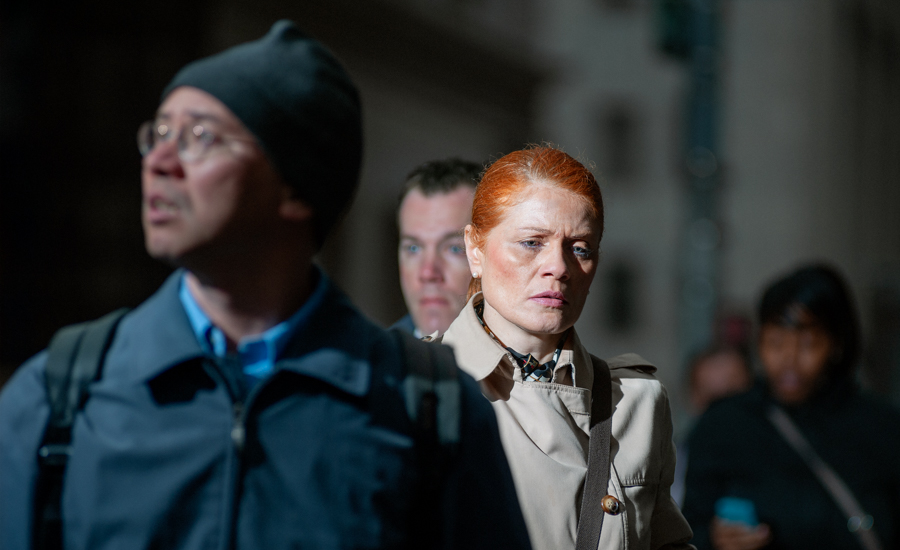
    The project includes photography from the cities of New York, São Paulo, Seoul Mumbai, Hong Kong, London, Lagos, Istanbul and Mexico City. Losekoot photographed one month in each of these cities, placing flashlights in the most crowded streets of the city, creating an uncanny reality. These lights emphasise the capacity of photography to freeze movement, turning the mise-en-scène of urban dwellers into a fascinating choreography. By adding drama to the trivial, Losekoot is painting the theatre of the real life, where small gestures become dramatical events. The images show us details of everyday life that normally remain unnoticed. Like film stills, they are a fragment of a bigger picture; an extended moment out of an urban continuum.

    Key Questions:
    • The street is a pressure cooker for human expression and development, how do we cope with the amount of visual stimulations in the street?
    • Is the growth of mega cities providing a fundament for human happiness?

    Bas Losekoot Quote:
    “I always considered the street a stage where we, the actors, are performing in the decor of the city. In daily life, we are performing social roles and we wear the appropriate mask for that. While commuting the city, we drop this mask and replace it for another one, the mask of ‘self-protection’. I am interested in this mask, because I believe this it gives us a lot of information of the self and the construction of identity. On the street, it seems that  we perform ‘avoidance practice’; modern city life gets us over-stimulated, and we detach from space and reality.”


    Press Quotes:

    Shining a flashlight on coming and going New Yorkers, he created photographs with a heightened sense of drama that freeze moments of movement, halting the frenetic pace of New York’s commuter culture. The series also explores how, counterintuitively, the commute can be a time for introspection and psychological divorce from reality.” Ruby Goldberg / The New Yorker


     “Exploring the dynamics of the streets. Capturing a moment in time that you can delve into and resonate with on a very human level. Losekoot asks thoughtful questions of society by holding up a mirror and inviting honest examination.” Lyric Lewin / CNN Editions


    “Bas Losekoot’s ‘Urban Millennium Project’ shows us Streetphotography Reinvented”

    – Julien Bolle / Réponses Photo


    “Bas’ brightly lit street scene is arresting.  It’s a comment on the anonymity of an individual in our huge urban jungles. For a candid street image it’s incredibly sharp – it almost feels staged, with studio lighting rigs just out of view. It’s a mesmerising image that I enjoy both aesthetically, and through what it makes me feel about our modern world.” – Patrick di Nola / Getty Images


    Bas captures that decisive moment of almost-interaction in our busy urban environments, where two people almost connect, or in this case almost collide, in his own brilliantly distinctive style.” – Olivia Arthur / Magnum Photos


    “Evoking the spirit of Italo Calvino’s (1978) “Invisible Cities” in which cities are imagined in Marco Polo’s journeys through them, “Out of Place” probes the cities of the imagination. The cities he photographs are urban landscapes caught in the free fall of rapid change. In each place people -the architects of the individual imaginary- are photographed against the others and fragments of their city. Who knows what images and memories of the city they navigate it with? But we are invited to speculate, to stand in their place.” – Caroline Knowles / Professor of Sociology and Director of the Centre for Urban and Community Research (CUCR)