Category: News

  • Double Disco à Paris – Oui!
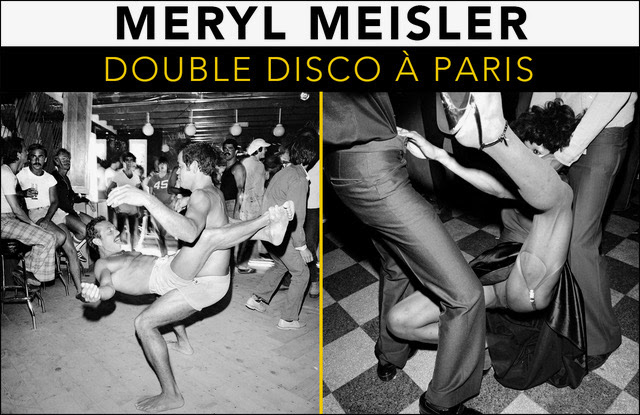
    Double Disco à Paris – Oui!

    Dancing at The Monster During Bartenders’ Weekend, Cherry Grove, Fire Island, NY, September 1977 Ripped Stocking and Garter Dance Trio at GG’s Barnum Room, NY, NY, December 1978
    MERYL MEISLER: STUDIO 54 & MORE
    Polka Galerie
    March 21 – May 17, 2025
    12, rue Saint-Gilles, 75003 Paris, France
    Curator: Adélie de Ipanema, Director
    For more information contact Anaïs Raffin 
    Vernissage Thursday, March 20, 18h – 08h30. Meryl will be present.
    Rejected From Studio 54 No No (With JudiJupiter), Studio 54, NY, NY, October 1978 Man In The Moon With An Animated Spoon, Studio 54, NY, NY, August 1977

    Echoing the exhibition “Disco, I’m coming out” at the Philharmonie de Paris, Polka invites you to rediscover the roaring twenties of this musical genre as committed as it is innovative with the work of New Yorker Meryl Meisler. A chronicler of the disco effervescence at the end of the 1970s, the photographer has delved back into her archives and tells us about the nightlife of Manhattan’s mythical nightclubs, including the famous “Studio 54”.


    DISCO, I’m Coming Out
    Philharmonie de Paris Musée De La Musique 
    On exhibit through August 17, 2025
    Curators: Jean-Yves Leloup, commissaire & Marion Challier, commissaire-associée
    221 avenue Jean-Jaurès, 75019 Paris, France
    For more information contact Hamid Si Amer

    Crucify, Star Wars Party, Fire Island Pines, NY, August 1977 Two Women Embrace on Floor Next to JudiJupiter's Legs, Les Mouches, NY, NY, June 1978

    Casting aside the clichés, this exhibition does justice to the dazzling power of disco – a genre deeply rooted in the history and culture of black America, descended from soul, gospel and funk.

    A collection of audiovisual archives, photographs, instruments, costumes, design objects and works of art underlines the political and festive dimension of this music, which brought different minorities and social classes to the dance floor, all united in the same hedonistic impulse. Artists include: Meryl Meisler, Andy Warhol, Peter Hujar, Faith Ringgold, Tom Bianchi, Michael Abramson, Tina Paul, Pacifico Silano, and Bill Bernstein.

    Care / Condition / Control
    601 Art Space
    On exhibit through April 27, 2025
    Curator: A.E. Chapman
    88 Eldridge St., NYC, NY
    For more information contact Sara Shaoul

    Mom Getting her hair Teased at Besame Beauty Salon North Massapequa, NY, June 1976 BUTCH FEM BUTCH, Pride March, NY, NY, June 1977

    Humans are obsessed with hair. And hair is never just hair. Intensely personal, it is quite literally how people frame themselves to signal their desired appearance to others. Individuals use hair as an expressive language to convey both their individuality and collective affiliations, and societies in turn regulate hair as a means to enforce and maintain social control, allegiance, and order. Be it conforming or rebellious, hair reflects and negotiates the social contracts between individuals and gender, racial, subcultural, and religious identities. Artist include: Meryl Meisler, John Coplans, Sara Messinger, Richard Prince, Cindy Sherman, and Melissa Stern.

    Recent Press

    Meryl Meisler could paraphrase this sentence: “It is to capture joy that I became a photographer.”
    LA FIÈVRE DES SAMEDIS SOIR – Portfolio
    M Le magazine du Monde, Clément Ghys

    “In the vast panorama of American documentary photography, Meryl Meisler ‘s work stands out as a vivid fresco of New York’s urban life in the ’70s and ’80s.”
    Le fotografie di New York di Meryl Meisler
    FOTOGRAFIA ARTISTICA, Giuseppe Santagata

    “Photos by Meryl Meisler, which orchestrate an astonishing dialogue between the euphoria of the clubs and the unsanitary streets of the Bushwick district”
    Avec sa nouvelle exposition, la Philharmonie ramène le “Disco” à ses origines politiques
    Harper’s BAZAAR FRANCE, Maxime Delcourt

    “the photographs of Meryl Meisler bear witness to the poverty and ghettoization of large American cities”
    À la Philharmonie de Paris, la facette politique du disco
    Beaux Arts, Juliette Collombat

    Meryl Meisler, who captures with humanism and irony the flamboyant New York fauna of the small shady bar to the celebrity of Studio 54″
    Le phénomène disco : «Cette musique n’est pas militante, c’est une caisse de résonance»
    Madame Figaro, Virginie Huret

    Fire Island Ice Palace membership cards are on display, while photographs by Meryl Meisler document the holiday spirit.”
    « Disco. I’m coming out » : Boogie Nights
    Politis, Pauline Guedj

    “the dancers captured by the lenses of Michael Abramson or Meryl Meisler can enter such a state of trance and abandon”
    L’éternel retour de la soirée disco
    philosophie magazine, Victorine de Oliveira

    “Street Walker, the latest monograph by Meryl Meisler, is a stunning exploration of social change, cultural diversity, and creative expression”
    Book Excerpt: Meryl Meisler Street Walker
    Hot Topic: Street Photography Behind The Lens with Meryl Meisler
    Sanctuary, Myrna Beth Haskell

    “Her passion for dance and nightlife remains at the heart of her art, reminding us that every moment, every smile, and every burst of laughter has the potential to become a timeless work”
    La passion des samedis soir à New York à travers l’objectif de la photographe Meryl Meisler
    Taste of USA, Thomas

    Meryl Meisler’s New York is at the same time decadent and intriguing.”
    Meryl Meisler e sua Nova York decomposta
    CULTPICKS Pitadas De Cultura

    “Photography can be a way of life if you want, and Meryl has embraced that way of life with gusto.”
    Spotlight: Meryl Meisler – A closer look at the street walking photographer
    FLAKPHOTO, Andy Flak

    “Meisler’s camera authentically documented this scene, capturing not only the excesses, but also the humanity behind the glitters, dusts, and lights.”
    Meryl Meisler retrató los brillos y las sombras de los clubes nocturnos de Nueva York
    CULTURA INQUIETA

    “[outrageously] brilliant photography – one of New York’s finest visual storytellers, the extraordinary and quirky Meryl Meisler.”
    EXPOSED In The Studio Darkroom With Meryl Meisler
    The Pictorial List, Karen Ghostlaw Pomarico

    Orange, Pink, Turquoise, and Gold Queen on Floor Studio 54, NY, NY, August 1977
  • What Is Street Photography Today?

    What Is Street Photography Today?

    The street and the camera were destined to collide. In retrospect, it seems obvious that the first photographs that managed to freeze objects in motion would be taken on the bustling streets of newly industrialized nineteenth-century cities. That era belonged to the crowd, and to the savvy navigators of the endlessly renewable theater of sidewalks and boulevards the world over, those flaneurs whom the poet Charles Baudelaire, in his essay “The Painter of Modern Life,” pegged as one of the nineteenth century’s most fertile archetypes. Baudelaire called for an art that would dive headfirst into the bracing water of the everyday. Impressionism followed, with its gauzy tableaux of bourgeois life, but in time it became clear that it was not the likes of Baudelaire’s titular, now-forgotten painter who were best suited to document the upheavals of the modern era. The pace of everything was quickening, and the newfangled camera was the perfect tool to slow things down, trapping the chaos in amber. Photographers became the ultimate flaneurs, shaping our collective vision as they wandered through the world.

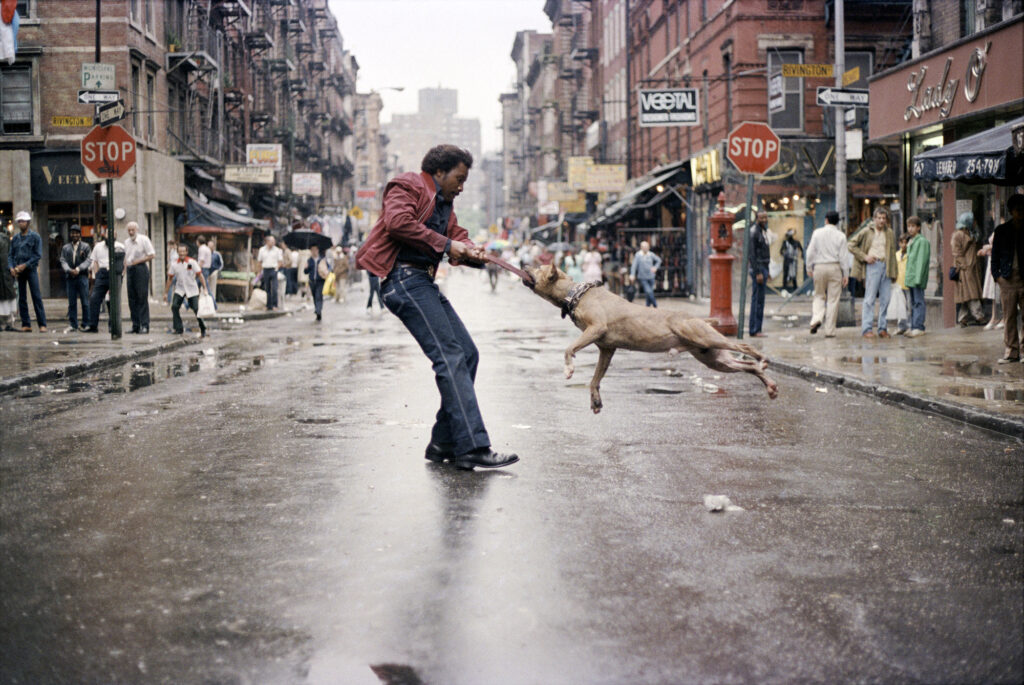
    Man and Dog on the Lower East Side, 1980 ©Jamel Shabazz

    Street pictures soon became practically synonymous with serious photography. The introduction of the fast, handheld 35mm Leica, in 1925, disencumbered roving shutterbugs from their bulky gear, allowing artists like Alexander Rodchenko to make a new kind of image that was as dynamic and spontaneous as the streets themselves. After that, it was off to the races. In 1952, inspired by the Surrealists’ obsession with chance encounters and striking juxtapositions, Henri Cartier-Bresson coined the indelible phrase “the decisive moment.” There followed Robert Frank’s Beatnik-era, dirge-like book The Americans; the epochal exhibition New Documents, featuring Diane Arbus, Lee Friedlander, and Garry Winogrand, at MoMA, in 1967; the Pop art­­–adjacent work of William Eggelston, which carved out space for previously déclassé color photography in hallowed museum halls; and, finally, the postmodern turn in the late 1970s, which laid the groundwork for the innovative scenes by Philip-Lorca diCorcia and Jeff Wall, deploying what were by then well-worn street photography tropes in the service of creating cinematic images that blended fact and fiction or were wholly fabricated for the camera.

    Jean and Chris, East Village, New York City, 1995 ©Janette Beckman
    White Dresses, St. Petersburg, 1995 ©Alexey Titarenko
    Pretty Woman, 2017 ©Daidō Moriyama

    Or anyway, that’s the usual history of street photography, made up of mostly white male Westerners. While I could have mentioned the work of photographic giants like Helen Levitt, Manuel Álvarez Bravo, Vivian Maier, Gordon Parks, Daidō Moriyama, Mohamed Bourouissa, or others who have a rightful place in the street photography canon, this was pretty much how the story was relayed to me, as I studied photography in college. Clearly, that blinkered history needed to make room for some heterodox voices.

    A sprawling new exhibition, We Are Here: Scenes from the Streets, currently on view at the International Center of Photography (ICP), in New York, has this aim. The show, curated by Isolde Brielmaier, with the assistance of Noa Wynn, features thirty-four artists working in twenty-two different countries. Some of the work stretches back as far as the 1970s (in a show-within-a-show that the curators have dubbed “On the Shoulders of Giants,” which focuses on New York street photography), but the lion’s share of the pictures on view are from the last ten years or so. Arranged in four broad categories—street style, neighborhood and community, protest and advocacy, and urban landscapes—We Are Here strives to provide a picture of the state of street photography now(ish), and to tell us something about the state of our world as a result.

    , Kids climbing a fence in an abandoned lot, Lower East Side, NYC, from the series Street Play, 1978 ©Martha Cooper

    We Are Here is admirably diverse, and many of the pictures are great. Highlights include the lush, wacky, fashion-forward work that Feng Li has been making on the streets of Chengdu, China; Romuald Hazoumè’s cheeky sculptural typologies of laden bike riders in Benin; the oneiric pictures of 1990s Saint Petersburg by Alexey Titarenko; a collection of era-defining 1990s Japanese street-style pictures that Shoichi Aoki shot for his magazine FRUiTS; and exuberant pictures of children’s play in gritty 1970s New York by graffiti documentarian Martha Cooper, which elaborate on earlier projects by Helen Levitt and Arthur Leipzig. Yet the exhibition is also dogged by a nagging question: Is twenty-first-century street photography hopelessly outmoded?

    Street photographers fall into essentially three sometimes overlapping camps. First are the descendants of Cartier-Bresson, who stalk the sidewalks in the hope of catching some serendipitous urban gestalt, which is either compositionally gorgeous, weirdly poignant, funny, freighted with sociopolitical import, or some combination thereof. Second are those engaged in a long-term project of social stock-taking, like Walker Evans or Robert Frank, who use the street to a weave semi-personal narrative about the character of a time and place. (This place, historically, has been America, though there are notable exceptions to be found in projects like Paul Graham’s New Europe.) Third are those photographers who inflect their street photographs with their personal presence, whether formal or emotional, such that the line between the inner and outer world becomes hopelessly blurry: the photographic equivalent of New Journalism, with Diane Arbus and Lee Friedlander at the helm rather than Joan Didion and Tom Wolfe.

    Riot police officers fire teargas during clash with protestors outside Shum Shui Po police station in Hong Kong on 11 August, 2019 ©Lam Yik Fei
    Protesters at the Lekki-Ikoyi tollgate calling for an end to the rogue police unit, Special Anti-robbery Squad, Lagos, Nigeria, October 2020 ©Grace Ekpu

    Aside from the work in We Are Here that is best described as reportage—namely the pictures of protest movements grouped together under the “protest and advocacy” subheading—much of the exhibition consists of pictures that rehash previously extant styles of street photography, but in an era that can no longer be called modern. I’ll leave it to others to tell what our era could be rightly called—“postmodern” is entirely too retro—but we can be certain that the space that most exemplifies it is no longer the street. Perhaps, as the anthropologist Marc Augé argued in his 1995 book Non-Places: Introduction to an Anthropology of Supermodernity, it is instead one of the featureless spatial products of globalization—airports, supermarkets, shopping malls, chain hotels—that form a fractured, yet uncannily contiguous purgatory, scattered across the earth. More likely it is the space right under your nose, where you are reading this text: cyberspace.

    Given the pull that the Internet has over our daily lives, it is almost shocking how little technology shows up in the pictures on view at ICP. By my count, there are only five pictures in which smartphones even appear, and just two of these show people gazing into them, perhaps the most commonplace sight in any city anywhere. Beyond that, almost none of the images contain technological tells that they were taken anytime this century. On the production end, only Michael Wolf, who made a collection of found street photographs using Google Maps, has utilized technology that would be unfamiliar to the modernists. A feeling of anachronism prevails.

    Nonkululeko, 2003 ©Nontsikelelo Veleko
    from the series FRUiTS, 1998 ©Shoichi Aoki

    Even people’s manner of dress, which Baudelaire insisted was key to taking the temperature of any age, looks temporally fuzzy in the exhibition. Save for some bold, funky takes on traditional African garb captured by Trevor Stuurman in Dakar, Senegal, a few cutting-edge looks found in Feng Li’s pictures, and the presciently chic fashions captured in South African cities by Nontsikelelo Veleko twenty years ago, the clothes people wear are mostly a drab parade of generic causal wear, the fast fashion and sportswear slop that sloshes out of the globalized garment industry trough. The most futuristic looks in the bunch hail, paradoxically, from the past—Aoki’s pictures of Japanese youth taken nearly thirty years ago.

    Perhaps the former sense of technological anachronism is an indication that contemporary street photographers are averse to depicting the banalizing aspects of our technological society, which have steadily made the world uglier, and the public sphere less vibrant. (Even back in the 1990s, an aging Helen Levitt lamented: “Children used to be outside. Now the streets are empty. People are indoors looking at television or something.”) Maybe, similarly, street photographers avoid photographing excessively trendy fashionistas because they fear their pictures will be defined by the clothes they capture. Or the feeling that time is out of joint in this exhibition is a telling sign of the kind of cultural stagnation that Mark Fisher, citing the Italian philosopher Franco Berardi, called the “slow cancellation of the future.” Likely all of the above. But it is also the case that as we exited the modern age and migrated the dynamos of capital and social life online, the world has begun to mostly transform off stage, becoming governed not by the life of the street, but through subtle shifts in the digital pleroma.

    Untitled, Birjand, Iran, 2017 ©Farnaz Damnabi
    Screened Pictures X #90, 2018–19 ©Anthony Hernandez

    In some ways, this is an extension of an old problem. Walter Benjamin, in his 1931 text “A Little History of Photography,” complained that the photograph “can endow any soup can with cosmic significance but cannot grasp a single one of the human connections in which it exists.” To elaborate on this, he quotes Bertolt Brecht, who observed that “less than ever does the mere reflection of reality reveal anything about reality. A photograph of the Krupp works or the AEG tells us next to nothing about these institutions. . . . The reification of human relations—the factory, say—means that they are no longer explicit.” But, in ways that Benjamin and Brecht could scarcely have imagined, our situation has become even more abstract. If a photograph could reveal “next to nothing” about a world run by the factory system, consider how much less it must reveal about a world run by algorithms.

    Climat de France, Algiers, 2016 Courtesy the artist and Collective 220 ©Youcef Krache

    We now live in the era of the so-called black box, ruled by systems whose internal workings are opaque even to their creators. Our sociopolitical world is increasingly governed by social media algorithms which have sowed division and ignited civil unrest, either as the result of an unhappy accident of their flawed designs or through the malicious machinations of state actors and shady billionaires. (Even street protest movements, which We Are Here puts forward as triumphant engines of social change, have become social media–engineered phenomena, which rarely achieve their stated goals, and, conversely, give political ammunition to forces that oppose them.) As the filmmaker Adam Curtis, in his BBC documentary Hypernormalisation, and the journalist Vincent Bevins, in his book If We Burn: The Mass Protest Decade and the Missing Revolution, have both pointed out, the Internet age makes it easy to get people to the streets, but has not made it easier to figure out what to do after they get there, which is the tricky part). The strings of our economy are pulled by supercomputers running high-frequency trading algorithms like BlackRock’s Aladdin, which now manages in excess of twenty-one trillion dollars in assets, likely more than the GDP of any country on earth. The truth value of images themselves, and their impact, have never been more questionable, as we are fed a constant slurry of algorithmically optimized and increasingly artificially generated “content,” managed by vast server farms that are quietly sucking our aquifers dry and rudely shoving aside the pesky carbon emissions targets that stand in the way of promised progress. Soon, it seems, the whole of our reality might be shaped by our encounter with a fundamentally alien, super powerful AI. How can we possibly hope to capture this world from street level, using as blunt and as literal a tool as a camera? Perhaps we must return to Baudelaire’s plea for the creation of a contemporary vision of contemporary times, and try to chart a new way forward.

    We Are Here: Scenes from the Street is on view at the International Center of Photography, New York, through January 6, 2025.


  • IMAGENATION PARIS 2023

    IMAGENATION PARIS 2023

    ImageNation Paris


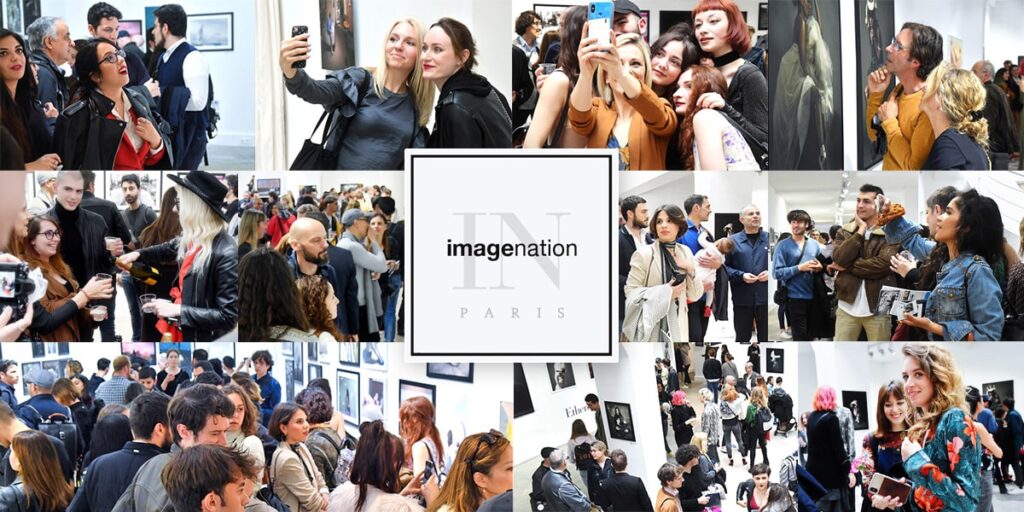
    From 10 to 12 November 2023, ImageNation will be back in Paris, the city that saw the birth of photography almost two centuries ago. Thanks to the many festivals and fairs, the French capital is, more than ever, the crossroads of the new trends. Over all, Paris Photo has seen attracting important collectors and art enthusiasts from all over the world. Along with this, during Paris Photo days, the city becomes an ideal stage for the photographic works of the most interesting international artists in dialogue with the audience.
    __________________________________________________________________________________________________
    Nathan LANDERS  •  Anna MULLER  •  Felix KAYSER  •  Salomé DECHAUD  •  Jacques MEZGER  •  Adina DAVIDSON  •  Alana CARTWRIGHT  •  Alina HAGER  •  Alizé JIREH  •  Alma HASER  •  Alvaro RODRIGUEZ  •  Amy LIDGETT  •  Anastasia LORIOLI  •  Ann-Louise SODERLUND  •  Anna LABELLE  •  Astrid JI  •  Bartek WALCZUK  •  Benny & MATAN  •  Carlo DIAMANTI  •  Cédric BENET  •  Célia PRIAT  •  Céline AIETA  •  Charlotte ASSAD-GRAZIANI  •  Chikashi YANAGI  •  Cindy KONITS  •  Claudia CABRERO MALAGA  •  Clement SIEGRIED  •  Cordelia LAWLER  •  Costanza SALINI  •  Cristian IACONO  •  Darina UMKA  •  Despina SPYROU  •  Didi VON BOCH  •  Dmytro BONDARENKO  •  Eddy PRADELLES  •  Emma HELENA  •  Eola MIN  •  Esther GEUSKENS  •  Estrella CARABALLO  •  Evan MURPHY  •  Fritzi SCHWARZBAUER  •  Giacomo TAZZINI  •  Guilhelm DIJOUX  •  Hannes CASPAR  •  Hector PALACIOS  •  Indra ARREZ  •  Ingrid JORAND  •  Jan KWAN  •  Joanna CHUDY  •  Joshua AMIRTHASINGH  •  Julia CASESNOVES BALLESTER  •  Kaisa Maria HOLLANTI  •  Karoliina BARLUND  •  Katya PANOVA  •  Kevin ALDRICH  •  Kristina AYUSHEVA  •  Kristina CHAPLYGINA  •  Kymara AKINPELUMI  •  Larisa USMANOVA  •  Laura SGHERRI and Viola BUTI
    __________________________________________________________________________________________________
    Nanda HAGENAARS  •  Loc BOYLE  •  Markus WEAVER  •  Svetlana JOVANOVIC  •  Marco TENAGLIA  •  Ben BRADISH-ELLAMES  •  Marion COULOMB and Thibaud PONCE  •  Anna NEUBAUER  •  Léa BOURCIER  •  Leonie BRAUN  •  Lesya YASNITSKA  •  Lien PHAM  •  Lorella CASTILLO  •  Louie SALTO  •  Luda SHVETS  •  Maira DIAS RAY  •  Margo ERMOLAEVA  •  Marie DREEZEN  •  Marie MEISTER  •  Marta ROMASHINA  •  Mathilde VEY  •  Mia CONOLLY  •  Miguel BENALES  •  Mika MORET  •  Mika SAHIN  •  Mirko MONDIALI  •  Naomi PECQUEUX  •  Narges KOOHBOR  •  Nas NIXX  •  Nass LOUNES  •  Nele DORN  •  Nienke ELENBASS  •  Paola PADRON  •  Patricia PETTITT  •  Randal YOKOMOTO  •  Roberto DE MITRI  •  Romy MAXIME  •  Sandra DE FEUDIS  •  Sara GENTILINI  •  Sebastian VISTISEN TOFT  •  Sofya SVETLAYA  •  Susi BELIANSKA  •  Tatiana IVASHCHENKO  •  Tatiana SAAVEDRA  •  Thomas DRIESEN  •  Tiago SALES  •  Valentina HERNANDEZ GUZMAN  •  Valeria SARTO  •  Veronica NESCI  •  Véronique L’HOSTE  •  Victoria VINAS  •  Vital ADIMALE  •  Xiangyu DONG  •  Yuan YAO  •  Zorica PURLIJA
    __________________________________________________________________________________________________

    ARLETTE PHOTO SHOW


    Annabelle FADAT  •  Auden BUI  •  Baptiste HENRY  •  Camille MAUCOTEL  •  Camille ROBIOU DU PONT  •  Cedric HAYABUSA  •  Charlotte CLAIN  •  Chloé DESTUYNDER  •  Cristina RAMIREZ  •  Daniel CRUZ  •  Denis TUNGUZ  •  Dor ELIYAHU  •  Elise PECQUERY  •  Eylül EZIK  •  Florian PEYROT  •  Gabbie BURNS  •  Gaël BERNARD  •  Gal SHAHAR  •  Julia DIMITROVA  •  Justine ROBINEAU  •  Karolina KRASINSKA  •  Kaveh MAGHSOUDI  •  Kelly CASEY LOVETT  •  Keng PEREIRA  •  Laura SALES  •  Lisa HABETS  •  Lucas SCHIFFLER  •  Ludwig OBLIN  •  Margot MARTINEZ  •  Mario STUMPF  •  Maud TENDA  •  Mazarine EGGERICKX  •  Miguel ROZPIDE  •  Monsieur BONHEUR  •  Nadia DOSS  •  Nevena LUKIC  •  Nicolas COSTY  •  Nicolas RONCHETTI  •  Nicolò MONTIS  •  Nikita PUZAKOV  •  Omar KRIKEZ  •  Radek KULUSH  •  Sabine AGOSTINI  •  Sarah LOESCHER  •  Sinead BUNN  •  Tetyana RYNKOVA  •  The Wild STRAWBERRY  •  Théo SAFFROY  •  Thomas SAMINADA  •  Thomas VONG  •  Thomas WIEN  •  Val FAYET  •  Valentin SEGOUIN  •  Xavier RUSTUL  •  Xavier SOUTY  •  Yannik SAINT-JUST  •  YOVO  •  Zoé CAVARO  •  Zoe SCHULZ  //  Curated by Théo BELASRI
    __________________________________________________________________________________________________

    FREE BODIES


    Alica MILEWSKI  •  Alina SIMONOVA  •  Amandine GRULOIS  •  Anastasiia MAISKAYA  •  Andrej GABOR  •  Anja PAPUGA  •  Beccy SMITH  •  Bénédicte DONET  •  Daisha ALMARAVISION  •  Daisy SEILERN  •  Danae CHARALAMPIDOU  •  Daria FINOGINA  •  Darien PANNELLA  •  Dean RAPHAEL  •  Dominika ANDRZEJCZAK  •  Elena BREUER  •  Elisabeth MOCHNER  •  Elsa Marie KEEFE  •  Inge VAN HARSKAMP  •  Ewa HACKWORTH  •  FemFIGURE  •  Gabrielle ROSHELLI  •  Giuseppe ATTANASIO  •  Ieva GRICIUTE’  •  Jaqueline LOUAN  •  Kaja HORVAT  •  Kenji SHIMIZU  •  Krista ESPINO  •  Ksenia IKKERT  •  Kyra HOLDAMPF  •  Maria FYNSK NORUP  •  MoHo POURAZIZI  •  Neoza GOFFIN  •  Nimrod GROSS  •  Paula CIRUGEDA  •  Rachel GRAY  •  Simeon VAN DER HOEVEN  •  Sophie KAMPF  •  Svala JOHANNSDOTTIR  •  Tatiana ILINA  •  Veronika LAVROVA  •  Ypatia KORNAROU  •  ZORA
    __________________________________________________________________________________________________

    THAT MAGIC MOMENT – A POLAROID EXHIBITION


    Edie SUNDAY  •  Carl FEHRES  •  Barbara SCHIEB  •  Gundula BLUMI  •  Camille GUERIN  •  Sara ROBINSON  •  Yoshihide ONO  •  Rachael BAEZ  •  Lula LAUINGER  •  Cristina ALTIERI  •  Simone CAROLLO  •  Sun XIN  •  KURT  •  Stefanie HEIDER  •  Alessio ROBERTO  •  Alexander GONZALEZ DELGADO  •  Alexandre MILAN  •  Angela REGINA  •  Annalisa GAETA  •  Camilla SCHMITT  •  Cecilia ROSSETTO  •  Claudio GOMBOLI  •  Cristina COMPARATO  •  Enrique RALVO’  •  Ernesto NOTARANTONIO  •  Florentijn BODDENDIJK  •  Frances BEATTY  •  Fred JOHNSSON  •  Grit DORA  •  Janette DUTTON  •  Jayme PERALEZ  •  Jürgen GRIEGER  •  Kieran McPEAKE  •  Lolo BATES  •  Luisa BRANDSTETTER  •  Lukas TAUBE  •  Marco RAGANA  •  Mario BATTAGLIA  •  Marjolaine VUARNESSON  •  Miguel DELIAERT  •  Natalia FILATOVA  •  Nicole SANTIN  •  Philippe GALANOPOULOS  •  Regis AUBERTIN  •  Samantha ASHCRAFT  •  Scarlett POPPY  •  Scott ASANO  •  Simona SALERNO  •  Stéphane VENDRAN  •  Thomas BERLIN  //  Curated by Francesco SAMBATI
    __________________________________________________________________________________________________

    STREET SANS FRONTIERES


    Craig WHITEHEAD  •  Jake INEZ  •  Skander KHLIF  •  Ximena ECHAGUE  •  Guido KLUMPE  •  Luca PACCUSSE  •  Alexandra AVLONITIS  •  Manuel ARMENIS  •  Omar AL JIWARI  •  Regula TSCHUMI  •  Hendrik KOCH  •  Fred NOGIER  •  Gianluca MORTAROTTI  •  Lukasz WASZAK  •  Youngho GO  •  David MONCEAU  •  Catherine LE SCOLAN-QUERE  •  Suresh NAGANATHAN  •  Catherine AUZURET  •  Betty MANOUSOS  •  Annu ESKO  •  Arthur BAUER  •  Sonia FITOUSSI  •  Souhayl A  •  Aaron MUNDOW  •  Adrienne HUTCHINGS  •  Aldo AMORETTI  •  Alessandro ZANONI  •  Andrea MISUROVA  •  Andrea POZZONI  •  Andrew GIMBLET  •  Carlotta DI SANDRO  •  Carolina LOPEZ BOHORQUEZ  •  Courtney SHAW  •  Damien LOREK  •  Eftihia BUFFINGTON  •  Eiichi YOSHIOKA  •  Eleni ALBAROSA  •  Emilie VERNEREY  •  Fabien ECOCHARD  •  Fabrizio RAGGIRI  •  Giacomo SANNIPOLI  •  Jens OCHLICH  •  Jérôme TOURNAIRE  •  John KAYACAN  •  Jukka VEHMAS  •  Kenn COSTANZO  •  Marco BRECCIAROLI  •  Massimo GARDA  •  Michael SWISTERSKI  •  Michiel HEIJMANS  •  Nicola FIORAVANTI  •  Niels JANIN  •  Ornella MAZZOLA  •  Philippe SARFATI  •  Rachel NIXON  •  Rafael HERNANDEZ  •  Roberta VAGLIANI  •  Sébastien DURAND  •  Stefania BONFIGLIO  •  Stijn HOEKSTRA  •  Vica BOGAERTS  //  Curated by Martin VEGAS
    __________________________________________________________________________________________________

    ATLAS OF HUMANITY


    Alessandro BERGAMINI  •  TREVOR COLE  •  Gon POULLET  •  Giovanna ARYAFARA  •  Inger VANDYKE  •  David DHAEN  •  Joaquin BARATA  •  Lynn COFFEY  •  France LECLERC  •  Marios FORSOS  •  Nicola DUCATI  •  Steven GOETHALS  •  Marie DUVIVIER  •  Esteban TORO  •  Alexander & Burkhard LEY  •  Eliane BAND  •  Diego GIUSTI  •  James FARR  •  Benoit FERON  •  Anne-Françoise TASNIER  •  Frances BRUCHEZ  •  Ingrid KOEDOOD  •  Juan Carlos RODRIGUEZ  •  Johan GERRITS  •  Jonathan GALBREATH  •  Lynn FRASER  •  Magdalena BAGRIANOW  •  Maike VARA  •  Maricruz SAINZ DE AJA  •  Stephen HERMIDA  •  Suzie WEISS  •  Tom PIAI  •  Ron GESSER  •  Paolo CINQUE  •  Max VERE-HODGE  •  Megan KWASNIAK  •  Michael CHINNICI  •  Nancy SAVAGE  •  Eline DE VRIES  •  Ella MACK  •  Enzo MISTRETTA  •  Anthonny VUILLEUMIER  •  Apostolos KALOUDIS  •  Aurora ARCESE  •  Aga SZYDLIK  •  Alessandro MALAGUTI  •  Ana ABRAO  •  Andrea MIGLIORE  •  Avi DADIA  •  Carlo DEPAULIS  •  Carol FOOTE  •  Chiara FELMINI  •  Claudia MASSAINI  •  Craig Victor BAULCOMB  •  Dawn LI  •  Elena MOLINA  •  Fabio CONVERTITO  •  Filipe SILVA  •  Francesco CINQUE  •  Grazia BERTANO  •  Hadriel TORRES  •  Hector RUIZ GOLOBART  •  Ilaria MIANI  •  Ivy GORDON  •  Jean-Pierre DUVERGE  •  Juanra NORIEGA  •  Julia BOWERS  •  Katy GOMEZ  •  Luca ARCESE  •  Luigi FASCIA  •  Matteo CARTA  •  Natalia MROZ  •  Nathaniel FAROUZ  •  Piotr KOWALSKI  •  Ruben DE LA TORRE  •  Safaa KAGAN  •  Sandrine VILLA  •  Sarah CRAKE  •  Sergio TENREIRO  •  SilkSWATI  •  Sofia SALDANHA  •  Stefano ASCANIO  •  Stefano MINIATIi  •  Valerie LEONARD  •  Virginie MERCKAERT  //  Curated by Martin VEGAS
    __________________________________________________________________________________________________

    ImageNation Paris   Galerie Joseph

  • Harry Gruyaert: La part des choses

    Harry Gruyaert: La part des choses

    Harry Gruyaert: La part des choses

    From June 15 to September 24, LE BAL presents the works of Belgian photographer Harry Gruyaert, featuring a vast selection of vintage Cibachrome prints. This exhibition traces an unprecedented journey through the works of an iconic figure in contemporary photography
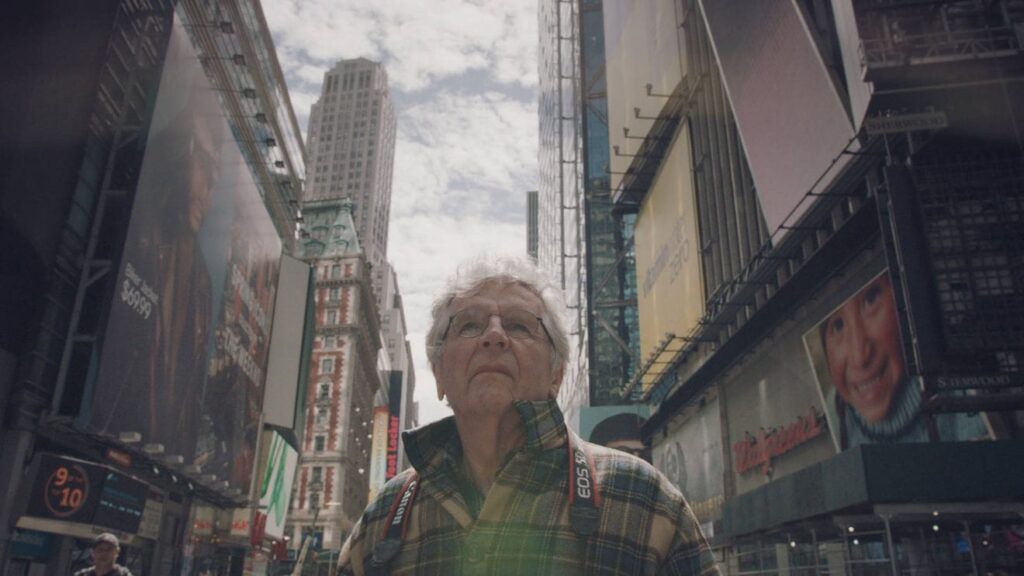
    Harry Gruyaert, born in Antwerp in 1941, stands as one of the pioneers of color photography, inspired by the great American photographers he discovered and admired from an early age, such as Joel Meyerowitz, William Eggleston, and Stephen Shore. Departing from the confines of his native Belgium, Gruyaert found himself in New York during the early 1970s, where he encountered pop art and learned to “view the ordinary with a fresh perspective, accepting the inherent beauty in the world, even in its ugliness.” Influenced by his interactions with avant-garde artists like Gordon Matta-Clark and Richard Nanas, Gruyaert’s outlook was further shaped by Antonioni’s film “Red Desert,” a work he had watched countless times, instilling in him a profound desire to explore the world—to immerse himself fully, not merely to describe or inform, but to mold and shape it. His goal was to capture his own perception of things rather than the things themselves—to become a visionary rather than a mere observer.

    Gruyaert describes this process as a physical struggle, an intimate battle with objects and individuals: “I throw myself into things, immersing myself in their mystery and alchemy. Things attract me, and I, in turn, attract things.” In the flow of life, where everything seems to slip through our fingers, Gruyaert believes that in order for “everything to fall into place,” one must simultaneously be present and absent—losing oneself to fully grasp the essence, the texture, and every aspect of the here and now. This requires cultivating a sense of foresight and surrendering to an instinctual arrangement of forms, colors, symbols, light, and motifs.
    Alain Bergala, in “Correspondance New Yorkaise,” distinguishes between two types of photographers: those who believe in reality and make photography a means of capturing presence, and those who perceive reality as elusive, only able to capture absence. According to this perspective, Harry Gruyaert stands as an anomaly—a photographer whose visceral presence in the world aims above all to capture its fleeting and intangible nature. Through his images, characterized by isolated trajectories, disjointed spaces, and bodies on the fringes, Gruyaert’s patterns contribute to revealing the absurdity of the world, the surreal collage of life and its fragmented moments.

    “What if photography could be about communing with a state of solitude and telling a lie that is truer than truth itself.” (Diane Dufour)

    This exhibition brings together, for the first time, 80 vintage prints created between 1974 and 1996 using the cibachrome process. Known for its sharpness, vibrant colors, and saturated surfaces, cibachrome was invented by Hungarian chemist Bela Gaspar in 1933 and trademarked in 1963. It involves producing prints from slides through the destruction of dyes incorporated into the exposed and developed paper emulsion—a positive-to-positive process. These rare prints have been generously loaned to Le BAL from various collectors and Gallery FIFTY ONE in Antwerp, allowing this extraordinary gathering of works to take place.
    On the occasion of the exhibition, LE BAL Books offers an exclusive limited edition print by the Belgian photographer. Limited edition print of the photograph: “Belgium, Brussels, Brussels-Midi Station, 1981 © Harry Gruyaert / Magnum Photos”.


    Harry Gruyaert : La part des choses From June 15 to September 24, 2023 LE BAL – Paris
    More info on:

    https://www.lebal.fr/

    https://www.magnumphotos.com/

    https://www.harrygruyaert-film.com/

  • Street Photographers Book Published

    Street Photographers Book Published

    Street Photographers Book Published

    We have the honor to inform you about the release of the first issue of the  Street Photographers Book series.
    This book was ready in February, but due to the Coronavirus lockdown and world health problem,
    there was a long delay in the distribution of our book.
    From today, you can order this book from anywhere in the world and receive it.
    Also, as regards to the charitable goals of Street Photographers Foundation,
    a portion of the profits from the sale of books will be proudly donated to child labor to alleviate some of their suffering.

    The photographers contributed to this issue are:

    Article by : Richard Sandler
    Interview with: Matt Stuart
    Alberte Alonso Pereira, Andrés Cañal, Ayla Güvenç İMİR, Barry Talis, Bimo Pradityo, Damian Milczarek, Dimitri Mellos, Ekin Küçük, Enrico Markus Essl, Fabricio Brambatti, Francesco Sembolini, Gareth Bragdon, Gil Rigoulet, Gustavo Minas, Ilan Burla, Jasper Tejano, Jaume Escofet, Jesse Marlow ,Jonathan Higbee, Juan Jose Reyes, Julie Hrudova, Keenan Hastings, Kraipuk Thanudkit, Maciej Dakowicz, Marcin Ryczek, Masoud Gharaei, Matthew Casteel, Mo Barzegar, Mohammad Torki, Nesam Keshavarz, Nick Hannes, Niki Gleoudi, Paul Russell, Pelle Sten, Peter Kool, Peyman Hooshmandzadeh, Philipp Merz, Rui Palha ,Sagi Kortler, Salvatore Matarazzo, Sam Rodgers, Sami Uçan, Shinichiro Yamada, Siegfried Hansen, Simon Nicoloso, Stan De Zoysa, Stefano Mirabella, Streetmax 21,Suzan Pektas, Tavepong Pratoomwong, Troy Holden.

    Please Check out:

    https://streetphotographersfoundation.com/product/street-photographers-book/

    bookSPF-(8)--Roo-sefid
  • Venice Photo Lab

    Venice Photo Lab

    We are honored to announce the new partnership with Venice Photo Lab.
    One of their main objectives is to present photographic art to the public for free: a way to encourage young people to dream, to see new horizons through photography, which stimulates travel, knowledge, culture and socializing.
    They decided to exhibit in Venice and in this artistic laboratory to compare traditional and artisan art with a “new”, democratic and smartphone-friendly art, thus bringing together two different artistic processes, to create a mix of images and emotions, of experiences and knowledge.
    Venice Photo Lab thus becomes a space, physical and mental, where tradition and contemporaneity meet, linked by the same creative process even if with different results.In this space, the photos coexist with the traditional work of decorators and restorers, which continues even during the exhibition period; so the stories told by MANY photographers mix with those of the artisans within a wonderful frame made of brick walls, stone dust, stucco and colors that speak to us of traditions, experiences and manual skills.

    [thb_button_text link=”url:https%3A%2F%2Fwww.venicephotolab.it%2F|title:Venice%20Photo%20Lab%20Website|target:%20_blank|”]
    [thb_button_text link=”url:https%3A%2F%2Fwww.instagram.com%2Fvenicephotolab%2F|title:Venice%20Photo%20Lab%20Instagram|target:%20_blank|”]

    Photo © by Michele Palazzo 

  • Treviso Photographic Festival

    Treviso Photographic Festival

    We are honored to announce the new partnership with Treviso Photographic Festival.
    The festivals goal  is to bring art free of charge to the center of the squares, a moment to reflect, focus on an image, get excited, look up and look at the buildings as if they were an open-air museum, with no entrances or exits.
    It will take place in the beautiful city of Treviso, 40 km from Venice.
    The festival takes place in the following areas of the city: Borsa Square – Crispi Square – University Square – S. Maria de Battuti Square – San Vito Square – Cloister of San Francesco – Sagrado church of San Vito Santa Lucia and Sant’ Agostino – Latin Neighborhood.

    [thb_button_text link=”url:http%3A%2F%2Fwww.trevisophotographicfestival.it%2F|title:%20Treviso%20Photographic%20Festival%20Website|target:%20_blank|”]
    [thb_button_text link=”url:https%3A%2F%2Fwww.instagram.com%2Ftrevisophotographicfestival%2F|title:%20Treviso%20Photographic%20Festival%20Instagram|target:%20_blank|”]