Category: Photographers

  • Gareth Bragdon Mannequins
    Gareth Bragdon Mannequins

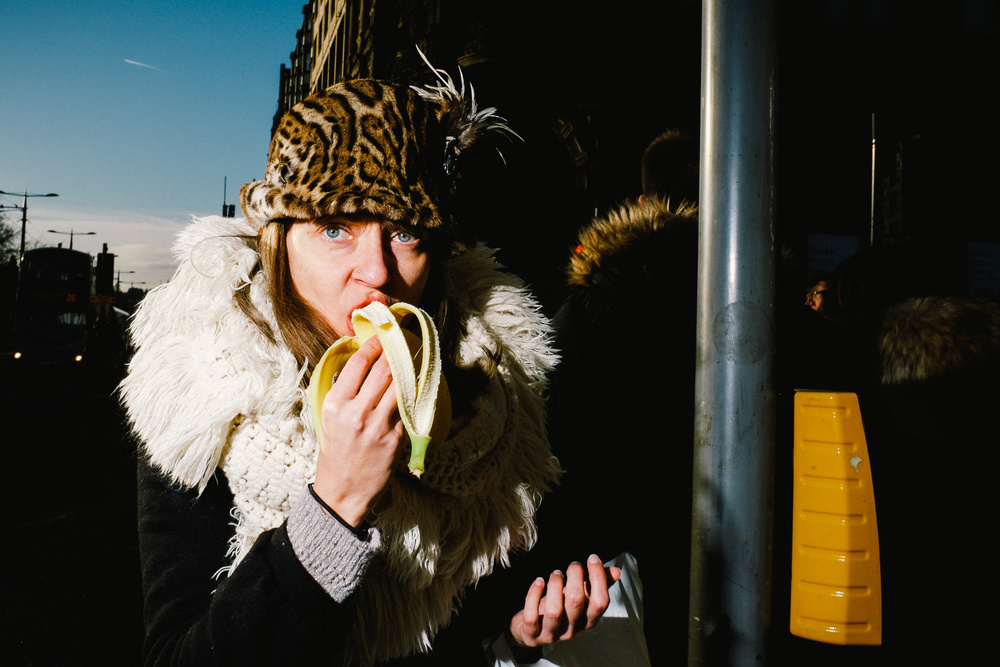
    Humans are the only animals in the world to wear clothing.

    Perhaps it is something that came as a result of our increasing ability to build and make things with our hands. Or maybe it caught on because it helped us withstand cold and inclement weather and thus conquer the world.

    Regardless, over tens of thousands of years, clothing became more than practical: it became symbolic of class, job, status, taste, tribe and so on. In other words, clothing became fashion.

    Today it is an industry worth trillions of dollars worldwide. But it is also one of the fastest-changing markets—at any given moment, fashion is not just a signifier of station or taste but also of the zeitgeist.

    The fashion worn by subjects in a photograph is one of the surest ways to date a photograph. It is the markers like these that make photography such an important document of our times.

    Gareth Bragdon

  • Víctor Morante

    Víctor Morante

    About Víctor Morante

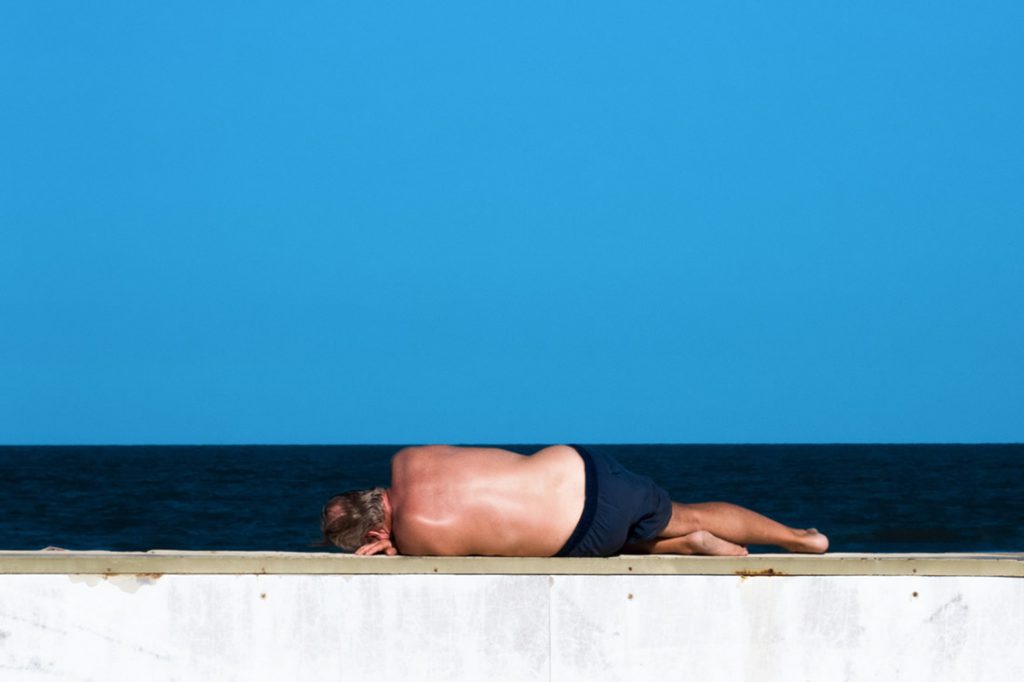
    I’m Victor from Spain, 28 years old and currently in Ho Chi Minh (Vietnam). I have been backpacking Asia for the last 5 years but I started taking photos not even 2 years ago. I’m using a second-hand Nikon D300 to capture those sort of minimal instants happening in Asia.

    All these photos were taken in India, Thailand, and Vietnam. I’m always seeking for that particular spot to make the photos look quiet, tidy and colorful, quite the contrary with the reality, those countries, in particular, are very busy. The point also of this series is that isn’t that easy to know where the photos were made, they could be photographed anywhere in the world.

    Copyrights:
    All the pictures in this post are copyrighted Víctor Morante. Their reproduction, even in part, is forbidden without the explicit approval of the rightful owners.

  • Gonzalo Gómez And Gustavo Rosas

    Gonzalo Gómez And Gustavo Rosas

    About Gonzalo Gómez

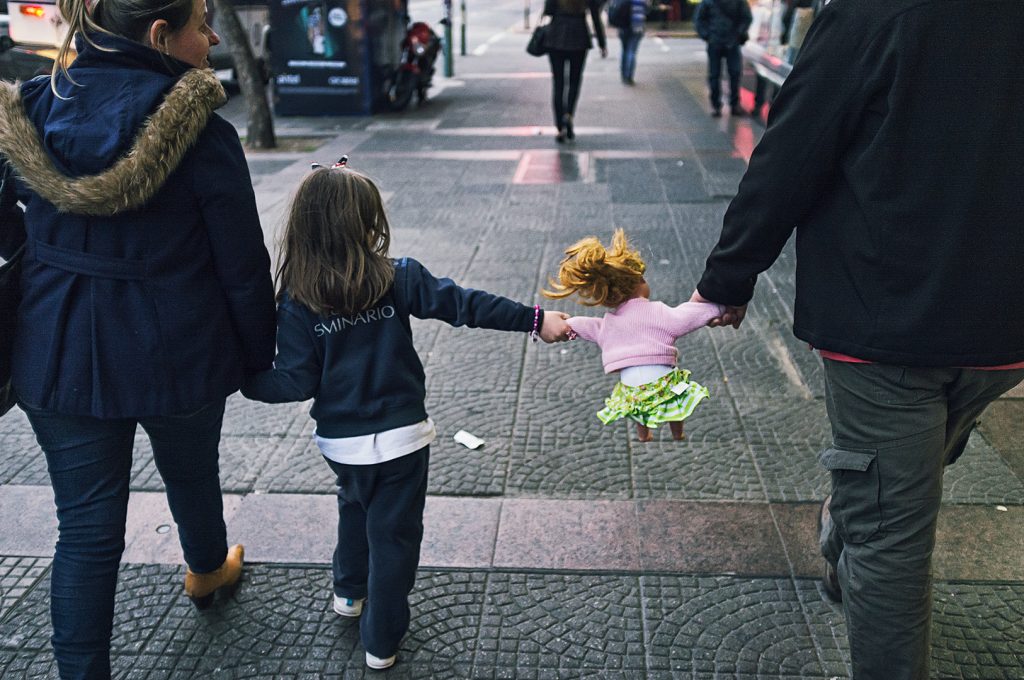
    I was born in Montevideo, Uruguay, on October 17, 1979. My passion is taking shots in the streets, walking a lot and being in a short distance from my subjects. For me, street photography is a form of aesthetic expression and communication of gestures, situations, and emotions, something unpredictable in common places. Life in the streets means there are lots of stories to tell.

    About Gustavo Rosas

    I was born in Montevideo, Uruguay, on May 15, 1985. My first approach to photography may have been through film, since I was a kid I liked to watch movies and since then I have been curious about the images, their construction and their power to communicate emotions. Throughout these years I have developed a special interest in street photography and the possibility of portraying and documenting life on the streets spontaneously.

    Shot is a street photography project created by Gonzalo Gómez and Gustavo Rosas in 2013. We are curious photographers about what happens in the streets of Montevideo (Uruguay) and walk quietly observing gestures, shapes, connections, something unpredictable in common places. We approach our subjects without using the zoom, to be in tune with life. For us, street photography is a form of aesthetic expression and a record of an age.

    The uniqueness of a story over mere every day is what we pursue. It is in this sense that we consider the street as an inexhaustible source of fleeting, spontaneous and emotional situations. The shape, light, and content should be mutually supportive.

  • Cristobal Carretero Cassinello

    Cristobal Carretero Cassinello

    About Cristóbal Carretero Cassinello

    Cristóbal Carreterto Cassinello, photographer, graphic designer, web designer, professor of economics, an expert in financial excel and professor of advanced office automation. Passionate about photography and design, for more than 20 years in the advertising graphics sector, he is the founder of the design and training studio for companies: Kritodesign | Graphic & Web Design Studio.

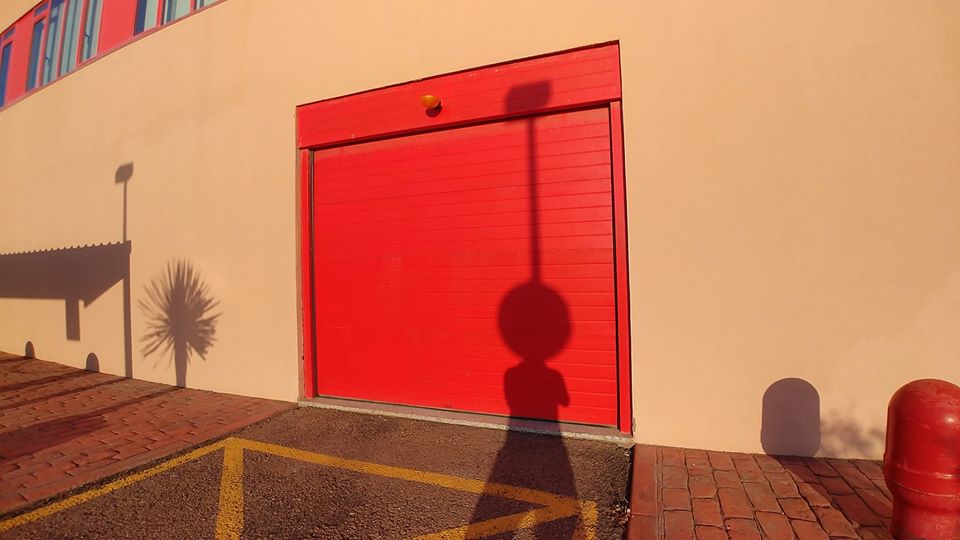
    Statement: As an photographer I use photography to capture beauty, detail and unique moments of our daily life and existence; also to surprise and play with the spectator, questioning the prism with which he observes the reality of things. Photography tells us and helps us to understand our relationship with the world through our own narrative and visual language.

    Copyrights:
    All the pictures in this post are copyrighted Cristóbal Carretero Cassinello. Their reproduction, even in part, is forbidden without the explicit approval of the rightful owners.

  • Shin Noguchi

    Shin Noguchi

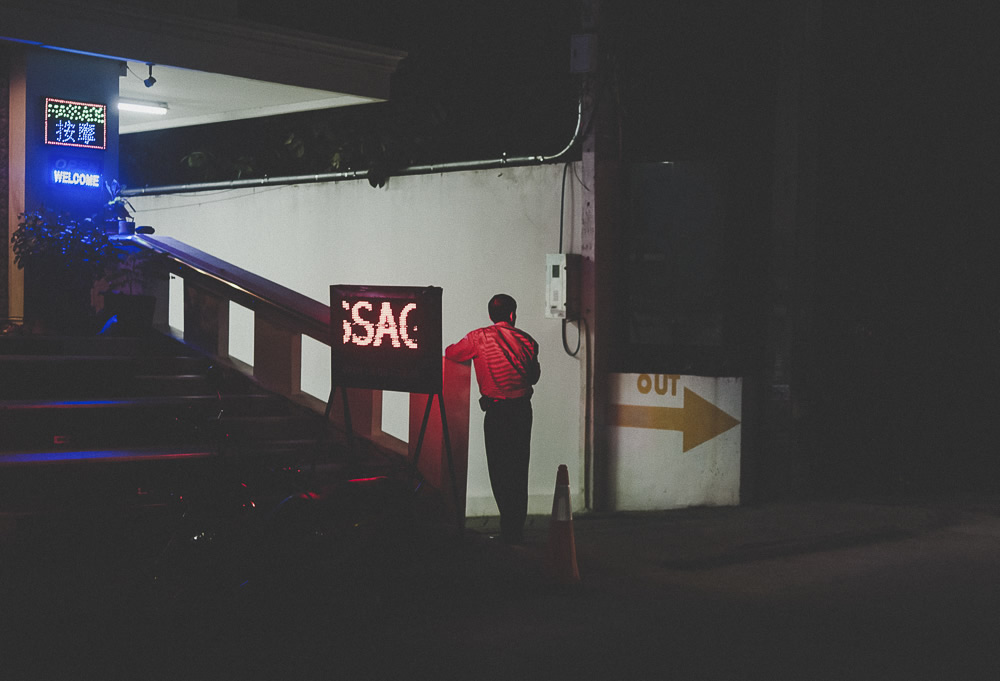
    People are living life desperately. Sometimes lonely, sometimes helping each other, sometimes crying, sometimes laughing. I capture people going about daily life because there are moments that they themselves do not realize are more beautiful and full of human touch than the carefully choreographed movies of Charlie Chaplin, Alfred Hitchcock, Federico Fellini or Shakespeare’s plays.
    I attempt to visualize Mark Twain’s words “Truth is stranger than fiction.”, and prove that it is true as a visual language in photograph that: fantasy moments where children show, and hope and possibilities for the future; adults are running on the society time semi-forcibly, but still, they shows individual strength sometimes painful, and sometimes fun; and the moments can see their footprint they lived in.
    I want to share these beautiful moments with other people and, at the same time, I want them to understand that that extraordinary moments exist in our daily lives and that they can happen anywhere and at anytime.
    “I’m here, just here. You’re here, just here. There is something here, something beautiful something special. It may last but a moment, but we are always connected to each other. I want you to feel that, when you see my work. You are not alone. There is always someone in the world keeping an eye on your struggle.”

  • Francesco Sembolini

    Francesco Sembolini

    Francesco Sembolini, based in Italy, was born in 1972. He is a professional photographer known for his humorous style. He is a promoter of several events dedicated to street photography and represents the Italian Street Eyes Collective.

    Statement: I love to build my own reality by apposition of elements, colors, people, creating aesthetic, graphics, humorous and crazy pictures.

    What is your first childhood memory?

    I was seven or eight years old and I was sitting next to my great-grandmother while she was telling me about the birth of my father during the Second World War.

    Are you still learning who you are?

    At the age 45, I have understood that I will be constantly continuing to discover new things. I have experienced so many developments during my life that at the end of each experience I thought I knew myself, I knew Francesco. But I didn’t.

    Who are you when no one is looking at you?

    When I am alone with myself, I am more free. Relationships with others restrict the freedom, which, in many cases, is good and serves certain purposes.

    What got you involved in photography in the first place?

    I always liked to write and to draw. When I was a young boy I liked to write the same sentence in a dozen of different types of handwriting and as time passed by I started drawing. When I took a camera in my hands I understood immediately that my eyes were able to follow my imagination much better in comparison to what my hand was able to do on a white paper. From that time onwards this way of drawing became also my job.

    Ansel Adams once said: You bring to the act of photography all the pictures you have seen, the books you have read, the music you have heard, the people you have loved. Could you tell us about your favorite photographs, books, music and people who are closest to you?

    I agree with Adams, in each of my picture there are all my experiences. A photo does say a lot about a photographer. I also think that there are some “subliminal” influences we are not quite aware of – even if they play a very important role in overall.

    There’s a thin line between invading people’s privacy and taking their photographs. Why do ethics matter?

    This is a very controversial issue in photography and especially in street photography. Many times street photographers solve this question without thinking too much and hiding behind their goals: “I don’t mean to hurt anyone”. The fact that we are not acting in order to hurt somebody does not mean that he/she does not feel that someone’s privacy has been violated. In my opinion, both sides should use common sense or the photographer should choose a type of street photography like the one I am using right now, where in most cases the photographed people can’t be recognized.

    Bruce Gilden claims that photography is a voyeuristic medium. Does it resonate with you?

    If we consider the most common meaning of the term “voyeurism”, I can say that it has nothing to do with me. But if we understand it as the mental pleasure that grows when we look at a scene that we have imagined and now it unfolds in front of our eyes – then yes.

    Have you ever acted rude in front of people you have tried to photograph?

    Yes, maybe twice. I have been rude to people that had a very rude approach towards me. The funny thing is, these people were not even the subjects of my photograph.

    Have you ever been following your subject that the person could eventually think you’re a stalker or a pervert?

    No. At least, I think I do not. I followed many people but I have never felt that they were scared of me.

    Gloria Steinem once said: The truth will set you free, but first it will piss you off. Are you getting nervous when someone goes deeper and scrutinizes your work?

    Criticisms and judgments are always important to grow, starting from the birth, during school time, at work and life in general. But comments can also “jeopardize” our development. This is the reason why I pay a lot of attention to the experience and reliability of the person that gives me pieces of advice or criticizes me.

    What if you take images for a couple of years and don’t get a positive audience reaction? Would you be still taking them?

    I do not know. It did not happen yet. We live in the world of the social media and it is strange not to receive any reaction from any kind of audience, the problem arises when the audience that is important to me is not interested in my work. If this would happen it means that I should evolve again.

    Do you often get jealous of someone’s achievements?

    I rate highly people that obtain a deserved success. Unfortunately, sometimes I think that somebody has an undeserved success and this can irritate me for a couple of minutes (Laughter).

    If you could wake up tomorrow in the body of another artist, who would you choose and why?

    Nobody. I didn’t want to be in the body of someone else, you never know what kind of unforeseen “demons” you will find in the body of another person! (Laughter) The fact that I think highly of a person does not mean that I would wish to become that person.

    What artist made the most impact on you and why?

    Maybe hundreds. So, ultimately, maybe no one.

    If you could have personally witnessed a perfect street scene at the right decisive moment, what would you want to have seen?

    I visualize a lot, I like to do it. Often while I am trying to fall asleep I imagine scenes that I would like to shoot, from the most minimal to the most unlikely. But you never know what kind of relationship you will find on the street, therefore at night, it is better to think about something else (Laughter).

    If you could witness and photograph any historical moment of the past, present – or future – what would it be?

    I am not a reporter; the importance of witnessing an event is not my cup of tea. If I could experience one of the most important historical moments, and go back in time, maybe I would get lost while doing the research on minimalism or matching colors, and eventually, I would lose the opportunity to come back to nowadays as the most famous photographer of the history (Laughter).

    What’s on your photography bucket list this year?

    To keep searching for street photos in order to surpass myself? (Laughter) But jokes aside, I am working on some important events about street photography.

    What do you like to do outside of photography?

    Photography is my work and my main hobby, the remaining time is for my family. It has not been always like this, in the past I used to practice many sports.

    Blind and live forever or be able to see and die in a couple of years?

    Being blind means that I cannot take photos but it does not mean that I cannot live and make experiences, it does not rule out the possibility to realize good things. This is a question we can answer without thinking too much, but most importantly because it is not the God’s will.

    What do you want your tombstone to say?

    Someone else will decide it.

    About Arek Rataj

    “You Can Shoot. Can You Talk?” is a series of interviews created by Arek Rataj. He is a Qatar-based journalist, contemporary photographer and educator.

    Arek was born in a small industrial district in communist Poland under the Soviet Union dictatorship. In midst of this human misery, political hypocrisy, environmental dirt and ugliness, he became particularly sensitive for all signs of beauty and transcendence.

    Copyrights:
    All the pictures in this post are copyrighted Francesco Sembolini. Their reproduction, even in part, is forbidden without the explicit approval of the rightful owners.

  • Felix Renaud

    Felix Renaud

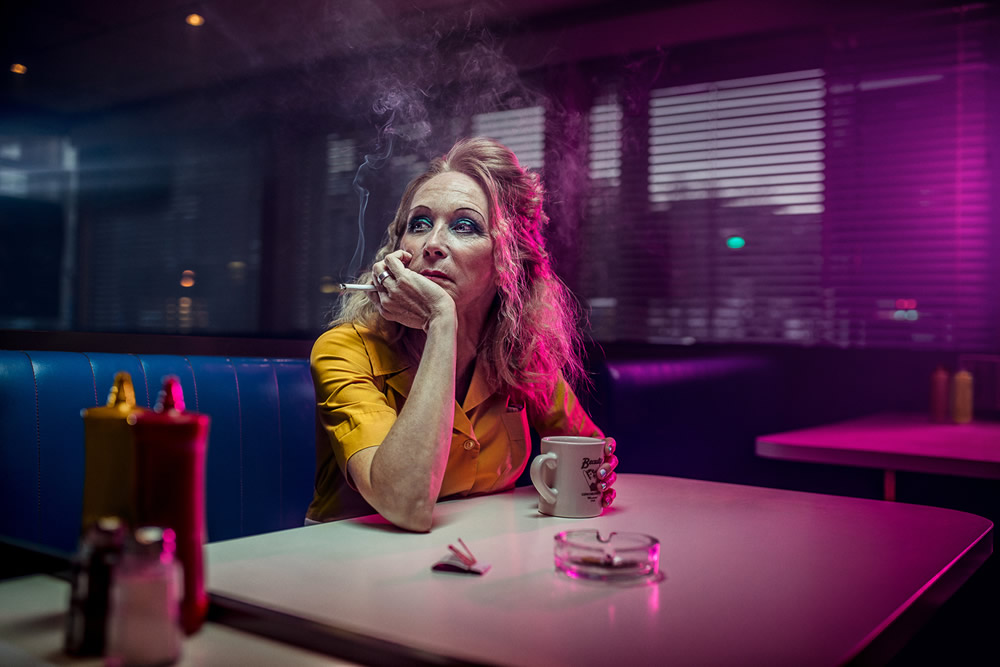
    Felix Renaud is a Montreal, Canada based photographer specialized in portraits and narrative imagery. Felix loves to capture the essence of fictional and real-life characters. He was attracted by cartoons & movies and he is more passionate about colors, contrast, and composition to tell stories.

    In his words about lighting “It’s hard to explain my lightning because it changes from a shoot to another. I work mostly with strobes. Every shoot is different, sometimes I can use one light and sometimes ten.”

    Thanks, Felix for accepting our invitation. Please read on…

    Could you please introduce yourself?

    I am a Montreal-based photographer specialized in portraits and narrative imagery. Capturing the essence of fictional and real-life characters is what I love most. I always work on my photos to make them look like they’re from of a movie or similar to a painting.

    I’ve always been attracted by beautiful images, mostly cartoons, and movies. That’s why I’m so passionate about using colours, contrast, and composition to tell stories.

    How did Photography happen to Felix?

    My younger brother had a new camera at the time. I was a bit jealous and curious about taking pictures. So I bought my own, while I was studying at film school. I thought I wanted to be a DOP. As life would have it, I started working as a camera assistant and quickly realized it wasn’t for me, so I started to assist a few photographers here and there and before I knew it, I was honing my photography skills and building a solid client base.

    Your photographs are very creative and inspiring; can you please explain your lighting and studio setups?

    It’s hard to explain my lightning because it changes from a shoot to another. I work mostly with strobes. Every shoot is different, sometimes I can use one light and sometimes ten.

    Before you start a shoot, how will you prepare yourself?

    I think a lot before a shooting. Whether for a client or for a personal project, I act in the same way, I like to be prepared. I inspire myself first by looking at pictures, movies or by listening to music. I put on paper my ideas, I draw lighting plans and prepare a list of equipment that I will need. After that, anything can happen!

    How do you inspire yourself?

    Once I have a project in mind, I think about it all the time. Not only when I’m at the studio or at the office, all the time. I find inspiration or ideas around me in connection with upcoming projects. It can be the way the sun lights someone outside, or the way the concierge walks from a grocery store. Most of the time, I look at the things or pictures that catch my attention and I ask myself this simple question, why do I like that? We rarely take the time to ask ourselves a simple question like this.

    What type of camera, lenses and lighting equipment do you use?

    • Camera body: Canon 5DIII and Canon 5DS
    • Lens: The new primes from Sigma Art 24mm, 35mm, 50mm, 85mm and Canon 100mm, 135mm and 200mm
    • Filters: Rarely I use filters but sometimes a polarizer or an ND.
    • Flash: Speedotron packs and Alienbees
    • Photoflex softboxes, Matthews gripping gear, and Manfrotto tripods.
    • Outex case for my underwater work

    If you could go on assignment anywhere in the world to shoot whatever you wanted; where and what would it be, and why?

    Go to New Orleans to photograph real bluesman. To be able to be part of such a rich musical community. To photograph this in my own way, documentary photos with a touch of fiction.

    If not a Photographer, what would you have been?

    Hard one! I think I would be a graphic designer or an illustrator.


    What is the best compliment do you ever had?

    That I had my own photographic signature.


    Which photographers have inspired you?

    Chris Buck, Tim Tadder, Yan Rabanier and Joey L, just to name a few.


    Who are you, besides being a photographer?

    Parent of two beautiful beings, Pablo and Luna. And I’m engaged to the most wonderful and powerful women, Manuela. Otherwise, I am passionate about water. I practice swimming and freediving in my spare time to rejuvenate myself.

    Copyrights:
    All the pictures in this post are copyrighted to Felix Renaud. Their reproduction, even in part, is forbidden without the explicit approval of the rightful owners.