Tag: street photographers

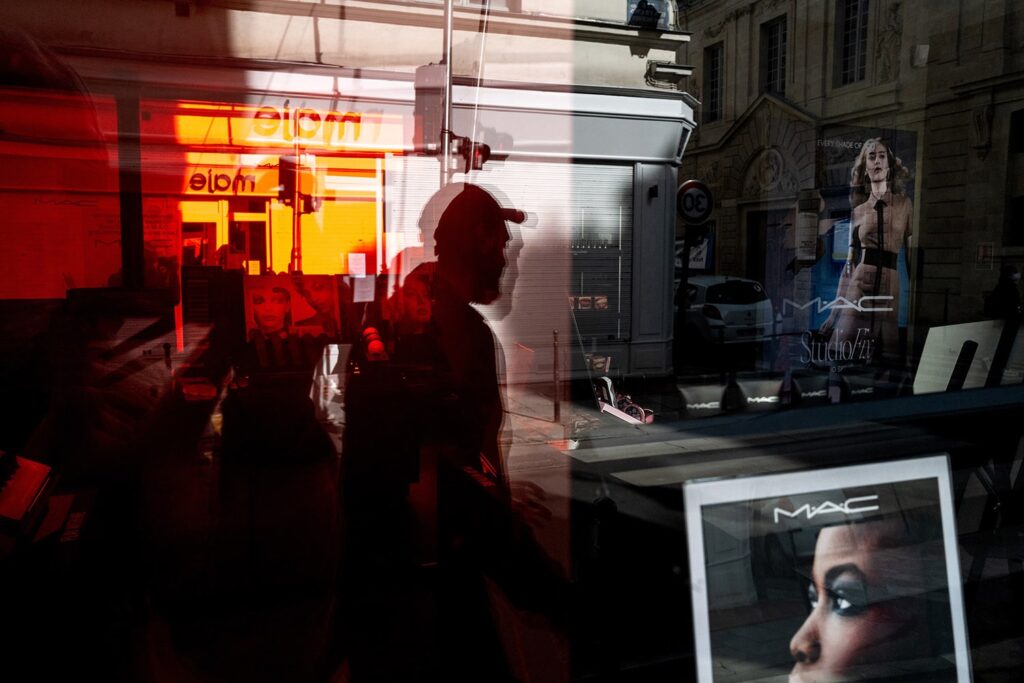
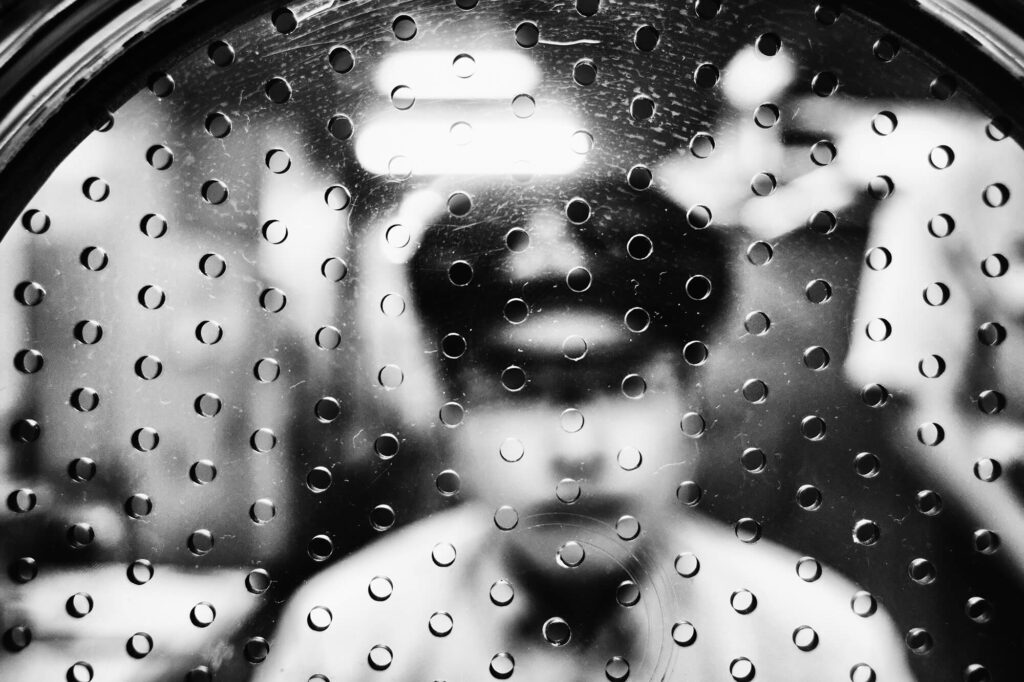
The street photographer can be seen as an extension of the flâneur, an observer of the street .a person who records everyday life in a public place. The very publicness of the setting enables the photographer to take candid pictures of strangers, often without their knowledge. Street photographers do not necessarily have a social purpose in mind, but they prefer to isolate and capture moments which might otherwise go unnoticed.the street photographer is similar to social documentary photographers or photojournalists who also work in public places, but with the aim of capturing newsworthy events; any of these photographers’ images may capture people and property visible within or from public places.
photographers who records everyday life in a public place. The very publicness of the setting enables the photographer to take candid pictures of strangers, often without their knowledge. Street photographers do not necessarily have a social purpose in mind, but they prefer to isolate and capture moments which might otherwise go unnoticed.

  • The Best Women Street Photographers of All Time
    The Best Women Street Photographers of All Time

    The Best Women Street Photographers of All Time

    Street Photography is one of the most challenging and exciting genres of photography. Sometimes when we see a photo, it gets into our mind and remains eternal for life. This could be moments of sorrow and pain, a disaster happening in the world, usual human interaction in our society, or even a moment of everyday life.
    Having awareness of photography history and the famous actors of that history will definitely make you a better photographer. If you are trying to capture perfect photographs, knowing the masters of photography will show you what makes a photograph perfect.
    In this article, we will introduce some of impressive master women photographers in this genre.

    Stay with us.

    Berenice Abbott

    Berenice Alice Abbott (July 17, 1898 – December 9, 1991) was an American photographer. Abbott’s work often focused more on cityscapes, social documentary and street photography. Her introduction to photography came when she made contact with the famed Surrealist Man Ray, who hired her as a darkroom assistant in 1923. It was in 1925 at the Man Ray Studio that Abbott first saw photographs by Eugène Atget.

    In 1929, Abbot began documenting the city in the manner of her of one of her major influences Eugène Atget. The impact of Atget’s photographs on Abbott was immediate: “There was a sudden flash of recognition – the shock of realism unadorned.” Abbott was part of the straight photography movement which stressed the importance of photographs being unmanipulated in both subject matter and developing processes. Today, Abbott’s photographs are held in the collections of The Museum of Modern Art in New York, the J. Paul Getty Museum in Los Angeles, and the Walker Art Center in Minneapolis, among others.

    Quotes:

    “The challenge for me has first been to see things as they are, whether a portrait, a city street, or a bouncing ball. In a word, I have tried to be objective. What I mean by objectivity is not the objectivity of a machine, but of a sensible human being with the mystery of personal selection at the heart of it. The second challenge has been to impose order onto the things seen and to supply the visual context and the intellectual framework – that to me is the art of photography.”

    Diane Arbus

    Diane Arbus (March 14, 1923, July 26, 1971). She is one of the most original and influential artists of the twentieth century. She studied photography with Berenice Abbott, Alexey Brodovitch, and Lisette Model and had her first published photographs appear in Esquire in 1960. In 1963 and 1966 she was awarded John Simon Guggenheim Fellowships and was one of three photographers whose work was the focus of New Documents, John Szarkowski’s legendary exhibition at The Museum of Modern Art, New York, in 1967. Arbus’s depictions of couples, children, female impersonators, nudists, New York City pedestrians, suburban families, circus performers, and celebrities, among others, span the breadth of the postwar American social sphere and constitute a diverse and singularly compelling portrait of humanity.

    Quote:

    “Freaks was a thing I photographed a lot. It was one of the first things I photographed, and it had a terrific kind of excitement for me. I just used to adore them. I still do adore some of them.”

    Dorothea Lange

    Dorothea Lange (May 26, 1895 – October 11, 1965) was an American documentary photographer and photojournalist. Lange’s photography focused more on capturing the struggles and realities of everyday life, often inrural settings or migrant camps, rather than the urban environments commonly associated with street photography. She studied photography at Columbia University in New York City under Clarence H. White, a member of the Photo-Secession group. She photographed endow her work with unforgettable power.

    FSA director Roy Stryker considered her most famous portrait, Migrant Mother, Nipomo, California (1936), to be the iconic representation of the agency’s agenda. The work now hangs in the Library of Congress. In 1940, Lange became the first woman awarded a Guggenheim Fellowship in photography. In 1953–54 she worked with Edward Steichen on “The Family of Man,” an exhibition organized by the Museum of Modern Art (MoMA) in New York in 1955. Steichen included several of her photographs in the show. Over the next 10 years she traveled the world, photographically documenting countries throughout Asia, notably South Asia, the Middle East, and South America. She produced other work, including the images of home and family life published in American Country Woman (1964).

    Quote:

    “The camera is an instrument that teaches people how to see without a camera.”

    Esther Bubley

    Esther Bubley (February 16, 1921 – March 16, 1998) was an American photographer. Bubley’s photography often included street scenes and urban settings. Her work captured the broader spectrum of human experience, encompassing both public and private moments in diverse environments. Having developed an interest in photography in high school, Bubley received her big break in 1942, when she was hired as a darkroom assistant for Roy Stryker, the famed head of the photographic unit of the Office of War Information (OWI) in Washington, D.C. With Stryker’s guidance, Bubley embarked on her first assignments documenting wartime in the nation’s capital.

    She worked for several agencies of the American government and her work also featured in several news and photographic magazines. She was also a “people photographer” with an uncanny ability to achieve intimacy withher subjects. In 1955, Steichen included her work in his monumental The Family of Man exhibition. Bubley was a superb photographer, capable of creating striking modernist patterns in black and white and color under technically challenging conditions.

    Quote:

    “Put me down with people, and it’s just overwhelming,”

    Evelyn Hofer

    Evelyn Hofer (January 21, 1922 – November 2, 2009) was a German-American documentary photographer. Hofer’s work has influenced such photographers as Thomas Struth, Joel Sternfeld, Adam Bartos, Rineke Dijkstra, Judith Joy Ross, and Alex Soth. A street photographer of a different stripe, Hofer’s street pictures convey the artist’s concern with sociological connections and offer a pointed look at society and its conditions. Her trades-people and toffs, her families and social groups are more than just intimate portraits – they epitomize the possibilities and restrictions of the human condition. Hofer’s studies covered everything from photographic technique to art theory. She didn’t just learn composition and the underlying theories of aesthetics, she also learned the chemistry involved in producing prints. Beginning in the early 1960s she became one of the first fine art photographers to adopt the use of color film and the complicated dye transfer printing process as a regular practice.

    Throughout her long career, Hofer continued to shoot in both color and black and white – determining which was the more apt for the picture at hand.In the middle 1950s Hofer’s career took an important turn when the writer Mary McCarthy asked her to provide the photographs for The Stones of Florence, a literary exploration of the history and culture of that city. Over the next forty years Hofer collaborated with writers including V.S. Pritchett and Jan (James) Morris to produce books on Spain, Dublin, New York City, London, Paris, Switzerland, and Washington, D.C. in which she mixed portraits and land or cityscape. Hofer’s goal was to go beyond documentary photography to create a subjective interpretation of the world, conveying both the spirit of the time and a timeless message.

    Quote:

    “One reason I like to work with a big camera is that I don’t like to spy on people…I respect them and I want them to respect what we are doing together.”

    Helen Levitt

    Helen Levitt (August 31, 1913 – March 29, 2009) was an American photographer and cinematographer. She was particularly noted for her iconic street photography around New York City and most well known for taking pictures of children playing in the streets. She began photography when she was eighteen and attended many classes and events hosted by Manhattan Film and Photography League. Inspired by earlier masters such as Walker Evans and Henri Cartier-Bresson, she took her 35-milimeter camera to the streets, intimately capturing the daily activities of women, children, and minority communities. She became intrigued with the transitory chalk drawings that were part of the New York children’s street culture of the time. She began to photograph these chalk drawings, as well as the children who made them for her own creative assignment.

    She also explored the uncanny elements of the everyday, often capturing people in strange poses alongside surreal juxtapositions of people, places, and things. The New York Times described her images as “fleeting moments of surpassing lyricism, mystery, and quiet drama.” Levitt was one of the early pioneers of colour street photography and one of the first photographers to exhibit her colour work in 1974. In 1959 and 1960, she received two grants from the Guggenheim Foundation for her pioneering work in color photography.

    Quotes:

    “It would be mistaken to suppose that any of the best photography is come at by intellection; it is like all art, essentially the result of an intuitive process, drawing on all that the artist is rather than on anything he thinks, far less theorizes about.

    “I go where there’s a lot of activity. Children used to be outside. Now the streets are empty. People are indoors looking at television or something.”

    Ilse Bing

    Ilse Bing (23 March 1899 – 10 March 1998) German avant-garde photographer. She was a pioneering figure in the genre, known for her innovative use of the camera to capture urban life in cities such as Paris, Frankfurt, and New York during the early to mid-20th century. Bing’s work was often focused on capturing the energy, movement, and everyday scenes of city streets, using light and shadow to create dynamic compositions. Bing’s street photography was characterized by her ability to capture fleeting moments and to convey a sense of atmosphere and emotion. She experimented with various techniques, including using reflections, shadows, and unusual angles, to create visually striking images that provided unique perspectives on urban life.

    In addition to her street photography, Bing also worked as a photojournalist and fashion photographer, further showcasing her versatility and skill behind the camera. Her contributions to street photography have earned her recognition as one of the pioneers of the genre, and her work continues to be celebrated for its artistic merit and cultural significance.

    Quote:

    “I felt that the camera grew an extension of my eyes and moved with me.”

    Inge Morath

    Ingeborg Hermine Morath (27 May 1923 – 30 January 2002 was a prominent street photographer. She is renowned for her candid and poetic photographs capturing everyday life in New York City, particularly in neighborhoods like Harlem and the Lower East Side. A friend of photographer Ernst Haas, she wrote articles to accompany his photographs and was invited by Robert Capa and Haas to Paris to join the newly founded Magnum agency as an editor and researcher . She was one of the first female photographers to join the legendary Magnum agency. While working on her own first assignments, Morath also assisted Henri Cartier-Bresson during 1953-54, becoming a full member in 1955.

    Morath was the third wife of Pulitzer Prize-winning playwright Arthur Miller. Some of her most important work consists of portraits, but of passers-by as well as celebrities. She photographed a range of subjects: documentary stories like 1954’s Fiesta in Pamplona captured the Spanish city’s running of the bulls, or those from her extensive travels in China; singular street photography (see: A llama in Times Square); portraits; fashion photography; and work on sets of television and films.

    Quote:

    “To take pictures had become a necessity and I did not want to forgo it for anything.”

    Jill Freedman

    Jill Freedman (October 19, 1939 – October 9, 2019) was a diligent street and documentary American photographer who spent her life capturing the complexities of the day, with rare veracity and grace. Originally published in 1981, Street Cops represents her most iconic body of work, one that embodies the sensitivity and perspicacity for which she is renowned. She often spent months immersed with her subjects, observing them through her lens as they went about their daily lives. She appeared in solo and group exhibitions throughout the world, and contributed to many prominent publications.

    Quote:

    “I like to work two ways, either on a specific idea or just wandering around, getting lost, snapping. Eventually all the wanderings go together, and then I find out what I’ve been doing.”

    Lisette Model

    Lisette Model (born Elise Amelie Felicie Stern; November 10, 1901 – March 30, 1983) was an Austrian-born American photographer primarily known for the frank humanism of her street photography. Lisette Model began her creative life as a student of music. She never formally studied photography but took it up in the 1930s while living in Paris. Model’s images can be categorized as “street photography,” a style which developed after the invention of the hand-held camera, which made quick, candid shots possible.

    Model’s main subject was the social and psychological landscape of New York City during the 1940s. Lisette Model’s photography exemplifies the European photographic tradition and its influence on American modern photography. Avant-garde techniques such as low-angles, sense of movement, window reflections, and natural photomontages defined her approach. she met the Russian painter Evsa Model, Moving to Paris in 1924, whom she married and gaine her surname.

    Quotes:

    “Photography through the camera is an instrument of detection. We photograph not only what we know, but also what we don’t know.”

    “I have often been asked what I wanted to prove by my photographs. The answer is, I don’t want to prove anything. They prove to me, and I am the one who gets the lesson.”

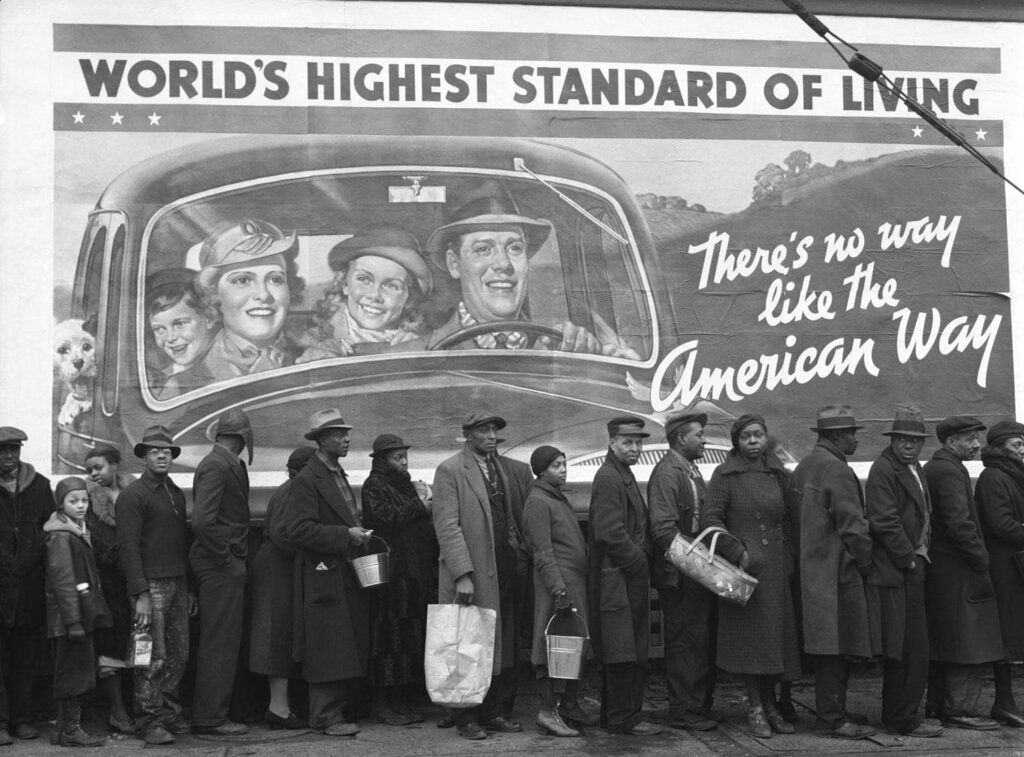
    Margaret Bourke-White

    Margaret Bourke-White (June 14, 1904 – August 27, 1971) was an American documentary photographer, Life magazine’s first female photographer, and the first female war correspondent credentialed to work in combat zones during World War II. She captured countless iconic images of 20th-century life, conflict, and the politicians at its center. She was the first foreign photographer to make pictures of Soviet industry and the only Western photographer to witness the German invasion of Moscow in 1941.

    One of her most iconic pictures came after the World War II, when she visited India and captured Mahatma Gandhi reading peacefully in his home, merehours before his assassination in 1948. She served as a photographer for Life during Korean War of 1950–1953. She was a great and tenacious photographer. She was awarded US Camera Achievement Award in 1963 and Honor Roll Award from American Society of Magazine Photographers in 1964. Her work was her life, and her life was flamboyantly spectacular.

    Quote:

    “Photography is a very subtle thing. You must let the camera take you by the hand, as it were, and lead you into your subject.”

    Mary Ellen Mark

    Mary Ellen Mark (March 20, 1940 – May 25, 2015 was known for her exceptional work as a street photographer, among other genres. she earned a BA in painting and art history and an MA in photojournalism from the University of Pennsylvania. Her work highlighted Vietnam War protesters and societal outcasts in order to underscore their importance to contemporary society. Her best known works include studies of severely ill women at Oregon State Mental Hospital and runaway teenagers in Seattle.

    She also worked in India for many years, producing studies of Mother Teresa, circuses, and brothels in Bombay. Mark has been presented with the Cornell Capa Award (2001) and an Infinity Award (1997) from the International Center of Photography, an Erna & Victor Hasselblad Foundation grant (1997), and a John Simon Guggenheim fellowship (1994). Her works are held by institutions including the J. Paul Getty Museum; the Museum of Fine Arts, Houston; the Philadelphia Museum of Art, and the Whitney Museum of American Art.

    Quotes:

    “I just think it’s important to be direct and honest with people about why you’re photographing them and what you’re doing. After all, you are taking some of their soul, and I think you have to be clear about that.”

    “I think you have to have a real point of view that’s your own. You have to tell it your way. And, I think that it’s a mistake to shoot for a specific magazine’s point of view because it’s never going to be as good. You have to shoot for yourself and photograph [the way] you believe it.”

    Rebecca Lepkoff

    Rebecca Lepkoff (born Rebecca Brody; August 4, 1916 – August 17, 2014) was an American street photographer. About 1945 she joined the Photo League, and for the next four years attended its classes, studying with Paul Strand, among others, and also exhibiting her work in the League’s group shows. She is best known for her images of New York and its people taken during the 1940s and 1950s, especially of Jewish immigrants on the Lower East Side.

    Her work has been featured in a number of books, galleries, and museum exhibits, including A History of Women Photographers by Naomi Rosenblum; Bystander: A History of Street Photography by Joel Meyerowitz and Colin Westerbeck; and “The Radical Camera, New York’s Photo League (1936-1951). She photographed with a strong sense of light and abstraction and captured the rhythm of the street.

    Quote:

    “I went outside and at that time, people lived in the streets—everything happened in the streets,”

    Ruth Orkin

    Ruth Orkin (September 3, 1921 – January 16, 1985) was an American photojournalist and filmmaker street photographer, She worked as a nightclub photographer. During the day, she also shot baby portraits to make extra money, which enabled the purchase of her first ‘professional’ camera. She spent her free time wandering the city streets, capturing compelling images of everyday life, including candid portraits of children in her neighborhood.

    In 1952 Orkin married photographer, filmmaker and fellow Photo League member Morris Engel. Orkin and Engel collaborated on two major independent feature films, Little Fugitive which was nominated for an Academy Award in 1953, and Lovers and Lollipops (1955). After the success of the two films, Orkin returned to photography, taking color shots of Central Park as seen through her apartment window.

    Orkin photographed Hollywood stars, renowned musicians, and everyday people on the streets of New York City, Italy, Israel, and many other locations. Her work is characterized by honesty and sensitivity, as well as the same deep regard for her subjects that underpinned the images of the other great photographers of the post-war period. In 1959 Orkin was named one of “The Ten Top Women Photographers in the U.S.” along with Dorothea Lange and Margaret Bourke-White by the Professional Photographers of America.

    Quotes:

    “Being a photographer is making people look at what I want them to look at.”

    “To be a photojournalist takes experience, skill, endurance, energy, salesmanship, organization, wheedling, climbing, gatecrashing, etc. – plus an eye and patience.”

    Susan Meiselas

    Susan Meiselas (born June 21, 1948) is an American photographer. She has captured compelling images of life in various urban environments and on the streets. She joined Magnum Photos in 1976 and has worked as a freelance photographer since then. Meiselas is best known for her coverage of the insurrection in Nicaragua and her documentation of human rights issues in Latin America, which were published widely throughout the world.

    Her work is included in American and international collections. She has been the President of the Magnum Foundation since 2007, with a mission to expand diversity and creativity in documentary photography. Her awards include the Robert Capa Gold Medal, Leica Award for Excellence, Maria Moors Cabot Prize, the Hasselblad Foundation Prize, the Cornell Capa Infinity Award, and most recently, the Harvard Arts Medal.

    Quote:

    “Finding a photograph is often like picking up a piece from a jigsaw-puzzle box with the cover missing. There’s no sense of the whole. Each image is a mysterious part of something not yet revealed.”

    Vivian Maier

    Vivian Dorothy Maier (February 1, 1926 – April 21, 2009) was an American street photographer whose work was discovered and recognized after her death. She is often referred to as the Mary Poppins of Street Photography on account of the fact that she spent most of her career working as a nanny. She also produced a number of self-portraits (black-and-white and color) which have given the world a picture of an otherwise unknown, intensely private figure. During her lifetime, Maier’s photographs were unknown and unpublished; many of her negatives were never developed.

    A Chicago collector, John Maloof, acquired some of Maier’s photos in 2007, while two other Chicago-based collectors, Ron Slattery and Randy Prow, also found some of Maier’s prints and negatives in her boxes and suitcases around the same time. Photographer Mary Ellen Mark has compared her work to that of Helen Levitt , Robert Frank, Lisette Model, and Diane Arbus. Joel Meyerowitz, also a street photographer, has said that Maier’s work was “suffused with the kind of human understanding, warmth and playfulness that proves she was ‘a real shooter’.”

    Quotes:

    “I’m a sort of spy.”

    Curated  by Editor-in-Chief  Masoud Gharaei
  • IMAGENATION PARIS 2023

    IMAGENATION PARIS 2023

    ImageNation Paris


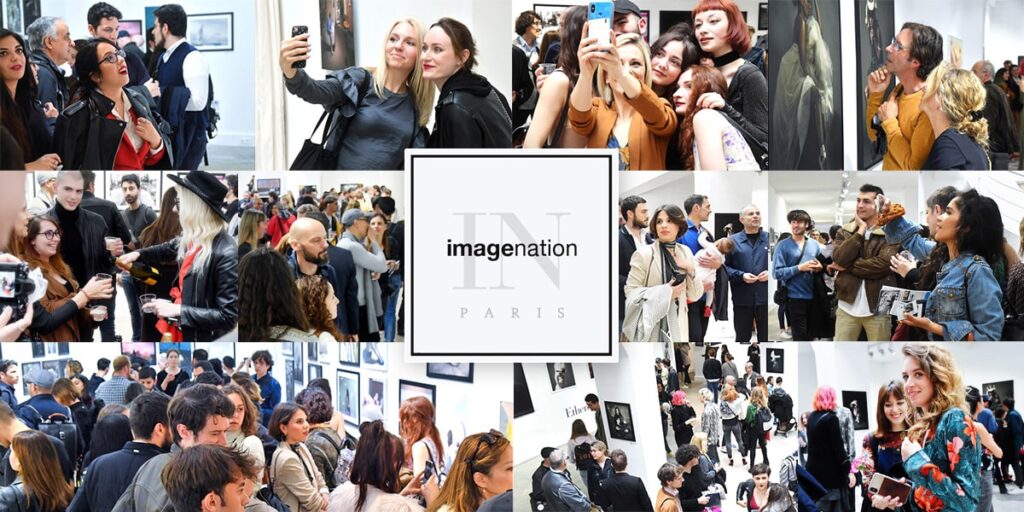
    From 10 to 12 November 2023, ImageNation will be back in Paris, the city that saw the birth of photography almost two centuries ago. Thanks to the many festivals and fairs, the French capital is, more than ever, the crossroads of the new trends. Over all, Paris Photo has seen attracting important collectors and art enthusiasts from all over the world. Along with this, during Paris Photo days, the city becomes an ideal stage for the photographic works of the most interesting international artists in dialogue with the audience.
    __________________________________________________________________________________________________
    Nathan LANDERS  •  Anna MULLER  •  Felix KAYSER  •  Salomé DECHAUD  •  Jacques MEZGER  •  Adina DAVIDSON  •  Alana CARTWRIGHT  •  Alina HAGER  •  Alizé JIREH  •  Alma HASER  •  Alvaro RODRIGUEZ  •  Amy LIDGETT  •  Anastasia LORIOLI  •  Ann-Louise SODERLUND  •  Anna LABELLE  •  Astrid JI  •  Bartek WALCZUK  •  Benny & MATAN  •  Carlo DIAMANTI  •  Cédric BENET  •  Célia PRIAT  •  Céline AIETA  •  Charlotte ASSAD-GRAZIANI  •  Chikashi YANAGI  •  Cindy KONITS  •  Claudia CABRERO MALAGA  •  Clement SIEGRIED  •  Cordelia LAWLER  •  Costanza SALINI  •  Cristian IACONO  •  Darina UMKA  •  Despina SPYROU  •  Didi VON BOCH  •  Dmytro BONDARENKO  •  Eddy PRADELLES  •  Emma HELENA  •  Eola MIN  •  Esther GEUSKENS  •  Estrella CARABALLO  •  Evan MURPHY  •  Fritzi SCHWARZBAUER  •  Giacomo TAZZINI  •  Guilhelm DIJOUX  •  Hannes CASPAR  •  Hector PALACIOS  •  Indra ARREZ  •  Ingrid JORAND  •  Jan KWAN  •  Joanna CHUDY  •  Joshua AMIRTHASINGH  •  Julia CASESNOVES BALLESTER  •  Kaisa Maria HOLLANTI  •  Karoliina BARLUND  •  Katya PANOVA  •  Kevin ALDRICH  •  Kristina AYUSHEVA  •  Kristina CHAPLYGINA  •  Kymara AKINPELUMI  •  Larisa USMANOVA  •  Laura SGHERRI and Viola BUTI
    __________________________________________________________________________________________________
    Nanda HAGENAARS  •  Loc BOYLE  •  Markus WEAVER  •  Svetlana JOVANOVIC  •  Marco TENAGLIA  •  Ben BRADISH-ELLAMES  •  Marion COULOMB and Thibaud PONCE  •  Anna NEUBAUER  •  Léa BOURCIER  •  Leonie BRAUN  •  Lesya YASNITSKA  •  Lien PHAM  •  Lorella CASTILLO  •  Louie SALTO  •  Luda SHVETS  •  Maira DIAS RAY  •  Margo ERMOLAEVA  •  Marie DREEZEN  •  Marie MEISTER  •  Marta ROMASHINA  •  Mathilde VEY  •  Mia CONOLLY  •  Miguel BENALES  •  Mika MORET  •  Mika SAHIN  •  Mirko MONDIALI  •  Naomi PECQUEUX  •  Narges KOOHBOR  •  Nas NIXX  •  Nass LOUNES  •  Nele DORN  •  Nienke ELENBASS  •  Paola PADRON  •  Patricia PETTITT  •  Randal YOKOMOTO  •  Roberto DE MITRI  •  Romy MAXIME  •  Sandra DE FEUDIS  •  Sara GENTILINI  •  Sebastian VISTISEN TOFT  •  Sofya SVETLAYA  •  Susi BELIANSKA  •  Tatiana IVASHCHENKO  •  Tatiana SAAVEDRA  •  Thomas DRIESEN  •  Tiago SALES  •  Valentina HERNANDEZ GUZMAN  •  Valeria SARTO  •  Veronica NESCI  •  Véronique L’HOSTE  •  Victoria VINAS  •  Vital ADIMALE  •  Xiangyu DONG  •  Yuan YAO  •  Zorica PURLIJA
    __________________________________________________________________________________________________

    ARLETTE PHOTO SHOW


    Annabelle FADAT  •  Auden BUI  •  Baptiste HENRY  •  Camille MAUCOTEL  •  Camille ROBIOU DU PONT  •  Cedric HAYABUSA  •  Charlotte CLAIN  •  Chloé DESTUYNDER  •  Cristina RAMIREZ  •  Daniel CRUZ  •  Denis TUNGUZ  •  Dor ELIYAHU  •  Elise PECQUERY  •  Eylül EZIK  •  Florian PEYROT  •  Gabbie BURNS  •  Gaël BERNARD  •  Gal SHAHAR  •  Julia DIMITROVA  •  Justine ROBINEAU  •  Karolina KRASINSKA  •  Kaveh MAGHSOUDI  •  Kelly CASEY LOVETT  •  Keng PEREIRA  •  Laura SALES  •  Lisa HABETS  •  Lucas SCHIFFLER  •  Ludwig OBLIN  •  Margot MARTINEZ  •  Mario STUMPF  •  Maud TENDA  •  Mazarine EGGERICKX  •  Miguel ROZPIDE  •  Monsieur BONHEUR  •  Nadia DOSS  •  Nevena LUKIC  •  Nicolas COSTY  •  Nicolas RONCHETTI  •  Nicolò MONTIS  •  Nikita PUZAKOV  •  Omar KRIKEZ  •  Radek KULUSH  •  Sabine AGOSTINI  •  Sarah LOESCHER  •  Sinead BUNN  •  Tetyana RYNKOVA  •  The Wild STRAWBERRY  •  Théo SAFFROY  •  Thomas SAMINADA  •  Thomas VONG  •  Thomas WIEN  •  Val FAYET  •  Valentin SEGOUIN  •  Xavier RUSTUL  •  Xavier SOUTY  •  Yannik SAINT-JUST  •  YOVO  •  Zoé CAVARO  •  Zoe SCHULZ  //  Curated by Théo BELASRI
    __________________________________________________________________________________________________

    FREE BODIES


    Alica MILEWSKI  •  Alina SIMONOVA  •  Amandine GRULOIS  •  Anastasiia MAISKAYA  •  Andrej GABOR  •  Anja PAPUGA  •  Beccy SMITH  •  Bénédicte DONET  •  Daisha ALMARAVISION  •  Daisy SEILERN  •  Danae CHARALAMPIDOU  •  Daria FINOGINA  •  Darien PANNELLA  •  Dean RAPHAEL  •  Dominika ANDRZEJCZAK  •  Elena BREUER  •  Elisabeth MOCHNER  •  Elsa Marie KEEFE  •  Inge VAN HARSKAMP  •  Ewa HACKWORTH  •  FemFIGURE  •  Gabrielle ROSHELLI  •  Giuseppe ATTANASIO  •  Ieva GRICIUTE’  •  Jaqueline LOUAN  •  Kaja HORVAT  •  Kenji SHIMIZU  •  Krista ESPINO  •  Ksenia IKKERT  •  Kyra HOLDAMPF  •  Maria FYNSK NORUP  •  MoHo POURAZIZI  •  Neoza GOFFIN  •  Nimrod GROSS  •  Paula CIRUGEDA  •  Rachel GRAY  •  Simeon VAN DER HOEVEN  •  Sophie KAMPF  •  Svala JOHANNSDOTTIR  •  Tatiana ILINA  •  Veronika LAVROVA  •  Ypatia KORNAROU  •  ZORA
    __________________________________________________________________________________________________

    THAT MAGIC MOMENT – A POLAROID EXHIBITION


    Edie SUNDAY  •  Carl FEHRES  •  Barbara SCHIEB  •  Gundula BLUMI  •  Camille GUERIN  •  Sara ROBINSON  •  Yoshihide ONO  •  Rachael BAEZ  •  Lula LAUINGER  •  Cristina ALTIERI  •  Simone CAROLLO  •  Sun XIN  •  KURT  •  Stefanie HEIDER  •  Alessio ROBERTO  •  Alexander GONZALEZ DELGADO  •  Alexandre MILAN  •  Angela REGINA  •  Annalisa GAETA  •  Camilla SCHMITT  •  Cecilia ROSSETTO  •  Claudio GOMBOLI  •  Cristina COMPARATO  •  Enrique RALVO’  •  Ernesto NOTARANTONIO  •  Florentijn BODDENDIJK  •  Frances BEATTY  •  Fred JOHNSSON  •  Grit DORA  •  Janette DUTTON  •  Jayme PERALEZ  •  Jürgen GRIEGER  •  Kieran McPEAKE  •  Lolo BATES  •  Luisa BRANDSTETTER  •  Lukas TAUBE  •  Marco RAGANA  •  Mario BATTAGLIA  •  Marjolaine VUARNESSON  •  Miguel DELIAERT  •  Natalia FILATOVA  •  Nicole SANTIN  •  Philippe GALANOPOULOS  •  Regis AUBERTIN  •  Samantha ASHCRAFT  •  Scarlett POPPY  •  Scott ASANO  •  Simona SALERNO  •  Stéphane VENDRAN  •  Thomas BERLIN  //  Curated by Francesco SAMBATI
    __________________________________________________________________________________________________

    STREET SANS FRONTIERES


    Craig WHITEHEAD  •  Jake INEZ  •  Skander KHLIF  •  Ximena ECHAGUE  •  Guido KLUMPE  •  Luca PACCUSSE  •  Alexandra AVLONITIS  •  Manuel ARMENIS  •  Omar AL JIWARI  •  Regula TSCHUMI  •  Hendrik KOCH  •  Fred NOGIER  •  Gianluca MORTAROTTI  •  Lukasz WASZAK  •  Youngho GO  •  David MONCEAU  •  Catherine LE SCOLAN-QUERE  •  Suresh NAGANATHAN  •  Catherine AUZURET  •  Betty MANOUSOS  •  Annu ESKO  •  Arthur BAUER  •  Sonia FITOUSSI  •  Souhayl A  •  Aaron MUNDOW  •  Adrienne HUTCHINGS  •  Aldo AMORETTI  •  Alessandro ZANONI  •  Andrea MISUROVA  •  Andrea POZZONI  •  Andrew GIMBLET  •  Carlotta DI SANDRO  •  Carolina LOPEZ BOHORQUEZ  •  Courtney SHAW  •  Damien LOREK  •  Eftihia BUFFINGTON  •  Eiichi YOSHIOKA  •  Eleni ALBAROSA  •  Emilie VERNEREY  •  Fabien ECOCHARD  •  Fabrizio RAGGIRI  •  Giacomo SANNIPOLI  •  Jens OCHLICH  •  Jérôme TOURNAIRE  •  John KAYACAN  •  Jukka VEHMAS  •  Kenn COSTANZO  •  Marco BRECCIAROLI  •  Massimo GARDA  •  Michael SWISTERSKI  •  Michiel HEIJMANS  •  Nicola FIORAVANTI  •  Niels JANIN  •  Ornella MAZZOLA  •  Philippe SARFATI  •  Rachel NIXON  •  Rafael HERNANDEZ  •  Roberta VAGLIANI  •  Sébastien DURAND  •  Stefania BONFIGLIO  •  Stijn HOEKSTRA  •  Vica BOGAERTS  //  Curated by Martin VEGAS
    __________________________________________________________________________________________________

    ATLAS OF HUMANITY


    Alessandro BERGAMINI  •  TREVOR COLE  •  Gon POULLET  •  Giovanna ARYAFARA  •  Inger VANDYKE  •  David DHAEN  •  Joaquin BARATA  •  Lynn COFFEY  •  France LECLERC  •  Marios FORSOS  •  Nicola DUCATI  •  Steven GOETHALS  •  Marie DUVIVIER  •  Esteban TORO  •  Alexander & Burkhard LEY  •  Eliane BAND  •  Diego GIUSTI  •  James FARR  •  Benoit FERON  •  Anne-Françoise TASNIER  •  Frances BRUCHEZ  •  Ingrid KOEDOOD  •  Juan Carlos RODRIGUEZ  •  Johan GERRITS  •  Jonathan GALBREATH  •  Lynn FRASER  •  Magdalena BAGRIANOW  •  Maike VARA  •  Maricruz SAINZ DE AJA  •  Stephen HERMIDA  •  Suzie WEISS  •  Tom PIAI  •  Ron GESSER  •  Paolo CINQUE  •  Max VERE-HODGE  •  Megan KWASNIAK  •  Michael CHINNICI  •  Nancy SAVAGE  •  Eline DE VRIES  •  Ella MACK  •  Enzo MISTRETTA  •  Anthonny VUILLEUMIER  •  Apostolos KALOUDIS  •  Aurora ARCESE  •  Aga SZYDLIK  •  Alessandro MALAGUTI  •  Ana ABRAO  •  Andrea MIGLIORE  •  Avi DADIA  •  Carlo DEPAULIS  •  Carol FOOTE  •  Chiara FELMINI  •  Claudia MASSAINI  •  Craig Victor BAULCOMB  •  Dawn LI  •  Elena MOLINA  •  Fabio CONVERTITO  •  Filipe SILVA  •  Francesco CINQUE  •  Grazia BERTANO  •  Hadriel TORRES  •  Hector RUIZ GOLOBART  •  Ilaria MIANI  •  Ivy GORDON  •  Jean-Pierre DUVERGE  •  Juanra NORIEGA  •  Julia BOWERS  •  Katy GOMEZ  •  Luca ARCESE  •  Luigi FASCIA  •  Matteo CARTA  •  Natalia MROZ  •  Nathaniel FAROUZ  •  Piotr KOWALSKI  •  Ruben DE LA TORRE  •  Safaa KAGAN  •  Sandrine VILLA  •  Sarah CRAKE  •  Sergio TENREIRO  •  SilkSWATI  •  Sofia SALDANHA  •  Stefano ASCANIO  •  Stefano MINIATIi  •  Valerie LEONARD  •  Virginie MERCKAERT  //  Curated by Martin VEGAS
    __________________________________________________________________________________________________

    ImageNation Paris   Galerie Joseph

  • Harry Gruyaert: La part des choses

    Harry Gruyaert: La part des choses

    Harry Gruyaert: La part des choses

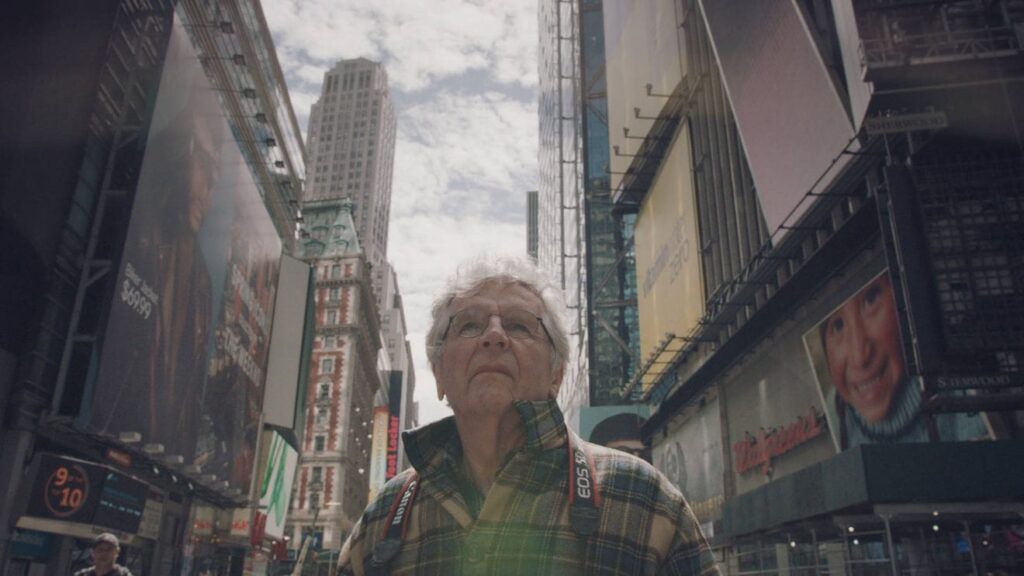
    From June 15 to September 24, LE BAL presents the works of Belgian photographer Harry Gruyaert, featuring a vast selection of vintage Cibachrome prints. This exhibition traces an unprecedented journey through the works of an iconic figure in contemporary photography
    Harry Gruyaert, born in Antwerp in 1941, stands as one of the pioneers of color photography, inspired by the great American photographers he discovered and admired from an early age, such as Joel Meyerowitz, William Eggleston, and Stephen Shore. Departing from the confines of his native Belgium, Gruyaert found himself in New York during the early 1970s, where he encountered pop art and learned to “view the ordinary with a fresh perspective, accepting the inherent beauty in the world, even in its ugliness.” Influenced by his interactions with avant-garde artists like Gordon Matta-Clark and Richard Nanas, Gruyaert’s outlook was further shaped by Antonioni’s film “Red Desert,” a work he had watched countless times, instilling in him a profound desire to explore the world—to immerse himself fully, not merely to describe or inform, but to mold and shape it. His goal was to capture his own perception of things rather than the things themselves—to become a visionary rather than a mere observer.

    Gruyaert describes this process as a physical struggle, an intimate battle with objects and individuals: “I throw myself into things, immersing myself in their mystery and alchemy. Things attract me, and I, in turn, attract things.” In the flow of life, where everything seems to slip through our fingers, Gruyaert believes that in order for “everything to fall into place,” one must simultaneously be present and absent—losing oneself to fully grasp the essence, the texture, and every aspect of the here and now. This requires cultivating a sense of foresight and surrendering to an instinctual arrangement of forms, colors, symbols, light, and motifs.
    Alain Bergala, in “Correspondance New Yorkaise,” distinguishes between two types of photographers: those who believe in reality and make photography a means of capturing presence, and those who perceive reality as elusive, only able to capture absence. According to this perspective, Harry Gruyaert stands as an anomaly—a photographer whose visceral presence in the world aims above all to capture its fleeting and intangible nature. Through his images, characterized by isolated trajectories, disjointed spaces, and bodies on the fringes, Gruyaert’s patterns contribute to revealing the absurdity of the world, the surreal collage of life and its fragmented moments.

    “What if photography could be about communing with a state of solitude and telling a lie that is truer than truth itself.” (Diane Dufour)

    This exhibition brings together, for the first time, 80 vintage prints created between 1974 and 1996 using the cibachrome process. Known for its sharpness, vibrant colors, and saturated surfaces, cibachrome was invented by Hungarian chemist Bela Gaspar in 1933 and trademarked in 1963. It involves producing prints from slides through the destruction of dyes incorporated into the exposed and developed paper emulsion—a positive-to-positive process. These rare prints have been generously loaned to Le BAL from various collectors and Gallery FIFTY ONE in Antwerp, allowing this extraordinary gathering of works to take place.
    On the occasion of the exhibition, LE BAL Books offers an exclusive limited edition print by the Belgian photographer. Limited edition print of the photograph: “Belgium, Brussels, Brussels-Midi Station, 1981 © Harry Gruyaert / Magnum Photos”.


    Harry Gruyaert : La part des choses From June 15 to September 24, 2023 LE BAL – Paris
    More info on:

    https://www.lebal.fr/

    https://www.magnumphotos.com/

    https://www.harrygruyaert-film.com/

  • Vivian Maier Color Photos

    Vivian Maier Color Photos

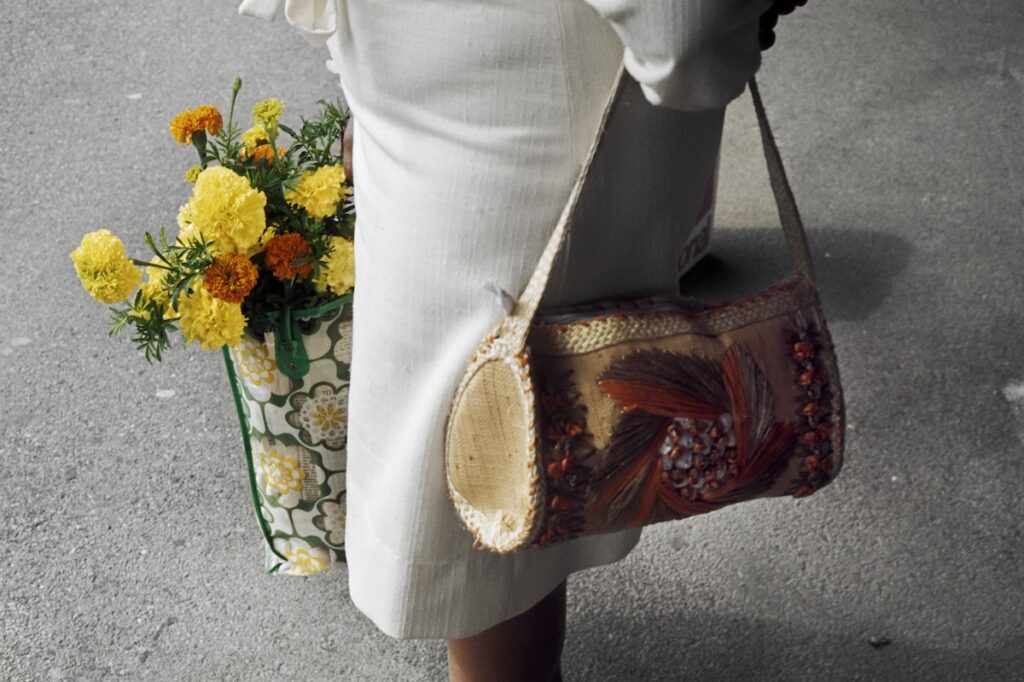
    Vivian Maier’s color photos have been the subject of Howard Greenberg Gallery exhibition in 2018. Many of the photos were displayed for the first time, presenting her perception from the world the way she grasped. “The Color Work captures the street life of Chicago and New York, and includes a number of her enigmatic self-portraits.”

    There has also been the publication of Vivian Maier: the first book devoted to her color images, created in partnership with Howard Greenberg Gallery.

    “Maier was an early poet of color photography,” writes Joel Meyerowitz in the foreword to the book. “You can see in her photographs that she was a quick study of human behavior, of the unfolding moment, the flash of a gesture, or the mood of a facial expression—brief events that turned the quotidian life of the street into a revelation for her.”

    Since 2010, Maier’s photographs have been exhibited in museums and galleries worldwide. Additionally, there was a 2013 documentary film, Finding Vivian Maier, co-directed by historian John Maloof, who discovered her work at an auction in Chicago in 2007.

    “Vivian Maier (1926–2009) was born in New York City, spent much of her youth in France, worked for 40 years as a nanny mostly in Chicago, and photographed consistently over five decades. When she died, Maier left behind more than 150,000 photographic images—prints, negatives, transparencies, and rolls of undeveloped film—though few had ever heard about or seen her work. Maier’s color work was made during her last 30 years. After retiring her signature Rolleiflex, she began working with a 35-millimeter camera and produced roughly 40,000 Ektachrome color slides.”

    “She was a self-invented polymath of a photographer,” writes Colin Westerbeck in the book. “The one advantage Maier gained from keeping her photography to herself was an exemption from contradiction and condescension. She didn’t have to worry about either the orthodoxy or the approval of her peers.”


    Sources

    Howard Greenberg  My Modern Met

    elf-Portrait, Chicago, February, 1976. © Estate of Vivian Maier, Courtesy Maloof Collection and Howard Greenberg Gallery, New York
    © Estate of Vivian Maier, Courtesy Maloof Collection and Howard Greenberg Gallery, New York
    Chicago, May 1958. © Estate of Vivian Maier, Courtesy Maloof Collection and Howard Greenberg Gallery, New York
    Chicago, 1962 © Estate of Vivian Maier, Courtesy Maloof Collection and Howard Greenberg Gallery, New York
    Chicago, 1956 © Estate of Vivian Maier, Courtesy Maloof Collection and Howard Greenberg Gallery, New York
    Chicago, 1962 © Estate of Vivian Maier, Courtesy Maloof Collection and Howard Greenberg Gallery, New York
    Miami, FL, 1960. © Estate of Vivian Maier, Courtesy Maloof Collection and Howard Greenberg Gallery, New York
  • Stanley Kubrick; Life on the Street

    Stanley Kubrick; Life on the Street

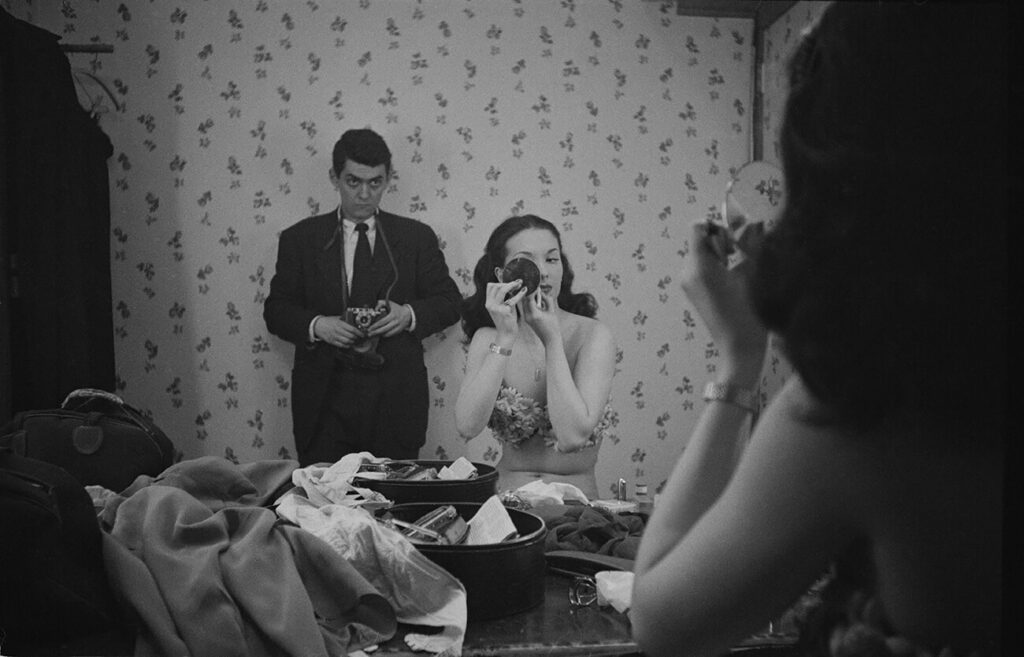
    Kubrick spent five years as a photographer for Look magazine before he became a director. He joined the magazine at the age of 17.  Later, his exhibition was held in the Museum of the City of New York; ‘Through a Different Lens: Stanley Kubrick Photographs’, explored Kubrick’s which accompanied by a book of the same name.

    “Because of my background in photography, I have been able to quickly figure out the best visual way to photograph or represent a scene on the screen,” the director once said. “But I never start thinking in terms of shots. I first begin thinking of the main intent of the film. After the actors rehearse the scene and achieve a level of reality and excitement, only then do I really look through the viewfinder and try to figure out the best way to put this on the screen.”

    He added: “Generally speaking, you can make almost any action or situation into an interesting shot, if it’s composed well and lit well. I’ve seen many films in which interesting camera angles and lighting effects are totally incongruous to the purpose of the scene. When the whole thing is over, you’ve seen a rather interestingly photographed movie that has no effect at all.

    “I think aesthetically recording spontaneous action, rather than carefully posing a picture, is the most valid and expressive use of photography.”

    Donald Albrecht, the curator of architecture and design at the museum, said: “You cannot look at photographs without knowing he’s going to be a filmmaker.”

    Adding: “There were a lot of great photographers at Look and he probably wasn’t the greatest one there, but there was something about Stanley that you just knew he had what it took to get to the next level.”


    Sources:

    Farout Magazine  Guardian Magazine  Documentary Shooters

    Stanley Kubrick for Look Magazine. Life and Love on the New York City Subway. 1947. © Museum of the City of New York. The LOOK Collection
    Stanley Kubrick for Look Magazine. Paddy Wagon. 1949. © Museum of the City of New York. The LOOK Collection
    A Dog’s Life in the Big City. 1949. © Museum of the City of New York. The LOOK Collection
    (Credit: SK Film Archives/Museum of the City of New York)
    (Credit: SK Film Archives/Museum of the City of New York)
    Credit: SK Film Archives/Museum of the City of New York
    Stanley Kubrick for Look Magazine. Shoe Shine Boy. 1947. © Museum of the City of New York. The LOOK Collection
  • Simona Bonnano

    Simona Bonnano

    About

    About Simona Bonanno
    Simona Bonanno is a visual artist that works mostly with photography. Sicilian born, she studied in Paris, at the ESAG Penninghen school of art direction and interior architecture. Graduated at Academy of Fine Arts in Italy, she was selected for a European Union scholarship at the Paris 8 University, France. In 2013 she had her first photography solo exhibition in Nyon, Switzerland, at Galerie Focale. Her artworks have been shown in several exhibitions, in Italy and abroad. A limited edition print has been auctioned at Snap! Toronto (Canada, 2014); two prints have been acquired by the Bibliothèque National de France. She won several awards, including Lens Culture Street Photo Award, International Women in Photo Association (2022), All About Photo (2016), the Grand Prix de Découverte (2013), the Julia Margaret Cameron Award (2011). Her photographs have been featured in networks and magazines worldwide, such as CNN, RTS UN, Resource Magazine, Amateur Photographer, Fotografia Reflex, National Geographic, Digital Camera Magazine. Bonanno lives and works in Sicily.

    ©SimonaBonnana

    ©SimonaBonnano
    ©SimonaBonnano
    ©SimonaBonnano
    ©SimonaBonnano
    ©SimonaBonnano
    ©SimonaBonnano
    ©SimonaBonnano
    ©SimonaBonnano
  • Lenny Ruiz

    Lenny Ruiz

    Biopgraphy

    I am inspired by a love for the urban environment and its endless supply of stories to capture. My approach to street photography is influenced by Saul Leiter, William Eggleston, Ernst Haas, Vivian Maier and Fred Herzog, among others. I tend to spend a lot of my free time doing urban walks and looking for new views of the city.

    ©LennyLuiz

    ©LennyRuiz
    ©LennyRuiz
    ©LennyRuiz
    ©LennyRuiz
    ©LennyRuiz
    ©LennyRuiz
  • Didier Vanderperre

    Didier Vanderperre

    Biopgraphy

    A native of France who has lived and worked in New York since 1986, Didier Vanderperre has been photographing for over 30 years. His desire to photograph places off the beaten track has taken him to remote and less-traveled places areas of Indo-China and East Asia:  Vietnam, Laos, Cambodia, Xinjiang and more importantly Myanmar.

    ©DidierVanderperre

    @DidierVanderperre
    @DidierVanderperre
    @DidierVanderperre
    @DidierVanderperre
    @DidierVanderperre
    @DidierVanderperre
    @DidierVanderperre
    @DidierVanderperre
  • Anna Biret

    Anna Biret

    Biography

    I was born in soviet Poland where I found my calling in the spatial perception and geometric patterns of architecture. After finishing my studies in architecture, I moved to Paris, where I have lived ever since.  I discovered street photography in November 2018, during a workshop by Maciej Dakowicz in Mandalay, Burma.  That was the first spark that incited a whole photography related trips.

    When I go out in the street with my camera, I have no precise idea of what I am going to photograph.  A priori everything interests me, the ordinary scenes, the details, the light, the colors, the shapes and above all the people inspire me.  I respect people, I don’t want to attack them. I don’t use flash, ever.  My presence is accepted, why I don’t know. I never put people in a situation. I adapt to the scene, I try to preserve natural expressions.  I make candid street photos, simplifying the chaotic mess of life with a sense of beauty, to bring out some mystery and order.  I love to capture those moments that make every moment beautiful in everyday life.

    ©AnnaBiret

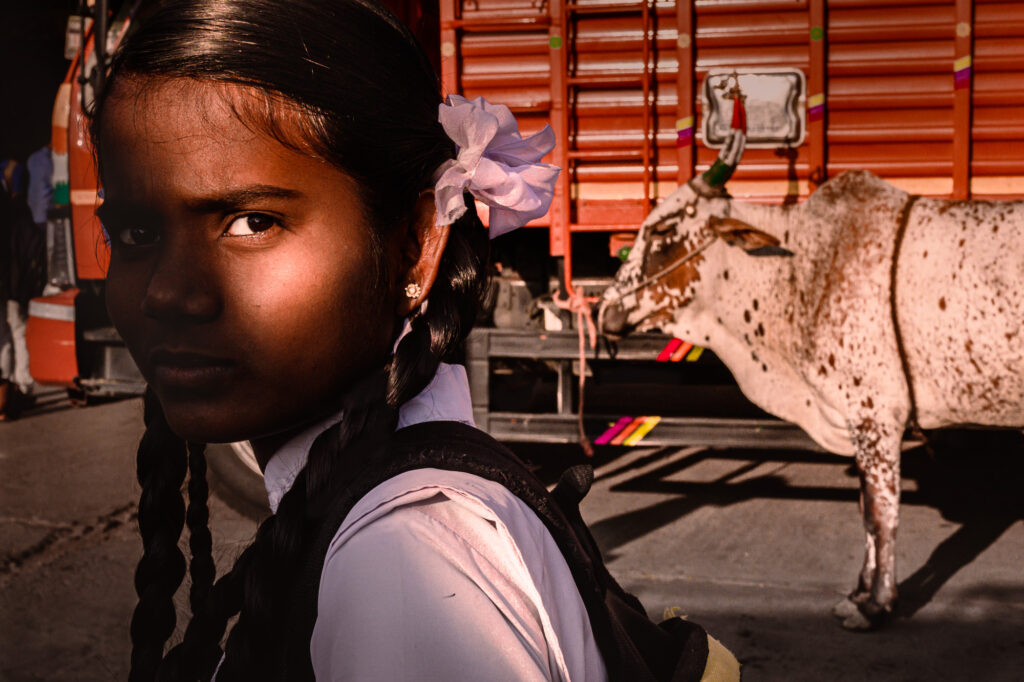
    I was at the bus station, and this girl on her way to school caught my attention. She had a very intriguing personality, a form of pride and modernity, which is in direct contrast to the reality of living in India.
  • Giacomo Vesprini

    Giacomo Vesprini

    About Collection

    Dive

    This collection of images represents my synthesis of a path that leads straight into the profound aspects of my psyche, as well as my soul. Just as dreams bring with them the double dimension of latent and manifest content, so do images. This journey, which often begins with doubt, moves according to non-linear logic, now going into the more mental and thought-related aspects, now descending into the depths of the unconscious through dreams and slips.

    Anna Biret
    Giacomo Vesprini - Dive
    Giacomo Vesprini - Dive
    Giacomo Vesprini - Dive
    Giacomo Vesprini - Dive
    Giacomo Vesprini - Dive
    Giacomo Vesprini - Dive
    Giacomo Vesprini - Dive
    Giacomo Vesprini - Dive
    Giacomo Vesprini - Dive
  • WENPENG LU

    WENPENG LU

    About Collection

    Street Scenes

    The street is the absolute of everyday life. In an increasingly digital world, it is where reality comes to life. The street is the circulatory system of all the cities of the world, where people of all ages, origins or living conditions mix and circulate. What guides my gaze is the quest for those fleeting moments through which I manage to reconcile virtuality and reality.

    WENPENG LU
    WENPENG LU
    WENPENG LU
    WENPENG LU
    WENPENG LU
    WENPENG LU
    WENPENG LU
    WENPENG LU
    WENPENG LU
    WENPENG LU
  • Argus Paul Estabrook

    Argus Paul Estabrook

    About Collection

    Fare Adjustment

    Lost in Tokyo, I approached the metro ticket booth. The agent motioned for my rail pass. But where was it? And for that matter, where was I? The answer escaped me. Instead, swirling in my mind was a void made in the wake of my father’s recent passing. Light streaks traced over blurred recollections of abrupt travel to my family home. Deepening this emotional whiplash, I returned back to my apartment in Seoul only to learn my wife had been unfaithful. Wishing to escape the gravity of grief and infidelity, I booked a cheap ticket to Japan. But now there, I found escape was a fleeting specter like a spider web caught adrift in the wind to which I remained entangled. My life felt simultaneously in the air and weighed down by the turbulence of heartbreak. Reality returned to me as my fingers brushed over my rail pass card inside my camera bag. I slid it under the window and listened to the ticketing agent\’s voice echo through the intercom. “You need more for fare adjustment. One moment, please.” While the agent made his calculations, my mind was left alone to wonder how much more the toll would be.

    Argus Paul Estabrook
    Argus Paul Estabrook
    Argus Paul Estabrook - Lost in Tokyo
    Argus Paul Estabrook - Lost in Tokyo
    Argus Paul Estabrook - Lost in Tokyo
    Argus Paul Estabrook - Lost in Tokyo
    Argus Paul Estabrook - Lost in Tokyo
    Argus Paul Estabrook - Lost in Tokyo
    Argus Paul Estabrook - Lost in Tokyo
    Argus Paul Estabrook - Lost in Tokyo