Tag: china

  • Giannis Angelakis

    Giannis Angelakis

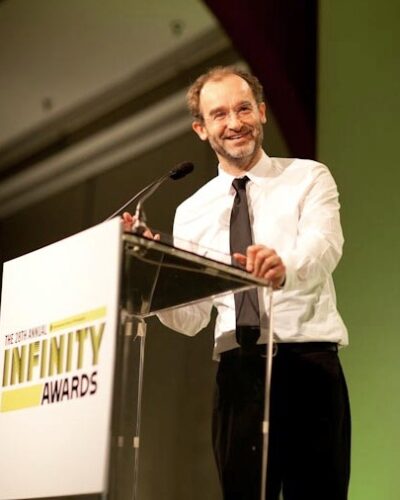
    Giannis Angelakis is from Chania. He was born in 1979 and has lived most of his life at Chania. He spent some years in England where he did a degree at Cultural and Media Studies at the University of Wolverhampton (BSc) and studied at the Centre for Contemporary Cultural Studies and Sociology at the University of Birmingham. From a very young age he works as a journalist and for the past years he is an official “Fuji-X Photographer”. His work is mainly focused on daily life at the island of Crete as well as covering news stories.

    [thb_button_text link=”url:https%3A%2F%2Fwww.instagram.com%2Fangelakis_gianis%2F|title:Giannis%20Angelakis%20Instagram|target:%20_blank|”]

    About The Collection

    Chania, beyond the tourist fantasy
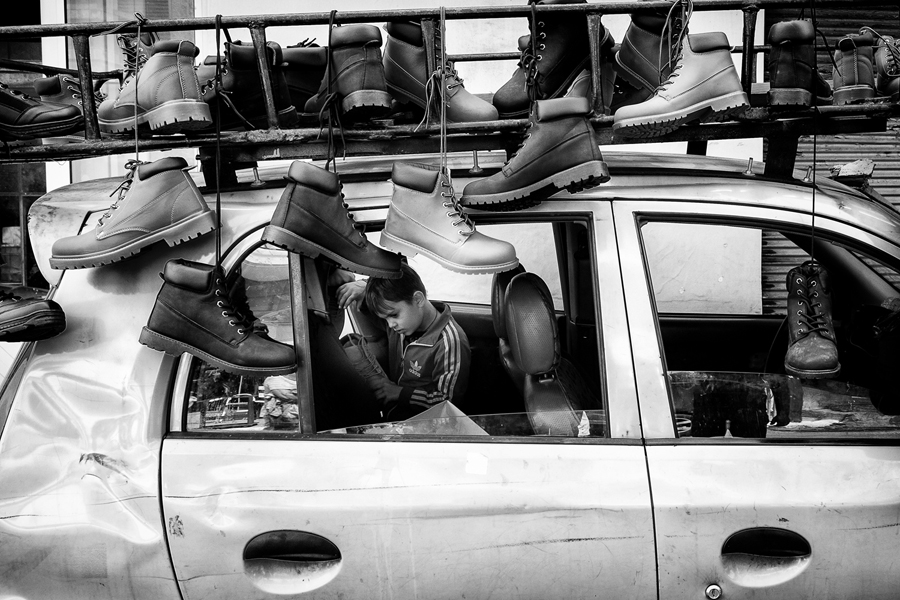
    Crete, in the years of the financial crisis of 2008 became even more depended on the tourism industry. Everything seemed to evolve around tourism because this was the only “industry” that was making money at a time where salaries were collapsing and unemployment was going to the roof. One side effect of this huge dependence of economy from tourism was that life in Chania was somehow reduced to an image that fits the idea of a touristic destination. People in Crete, according to the dominant narrative, are always smiling, dancing, drinking raki and playing music, enjoying the sun and having fun. Positive stereotypes can become negative when seen from another prism and stereotypes of the joyful native can turn into stereotypes about  laziness. The constant repetition of similar images of picturesque sunny beaches, glorious sunsets and almost caricaturist portraits of “indigenous people” imprints in the minds of visitors that this is really Crete. It casts a shadow to everything else that doesn’t serve the dominant narrative and forces people to comply and adjust to the collective fantasy that move the wheels of economy. In a global level, people are more and more location independent. Just before the coronavirus epidemic, we lived in a time of constant travel and flexibility. Travel is not anymore a matter of having a vacation but is more and more becoming a matter of status. New technologies and social media created a market for the abundance of material created, which is dominated by images of places that should be in a “bucket list”. This was a reality that the dominant division was between those “independent” and able to travel who could reach a higher level of consciousness which surpassed national or local boundaries towards an identity of a cosmopolitan citizen and the natives, those who are bound to a place, who can’t work from a distance, who belong in communities and depend from them. My effort is to bring back to the surface some of the richness of life that does not fit the dominant narrative of what a travel destination is.
    Here, you will find a combination of photos from everyday life in the town of Chania. It is a peculiar mixture of pictures which seem disconnected but I perceive that they somehow capture the complexity of living in a place like Chania from a quite dark perspective.


  • Leng Ung

    Leng Ung

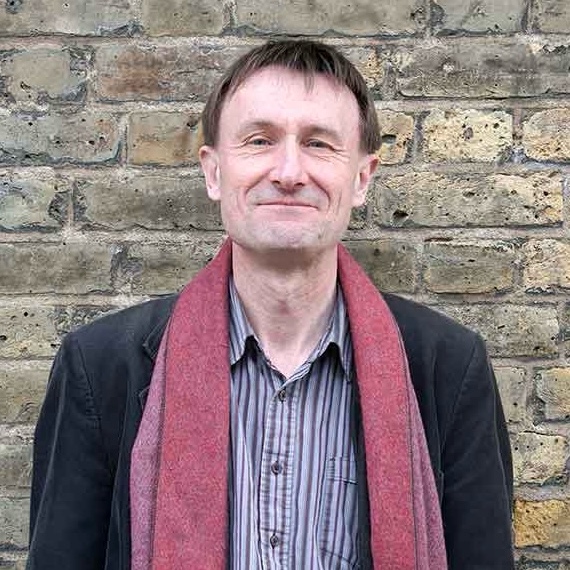
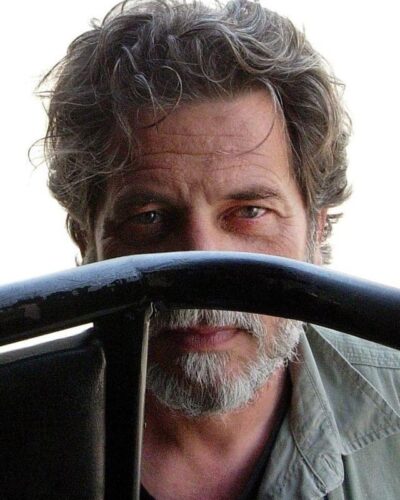
    I am is a Chinese Cambodian self taught photographer who immigrated to France during the Khmer genocide.
    I started experimenting with photography at the age of 25 after joining a French photo club. My primary goal at this moment was to improve my vacation photos. But then, i fell in love with photography and learned black and white film craftsmanship  – which I believe to be a cornerstone for my today digital black and white work. I learned how to process film and use the enlarger in the darkroom. And still today, I am applying the same approach to interpret my digital black and white images.
    Today, I am currently based in Montreal, Canada after spending few years in Chicago, USA.

    [thb_button_text link=”url:https%3A%2F%2Fwww.instagram.com%2Fleng.ung.312%2F|title:Leng%20Ung%20instagram|target:%20_blank|”]

    About The Collection

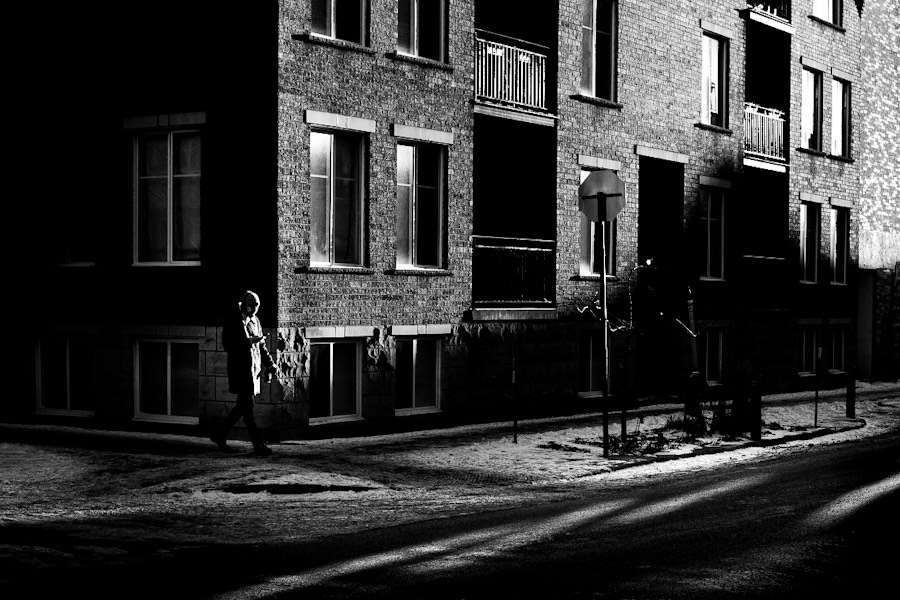
    My recent work « Corridors of light, metaphor of life»  is meant to question the validity of relationships. As a migrant – immigrating from Cambodgia to France because of the Khmer genocide, then France to the USA and recently from the USA to Canada, I experimented many separations with friends. Each time, it is the same interrogation: which relationship will be strong enough to survive the distance? So, I made this series to be a metaphor for (my) life. Like a play, each corridor of the light in the city is an act. A scene. What I tried to do while shooting these images was to imagine that pedestrians were actors, actors who were all the time entering and exiting the city stage. I felt a relationship with these strangers who seemed to evanescently enter my life through one side of the stage, only to briefly occupy that spotlight and then leave on the other side of the stage. Fade to black. Gone.
    While the vertical frame of these images portrays the scene—a North American city—the negative spaces should not only be seen to represent the immutable past, but also the unpredictable future. And consequently, my blacks are not merely shadow but voids – voids as the memories of me in the mind of people I left behind, voids as the memories I had from my early years in Cambodia…
    Many of us live in claustrophobic environments, in big cities with social media almost automatically finding relationships for us. Sure, it may appear that we have more and more “friends,” and for some of use, these friends span the world over. However, despite the new communication technology,  I often wonder who accompanies us in the life journey? And how strong are these bonds? can relationships survive distance and the shadows of our daily life?
    This series is really questioning the validity of our relationship to modern spaces. And as a deracinated person myself, this questioning is also an introspective inquiry.