Garry Winogrand is one of my favorite street photographers that I have gained much photographic insight and wisdom from. He was in-arguably one of the most prolific street photographers of his time (he shot over 5 million photographs in his career) and one of the most passionate. However, he hated the term “street photographer” and simply saw himself as a “photographer”. It is an idea I later understood and respected very dearly, as Winogrand was more interested in making photographs than classifying himself for art historians.
I never understood a lot of the things that he said about photography like why you should wait a year or two before developing your shots, why photographs don’t tell stories, and how photographers mistake emotion for what makes great photographs. Although I didn’t really get what he was saying, I was intrigued.
After having done a ton of research on Winogrand and finding out more about his philosophy in photography, I found a treasure chest. Although I am not an expert on Garry Winogrand, he has influenced my street photography profoundly. I wish through this article to illustrate some things that Winogrand taught to his former students (the bulk of the quotes are from “Class Time with Garry Winogrand by O.C. Garza” [PDF] as well as “Coffee and Workprints: A Workshop With Garry Winogrand” by Mason Resnick).
If you want to learn more about what you can learn from Garry Winogrand, read on!

1. Shoot, a lot
Garry Winogrand shot a lot of photographs. To give you a sense of how much he shot, read this one account of him shooting on the streets from a former student that he had:
“As we walked out of the building, he wrapped the Leica’s leather strap around his hand, checked the light, quickly adjusted the shutter speed and f/stop. He looked ready to pounce. We stepped outside and he was on.
We quickly learned Winogrand’s technique–he walked slowly or stood in the middle of pedestrian traffic as people went by. He shot prolifically. I watched him walk a short block and shoot an entire roll without breaking stride. As he reloaded, I asked him if he felt bad about missing pictures when he reloaded. “No,” he replied, “there are no pictures when I reload.” He was constantly looking around, and often would see a situation on the other side of a busy intersection. Ignoring traffic, he would run across the street to get the picture.” – Mason Resnick
Wow, shooting an entire roll in a short block without breaking stride? Many street photographers struggle to finish an entire roll in a day, let alone in a short block.
If you want to see how much film he shot, you can see the image of film worn onto the pressure plate of his Leica M4 here.
Not only that, but at the time of his unfortunate early-death (at age 56) he left behind 2,500 rolls of undeveloped film, 6,500 rolls of developed but not proofed exposures (not made into contact sheets), and contact sheets made from about 3,000 rolls. In addition to that, the Garry Winogrand Archive at the Center for Creative Photography has over 20,000 fine and work prints, 20,000 contact sheets, 100,000 negatives and 30,500 35mm colour slides as well as a small group of Polaroid prints and several amateur motion picture films.
Winogrand shot at a pace in which he couldn’t even see his own photos (because he was always out on the streets, shooting). In an interview that he did with Barbara Diamonstein she asks him:
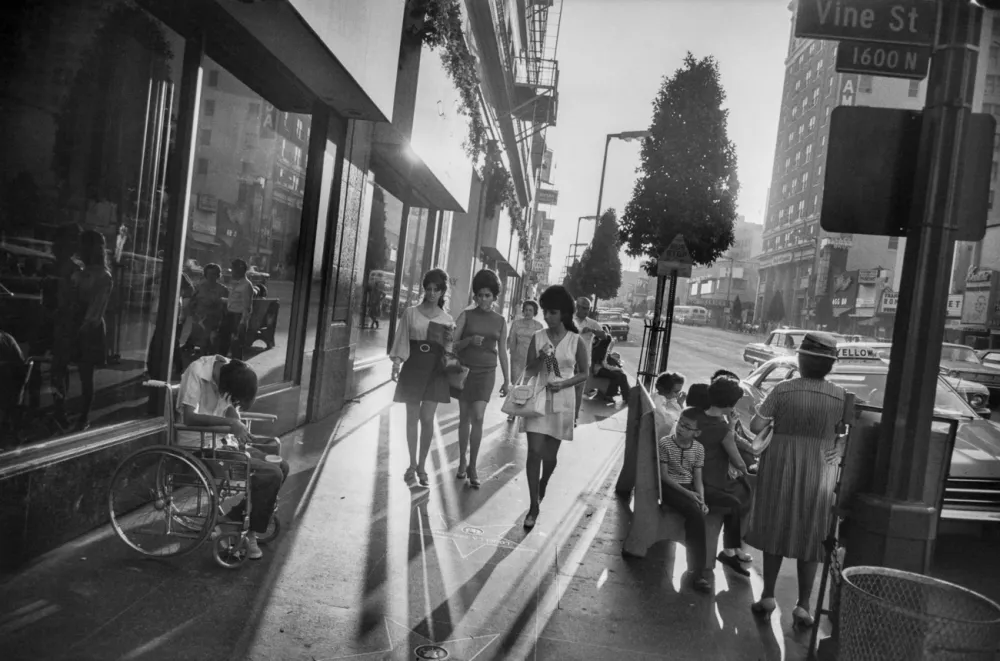
Diamonstein: When you looked at those contact sheets, you noticed that something was going on. I’ve often wondered how a photographer who takes tens of thousands of photographs — and by now it may even be hundreds of thousands of photographs — keeps track of the material. How do you know what you have, and how do you find it?
Winogrand: Badly. That’s all I can say. There’ve been times it’s been just impossible to find a negative or whatever. But I’m basically just a one man operation, and so things get messed up. I don’t have a filing system that’s worth very much.
Diamonstein: But don’t you think that’s important to your work?
Winogrand: I’m sure it is, but I can’t do anything about it. It’s hopeless. I’ve given up. You just go through a certain kind of drudgery every time you have to look for something. I’ve got certain things grouped by now, but there’s a drudgery in finding them. There’s always stuff missing.”
Winogrand accepted the fact that he wouldn’t ever have enough time to see all of his photographs that he shot, and that there would be negatives he could never find (because of the volume of photographs that he took).
I always wondered whether I should shoot a lot or be as selective as I can when shooting on the streets.
I have always shot a lot in street photography. For example, when I shot digitally, I would often take 300-500 a day (no problem). Now with film, I have slowed down a bit (generally 1-3 rolls a day). 5-6 rolls if I am feeling really ambitious (like my recent trip in Istanbul).
However I wasn’t quite sure if I was simply wasting my time by taking so many photographs, and not improving as a street photographer (because I would take more photographs “than necessary”).
One quote that really struck me from my friend Charlie Kirk:
“When in doubt, click”
Now when I am out shooting, I always make sure to take at least 2-5 shots of a scene that I see (because a subtle change of gesture, position, or people in the background can change in a fraction of a second). If you also study the contact sheets of very famous photographers (and their photographs) you will see that they don’t just go for one shot when they see “the decisive moment” about to happen: https://erickimphotography.com/blog/2012/07/how-studying-contact-sheets-can-make-you-a-better-street-photographer/
Not only did Winogrand shoot a lot, but he was always out on the streets. People described him as being restless, and always shaking around in his seat (even while seated). He had an insatiable urge to be out and about, photographing life around him.
How many photographs did Winogrand take exactly in his lifetime? Let’s do the math by once again taking a look at photos collected at his death and photos stored in his archive:
(Left behind at his death)
- 2,500 undeveloped film = 90,000 photos
- 6,500 developed (but not contact sheets) = 234,000 photos
- 3,000 contact sheets = 108,000 photos
- Total: 432,000 photos
(In Winogrand’s Archive)
- 20,000 contact sheets = 720,000 photos
- 100,000 negatives = 3,600,000 photos
- 30,500 color slides = 1,098,000 photos
- Total: 5,418,000 photos
In total (on the low end) we can be certain that he shot at least 5,850,000 photos in his lifetime. He passed away and never saw nearly half a million of his shots (432,000 photos) and in his archive they have around 5,418,000 photos.
How many photos (on average) did he shoot a day?
Well he started studying painting at City College of New York and painting and photography at Columbia University in New York City in 1948 (aged 20). He passed away at age 56. Therefore he must have had at least 36 years of shooting.
Assuming that he shot 5,850,000 photos in his lifetime (and shot for 36 years), that would equate to 445 photographs a day (or 12 rolls of film a day).
*Note: I just got a comment from Blake Andrews that the number of shots Winogrand took might have been lower, at around 1-1.5 million photographs. Needless to say, Winogrand shot a lot.
As Michael David Murphy said on his essay on Winogrand, Winogrand was indeed “…the first digital photographer”.
I think it is difficult for the majority of us to shoot 445 photographs a day (12 rolls of film a day). However I think one thing that we can take is that with sheer amounts of volume, we can increase our odds of getting memorable images.
Of course we cannot simply equate what makes a memorable street photograph down to a mathematical equation, but my point is in order to take memorable street photographs, we need to subject ourselves to more “decisive moments”. Generally that is increased by spending more time shooting on the streets, and shooting a lot.
So not to put your camera into burst mode and take tens and thousand of photographs a day (for the sake of shooting a lot) – try to be intentional in the photographs that you take, but don’t try to limit yourself in terms of the number of photographs that you take.
2. Don’t hesitate and follow your gut
Hesitation is one of the things that kills most potentially great street photographs. We might see a great scene unfold before our very eyes, but we may hesitate for one reason or another (the person is too far away, they might get angry at us, I don’t want to be disrespectful).
When Winogrand would shoot on the streets, he wouldn’t hesitate to take his shots, and would actively pursue his shots. As mentioned from Mason Resnick in his 2-week long workshop with Garry Winogrand:
“He was constantly looking around, and often would see a situation on the other side of a busy intersection. Ignoring traffic, he would run across the street to get the picture.”
I am not advocating for you to be reckless and getting hit by cars while chasing decisive moments.
However I think one thing that we can learn from Winogrand is to follow our instincts and our guts, and go for our shots. If a person is too far away, we should either run (or walk) to them and go for the shot. If we think that they may get upset for us taking the shot, we should put away those assumptions and go for the shot anyways. If we are concerned of offending people, take the shot anyways. If you feel guilty afterwards, you can always delete the photograph afterwards (or never show it to anyone else).
3. Smile when shooting on the streets
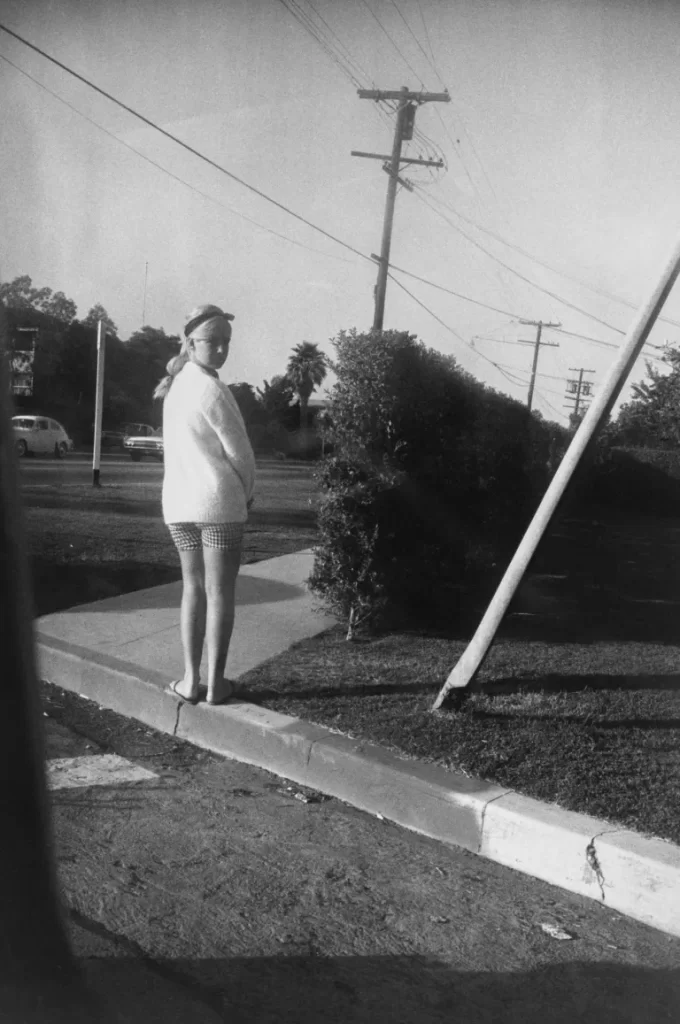
Garry Winogrand shot with a 28mm lens for most of his life, which meant that for the majority of his shots he had to be quite close to his subjects (and in front of them). Therefore Winogrand wasn’t Henri Cartier-Bresson (trying to be invisible) but was actively a part of the action and immersed in the crowds. He would be very obviously taking photographs in the streets and would stick out like a sore thumb. (You can see a clip of him shooting in the streets here.
Mason Resnick continues about his experiences seeing Winogrand shooting on the streets:
“Incredibly, people didn’t react when he photographed them. It surprised me because Winogrand made no effort to hide the fact that he was standing in way, taking their pictures. Very few really noticed; no one seemed annoyed.
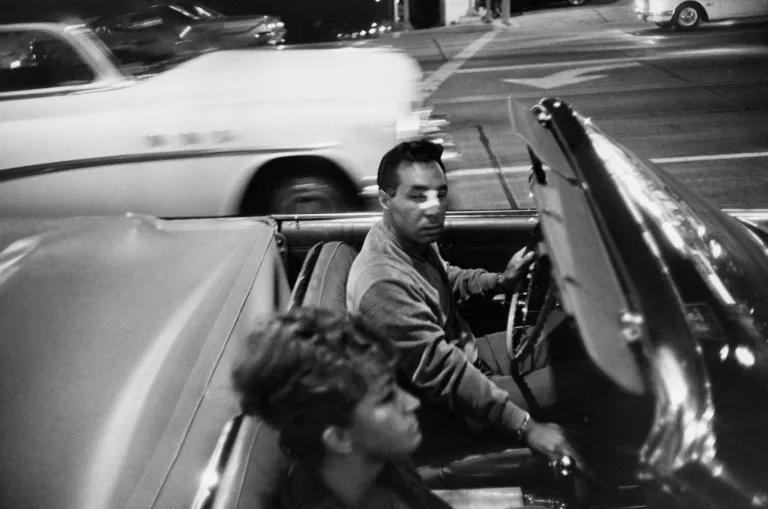
Winogrand was caught up with the energy of his subjects, and was constantly smiling or nodding at people as he shot. It was as if his camera was secondary and his main purpose was to communicate and make quick but personal contact with people as they walked by.”
Winogrand’s experiences mirror mine as well. When I am shooting on the streets, I always try to do it with a smile on my face, and generally nod to people after taking their photograph, saying “thank you”, complimenting them, or even chatting with them after taking their photograph. This sends off a positive aura in which people don’t feel as suspicious of you taking a photograph.
I am sure that there were many times in which people got pissed off when Winogrand took their photograph, and would react hostily to him. However that is inevitable in street photography and cannot be avoided. I am not sure how Winogrand would have reacted, but he never got sent to the hospital for being physically attacked after taking a street photograph of someone.
Remember to keep smiling when shooting on the streets 🙂
4. Don’t shoot from the hip
Garry Winogrand would discourage “shooting from the hip” – as Resnick recounts this story:
“I tried to mimic Winogrand’s shooting technique. I went up to people, took their pictures, smiled, nodded, just like the master. Nobody complained; a few smiled back!
I tried shooting without looking through the viewfinder, but when Winogrand saw this, he sternly told me never to shoot without looking. “You’ll lose control over your framing,” he warned. I couldn’t believe he had time to look in his viewfinder, and watched him closely.
Indeed, Winogrand always looked in the viewfinder at the moment he shot. It was only for a split second, but I could see him adjust his camera’s position slightly and focus before he pressed the shutter release. He was precise, fast, in control.”

Therefore when shooting in the streets, use your viewfinder (if you have one). It is possible to get good shots when shooting from the hip, but you will have far less control over your framing and composition when shooting on the streets.
In an interview Winogrand did during a few Q & A sessions in Rochester, New York in 1970 in which “shooting from the hip” was mentioned:
Moderator: Actually, what I’m asking is do you often shoot without using your viewfinder?
Winogrand: I never shoot without using the viewfinder—Oh, yes, there’ll be a few times,—I may have to hold the camera up over my head because for just physical reasons, but very rarely does that ever work.”
If your camera has a viewfinder, use it- that’s why it’s there. I used to shoot quite a bit from the hip when I started off (because I was shy to take photographs of people) but found it to personally be a crutch to me. When I got really lucky, I would get a decent shot. But the majority of my shots were generally poorly framed, blurry, or out-of-focus.
Once I started using my viewfinder religiously, not only did my composition and framing improve, but also my framing.
Of course if your camera only has an LCD screen (or you don’t want to buy an EVF for your micro 4/3rds or point & shoot camera) you can’t use a viewfinder. But try to keep in mind to always shoot with intent, and focus on your framing.
5. Don’t crop
Another thing that Winogrand advocated (which Henri Cartier-Bresson also advocated) was not cropping.
As O.C. Garza recounts in a photo class he took with Winogrand:
“The rest of the workshop followed the same pattern. I shot like a maniac all day (as did most of the other students), worked in the darkroom until dawn, schlepped my pile of 8x10s back into New York from Long Island for the 9 a.m. class.
Winogrand divided the shots into good and bad. I studied his selections, trying to divine his logic. I eventually realized that when the whole photograph worked–an intuitive response to something visual, unexplainable in words–he liked it. If only part of the photo worked, it wasn’t good enough.
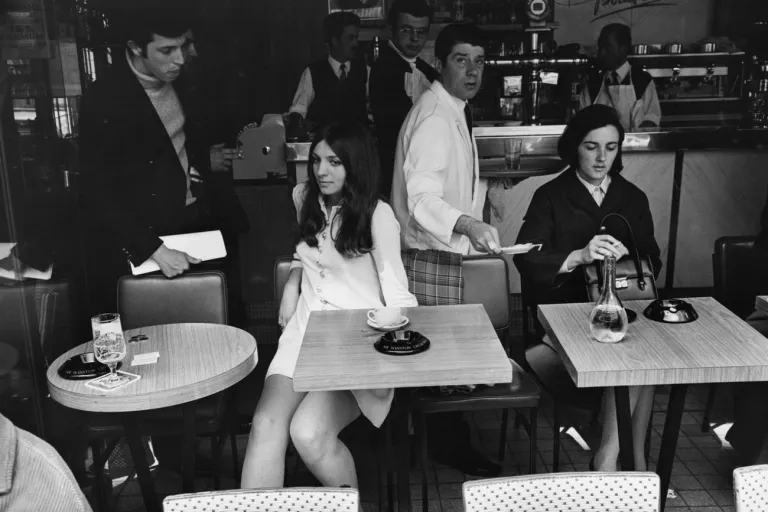
Cropping was out–he told us to shoot full-frame so the “quality of the visual problem is improved.” Winogrand told us to photograph what we linked, and to trust our choices, even if nobody else agreed with them.”
Although cropping can be a great tool to improve your photographs, it can also be another crutch. I used to crop quite a bit for my street photographs (when I had a messy background or distracting elements). However this lead me to having the mentality of not getting the photo right “in-camera” as I would subconsciously think to myself: “If the framing isn’t good, I can always crop later”.
Once again, try to get your framing right in-camera- as it will force you to “dance around” more on the streets to get a more coherent shot. Instead of shooting people against distracting backgrounds, it will encourage you to walk around them, taking a photograph of them behind a more simple background (that is less distracting). We will also get closer to our subjects to frame them better, rather than just cropping in from around the frame.
I am not saying that you should never crop a photograph (if you look at Robert Frank’s contact sheets of “The Americans” – he cropped a lot of his photographs), but try to do it in moderation and sparingly.
6. Emotionally detach yourself from your photographs
Winogrand once famously said, “Sometimes photographers mistake emotion for what makes a great street photograph.” When I first read the quote, I wasn’t quite sure what he meant by that.
To clarify what he meant, let’s go back to the class that O.C. Garza took with Winogrand:
“By the second week, Winogrand had opened up and told us about his working methods, which were rather unorthodox but not sloppy.
He never developed film right after shooting it. He deliberately waited a year or two, so he would have virtually no memory of the act of taking an individual photograph.
This, he claimed made it easier for him to approach his contact sheets more critically. “If I was in a good mood when I was shooting one day, then developed the film right away,” he told us, I might choose a picture because I remember how good I felt when I took it, not necessarily because it was a great shot.
You make better choices if you approach your contact sheets cold, separating the editing from the picture taking as much as possible.”
I agree much with this sentiment of waiting an extended period of time before editing your shots. One of the great parts of digital (seeing your images instantly) can also be it’s downfall. Even Alex Webb talked about his frustrations moving from shooting Kodachrome slide film into shooting digital by saying that it didn’t give him enough time to wait before seeing his images, and that he saw his photos almost “too quickly” before he was emotionally prepared to look/edit them.
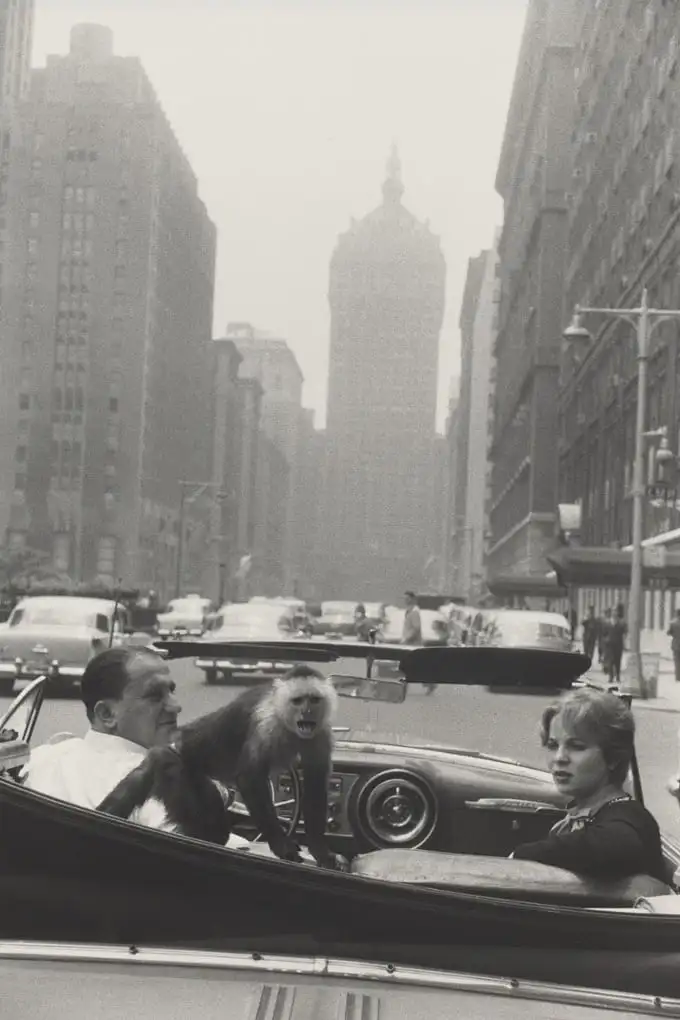
Therefore when I was shooting digitally, one of the issues I had was always having the urge to look at my photographs instantly. If I was shooting on the streets and took a photograph of something I thought was amazing (let’s say a little girl with a red umbrella jumping over a puddle) I might confuse the emotion I felt with taking the photograph of thinking that it was good (rather than the photograph itself).
I would then look at my LCD, scream in delight, rush home, post-process it, and then upload it directly to Flickr. After a few days I would be dismayed to see how many few “favs” or comments I got from the shot (in compared to the rest of my shots), and be confused why the shot wasn’t good. Of course after a few weeks I would realize that the shot wasn’t “as good as I remembered it” and would have compositional flaws as well as timing.
One of the benefits I personally have had when shooting film is that it has helped me emotionally distance myself from my shots. I generally shoot around 50 rolls of film for every month of traveling and shooting street photography, and I don’t look for my photographs at least for a month after taking it.
When I finally look at the images I took, I would forget taking half of them, which would help me be much more objective during the final editing (selection) process.
Whether you shoot digital or film, I think we can all learn from Winogrand in waiting before seeing or processing your shots. Let your shots marinate like a nice steak, or aerate like a nice red wine. Waiting for a year or two before seeing your photographs may be a bit hardcore, but it will definitely help you forget the images you took and be more objective when looking at your shots.
Perhaps if you shoot digitally, wait a few days or even a week before looking at your shots in-depth in Lightroom. Hell, you can even make it a month or longer! Same applies to film.
7. Look at great photographs
No photographs live in a vacuum, and certainly Winogrand didn’t. He was a great fan of many of his contemporary street photographers (as well as those who came before him).
Going back to Resnick’s workshop with Winogrand:
“He encouraged us to look at great photographs. See prints in galleries and museums to know what good prints look like. Work.
Winogrand recommended looking at The Americans by Robert Frank, American Images by Walker Evans, Robert Adams’ work and the photographs of Lee Friedlander, Paul Strand, Brassai, Andre Kertesz, Weegee and Henri Cartier-Bresson.
Also in another interview with Image Magazine in 1972:
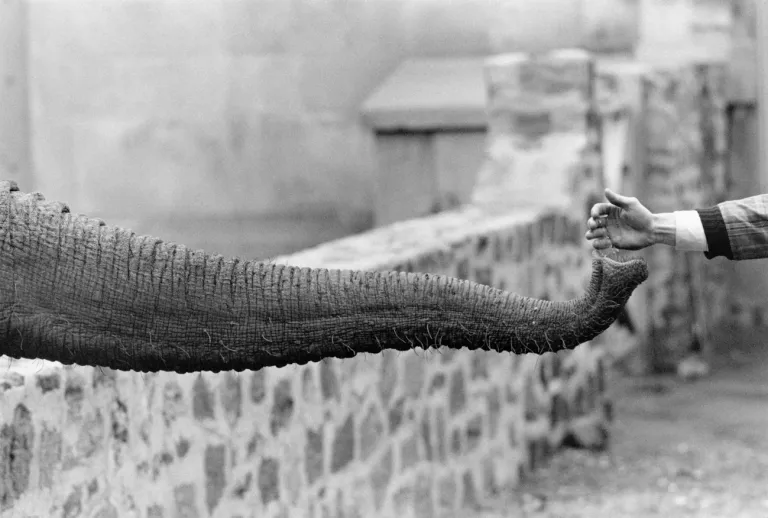
“Moderator: Do you look at a lot of other people’s photographs?
Winogrand: Sure. I look at photographs.
Moderator: Whose photographs do you find interesting?
Winogrand: Quickly, off the top of my head: Atget, Brassai, Kertesz, Weston, Walker Evans, Robert Frank, Bresson.
Moderator: Do you like them for different reasons or do you find a reason?
Winogrand: I learn from them. I can learn from them.”
Winogrand also discusses in the same interview about how he got inspired to start shooting photography:
“Nobody exists in a vacuum. Where do you come from? The first time I really got out of New York as a photographer was in 1955 and I wanted to go around the country photographing. And a friend of mine at that time, I was talking to him about it—a guy named Dan Weiner. I don’t know if you know his name. He’s dead now.
[He] asked me if I had ever seen Walker Evans’ book and I said, no. I had never heard of Walker Evans. He said, if you’re going around the country, take a look at the book. And he did me a big fat favor.
And then it’s funny, I forget what year when Robert Frank’s book came out. He was working pretty much around that time, ’55 or whenever it was. And there were photographs in there, particularly that gas station photograph, that I learned an immense amount from. I mean, I hope I learned. At least, I feel very responsible…”
Draw inspiration from other photographers. See what about their work that resonates with you, and take bits and pieces and synthesize it with your own photography. Whether it be the subject matter that they shoot, the framing and angles they use, or the certain techniques they use.
I think it is dangerous for street photographers to put themselves into a bubble, and not be influenced by great work.
“You are what you eat”. Consume tons of great photography books, check out other street photography blogs, and visit local exhibitions and libraries.
8. Focus on form and content
Winogrand famously said, “Every photograph is a battle of form versus content” and that “Great photography is always on the edge of failure.”
With lots of the word games that he says in his quote, I never quite understood what he meant. OC Garza shares his experience with Winogrand:
“Later on I began to see the headlights coming at me. If all the graphic elements are coming together, why do my photos still look like crap? Studying more of Garry’s work, I reasoned that not only were his photos working graphically, but something was happening in them. He would call this “content.” Garry repeated often this phrase; every photograph is a battle of form versus content. The good ones are on the border of failure.”
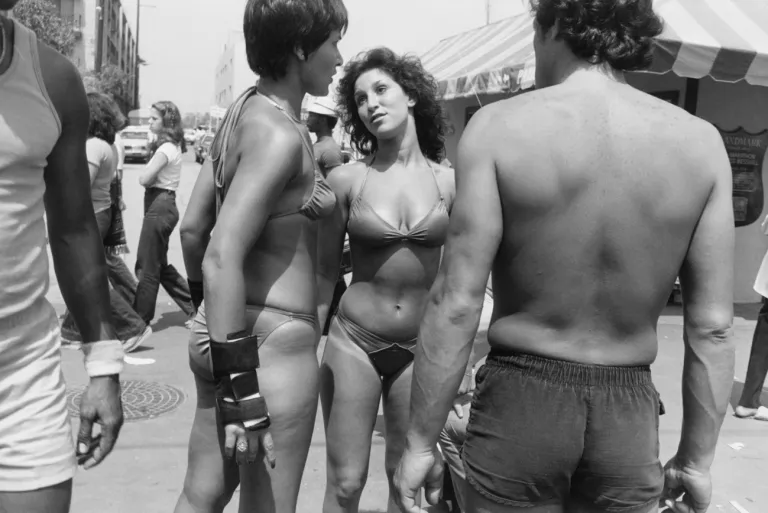
Form & content are two keys which make a memorable street photograph. Consider “form” as the composition, framing, and technical aspects of a photograph. Consider “content” as what is actually happening in the photograph (whether it be an old couple holding hands, a boy holding two bottles of wine, or a man looking through a peep-hole).
We need both strong form and content to make a memorable street photograph – but rarely does it ever happen. That what makes street photography so hard.
I am sure we have all had street photographs that we took that we weren’t quite sure were good or not. I like to call these the “maybe shots”. I have an entire folder full of them, but they usually are strong in terms of form, but have poor content. Others have strong content, but poor form.
I think that’s what Winogrand meant when he said that “Great photography is always on the edge of failure.” There are many things that can make our photographs fail. But if you are lucky enough, have enough dedication, and can create a well-balanced frame with interesting content- you can make a great street photograph.
9. Become inspired by things outside of photography
I think that in order to be more original and unique in your street photography, look outside of photography for inspiration. Winogrand shares the same sentiment in his interview with Image Magazine in 1972:
“Moderator: You feel you’ve been hustled in a pool room. . . . Are there any other things that relate photographically that are not necessarily other photographs? By this I mean, do you ever get ideas—not ideas—is your education ever expanded by an interest in something else other than photography?
Winogrand: I would think so. A heck of a lot. Reading and music
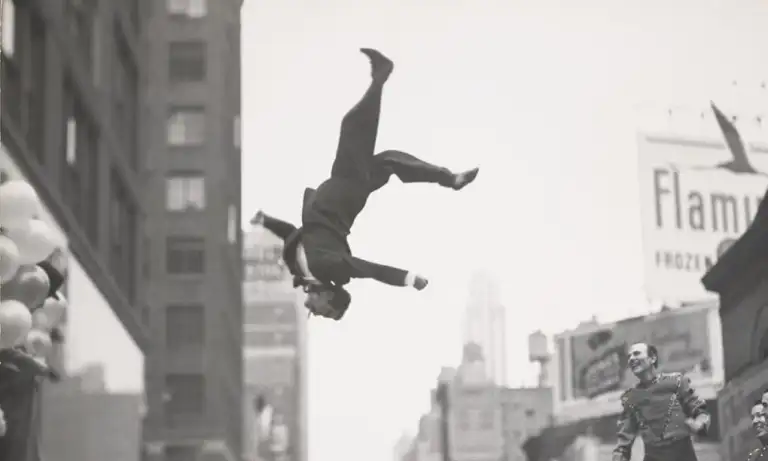
and painting and sculpture and other stuff. Basketball, baseball, hockey, etc. Certainly, you know, you can always learn from some—from somebody else’s—from some intelligence. I think. I hope.”
Consume art, books, music, painting, sculpture, and things outside of street photography. This will help you get a new angle in your photographic vision.
For example Sebastião Salgado, one of the most influential social documentary photographers and photojournalists started off his career as an economist, studying work. However after going to the work sites in-person, he soon chose to abandon economics (too focused on theory) and chose to pursue photography to more vividly show working conditions of people all around the world. Salgado took his outsider’s experience as an economist, and applied it to photography beautifully.
I started off being a sociology student at UCLA, and my interest in photography started at around the same time. When I was trying to think of what type of photographs I liked to make, I quickly realized that they were generally about people in society. Now I try to use my interest in sociology to apply to my street photography projects.
Think about how your personal experiences and interests (outside of photography) influences your street photography. This will help you discover a much more unique voice and help you create photographs that resonate who you are as a person.
10. Love life
In Garry Winogrand’s retrospective book published by MOMA, former curator John Szarkowski wrote a very lovely biography of the life of Winogrand.
One of the things that stood out to me the most was the conclusion, in which Szarkowski wrote (recited loosely by memory) was in which he discusses the confusion that people had about Winogrand (why did he take so many photographs if he knew he wasn’t going to look at so many of them?)
Szarkowski wrote quite eloquently how Winogrand was less interested in photography, and more interested about living and capturing life.
I think as street photographers we can all learn wisdom from what Szarkowski, and the example that Winogrand lead in his life.
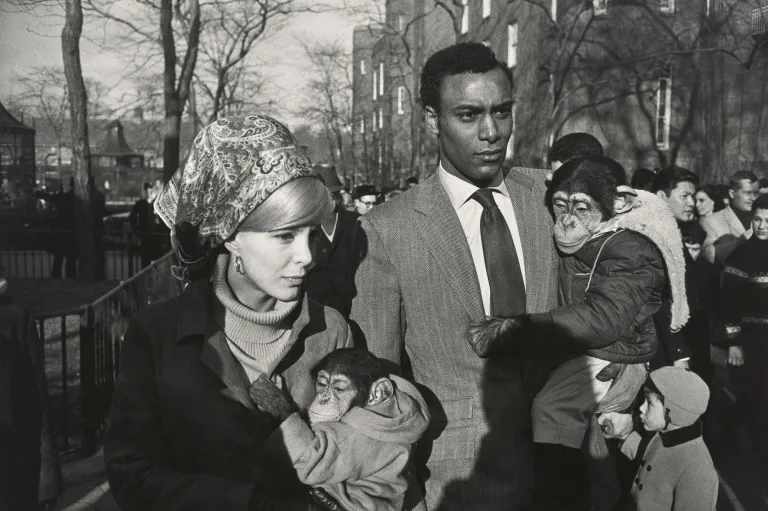
As street photographers we should strive to take memorable street photographs of people, society, and how we see the world. But let’s not forget, photography comes second after living life.
11. Don’t call yourself a “street photographer”
Garry Winogrand hated the term “street photographer”. He simply called himself a photographer — nothing more, and nothing less.
One of the dangerous things about classifying yourself as a certain type of photographer is that it can pigeon-hole you. After all, it is Robert Capa who advised Henri Cartier-Bresson the following:
“You must not have a label of a Surrealist photographer. If you do, you won’t have an assignment and you’ll be like a hothouse plant ….The label should be photojournalist.”
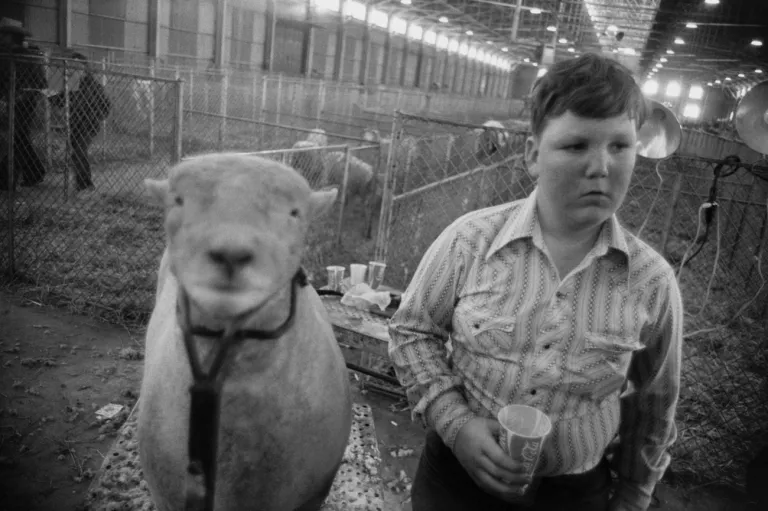
Furthermore even though Henri Cartier-Bresson was undoubtly the godfather of “street photography” – he never referred to himself as a street photographer either.
Of course we call ourselves “street photographers” for a practical reason. After all, if you meet someone who asks you what kind of photos you take– you won’t tell them you are a landscape photographer or a bird photographer. However it can be a pain to tell them, “Oh, I like to take photos of strangers on the street, sometimes with permission and sometimes without permission”. Calling yourself a “street photographer” is simply easier.
However even within the street photography community, street photographers come in many different colors. You got street photographers that focus more on the face, others that focus more on “the decisive moment”, others that focus on still lives, and others that focus on unusual or canny situations in public.
Curated by Editor-in-Chief Masoud Gharaei